


EN
MercadoLibre (MELI) Stock Eyes Brazil Finance Shift After Trabuco Appointment
- MercadoLibre (NasdaqGS: MELI) operates in Brazil, where Luiz Carlos Trabuco has been appointed the country's new finance minister.
- Trabuco is a long-time Brazilian banking executive, which signals closer ties between the finance ministry and the financial sector.
- His appointment shapes the backdrop for MercadoLibre's payments and credit operations that depend on regulation and financial system confidence.
- There is more to MercadoLibre's investment case than the appointment of Luiz Carlos Trabuco as Brazil's finance minister. Ask Charlie which of the 2 warning signs matters most for Trabuco’s appointment.
To broaden your watchlist, you could also look at other companies exposed to similar financial infrastructure themes through 52 AI infrastructure stocks.
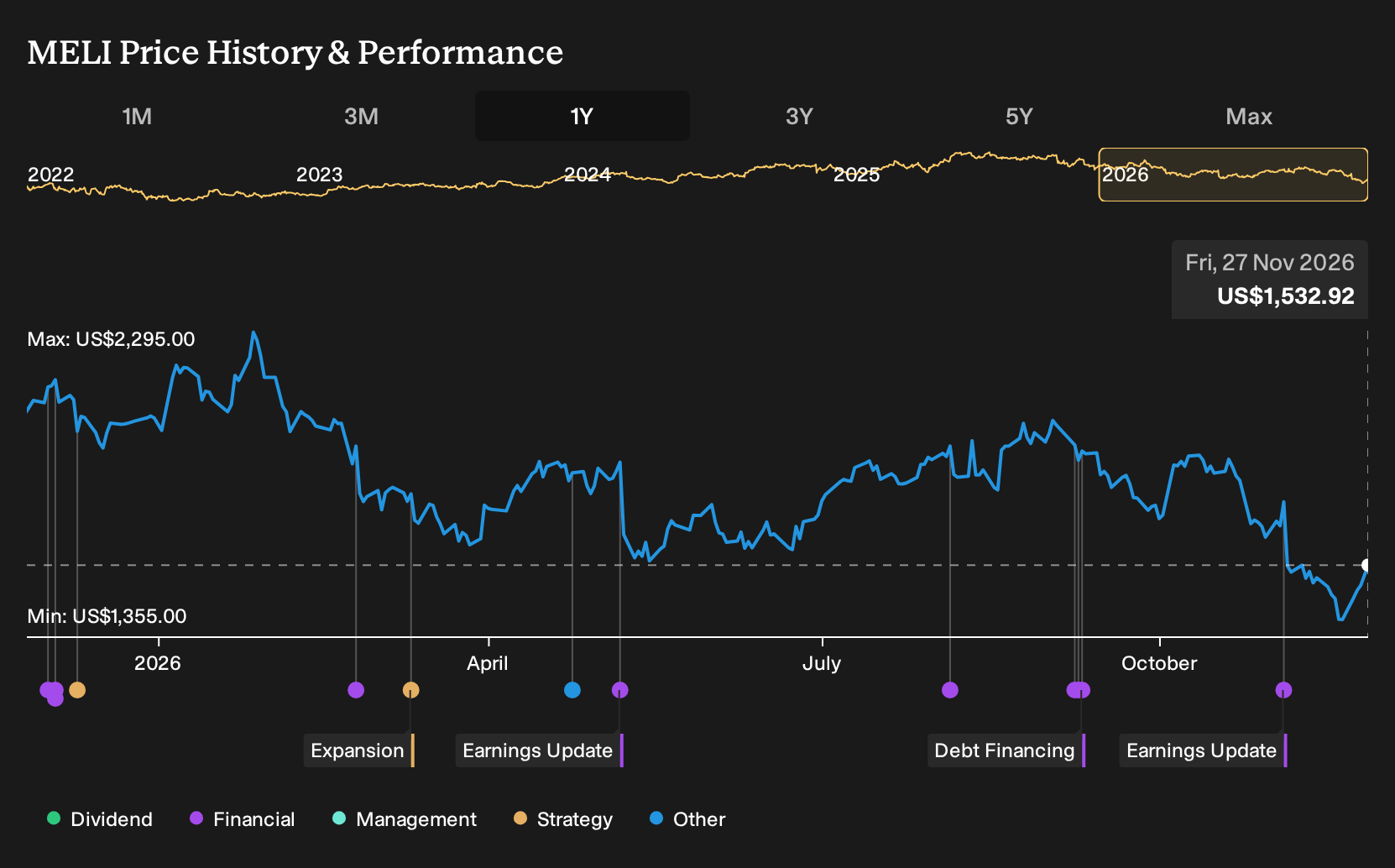
MercadoLibre runs online marketplaces and financial services platforms across Brazil, Mexico, Argentina, and other markets, which ties its fortunes closely to rules set for payments and credit. As a large US listed group with a market cap of about $77.8b, it relies on stable and predictable financial infrastructure in Brazil to support its regional ambitions.
How could Trabuco’s appointment affect MercadoLibre’s day to day in Brazil?
Luiz Carlos Trabuco comes from Bradesco, Brazil’s second largest private lender. Investors read his move into the finance ministry as a sign of tighter alignment between policymakers and banks. For MercadoLibre, which runs payments and credit operations in Brazil, that backdrop can matter for how smoothly regulation, funding access and consumer confidence evolve around its fintech arm.
Does this change the MercadoLibre Narrative investors have been tracking?
The core Narrative turns on whether heavy reinvestment in logistics, free shipping, AI tools and a growing credit book translates into better unit economics rather than a long drag on margins. A finance minister with deep banking experience could influence how credit rules, funding conditions and oversight evolve in Brazil, which links directly to the Narrative’s credit growth catalysts and risk management concerns.
See how these catalysts shape MercadoLibre's path to a $2,153 fair value.
What is the one development to watch next for MercadoLibre in Brazil?
The key signpost is how Brazil’s finance ministry and regulators set the tone on consumer credit and digital payments rules over the next 12 to 18 months, including any changes to underwriting standards or capital and provisioning requirements. Clear, consistent frameworks for fintech credit and wallets would either reinforce the current read of a more market friendly ministry or challenge it.
Add MercadoLibre to your Watchlist and get alerts as these catalysts play out.
Have feedback on this article? Concerned about the content? Get in touch with us directly. Alternatively, email editorial-team@simplywallst.com