


EN
How AI Partnerships Will Impact Singtel (SGX:Z74) Investors
- In late 2026, Xiaomi and Singtel Singapore announced a partnership that combines Singtel’s 5G network with Xiaomi’s AI powered ecosystem, alongside Singtel’s role in the Vietnam, Thailand and Singapore submarine cable project with Gulf Development and Advanced Info Service.
- The twin focus on AI led consumer services and new regional subsea capacity shows Singapore Telecommunications pushing deeper into higher value digital infrastructure and data driven usage.
- We will now look at how this AI focused partnership with Xiaomi could reshape Singapore Telecommunications' existing investment narrative for investors.
Scan beyond Singapore Telecommunications and see how other carriers and digital infrastructure players are positioned in our hand picked 52 AI infrastructure stocks.
Singapore Telecommunications Investment Narrative Recap
To own Singapore Telecommunications, you need to buy into a story of steadier telecom cash flows feeding into higher value digital infrastructure and AI ready services. The analyst consensus narrative on Simply Wall St already leans on Nxera data centres, RE:AI GPU capacity and ongoing capital recycling as the key engines. The Xiaomi AI partnership and new subsea cable project support that direction, but do not change the near term earnings hinge.
The most important short term swing factor still looks like execution at Optus and the pace of EBIT growth relative to expectations for FY27. Regulatory and remediation costs, plus any further pressure on group margins or free cash flow coverage of the 4.27% dividend, remain front of mind. FX drag from regional associates continues to sit as the biggest external risk.
The Vietnam, Thailand, Singapore submarine cable project with Gulf Development and Advanced Info Service ties directly into Singapore Telecommunications' push on Nxera and RE:AI. Extra subsea capacity can support data centre traffic and GPU workloads, which is exactly where analysts expect more visible infrastructure style earnings and 20% type EBIT margins.
This cable build also sits in the background of US export controls and proposed Section 301 tariffs, which put a spotlight on where AI compute is located and how traffic moves. Investors watching catalysts like capital recycling toward the S$9b target and returns on the data centre build out will likely treat successful delivery and customer ramp up on this cable as an execution proof point rather than a standalone driver.
What The Xiaomi AI Tie Up Means For The Numbers
For anyone tracking Singapore Telecommunications, the Xiaomi alliance and new subsea link sit against a fairly detailed analyst model for the next few years. Rather than treating those AI and cable headlines as blue sky, it helps to anchor them against what is already baked into revenue and earnings forecasts.
Analysts are currently building in 3.8% annual top line growth over the next three years, which assumes a steady grind higher in service usage and digital infrastructure rather than a surge. Within that, profit margins are expected to soften from 24.6% today to 23.7% in three years. This is a reminder that capital hungry data centres, GPU clusters and remediation costs at Optus could keep a lid on profitability even if the Xiaomi partnership delivers more engaged users.
Forecasts point to earnings of SGD 3.8b by 2029 compared with SGD 3.5b today, an increase of about SGD 0.3b that relies on a larger contribution from Nxera, RE:AI and the broader regional portfolio. The Xiaomi and subsea projects plug into that story by potentially driving more traffic across Singtel networks and into its data centres, but the underlying analyst case still hinges on disciplined capital recycling, execution in Australia and stable FX from associates.
On these projections, the analyst framework assumes Singapore Telecommunications trades on a P/E of 28.8x 2029 earnings rather than 18.9x today. This sits below the current SG telecom industry multiple of 32.2x mentioned in the report. That gap suggests the market is not treating Singtel as a pure infrastructure vehicle, even though assets such as the submarine cable and AI GPU clusters have characteristics that investors often associate with more predictable, contract backed cash flows.
Singapore Telecommunications' narrative projects SGD 16.1b revenue and SGD 3.8b earnings by 2029. This implies 3.8% yearly revenue growth and an earnings increase of about SGD 0.3b from SGD 3.5b today.
Uncover why Singapore Telecommunications' fair value indicates a 21% potential upside to its current price, which could narrow quickly.
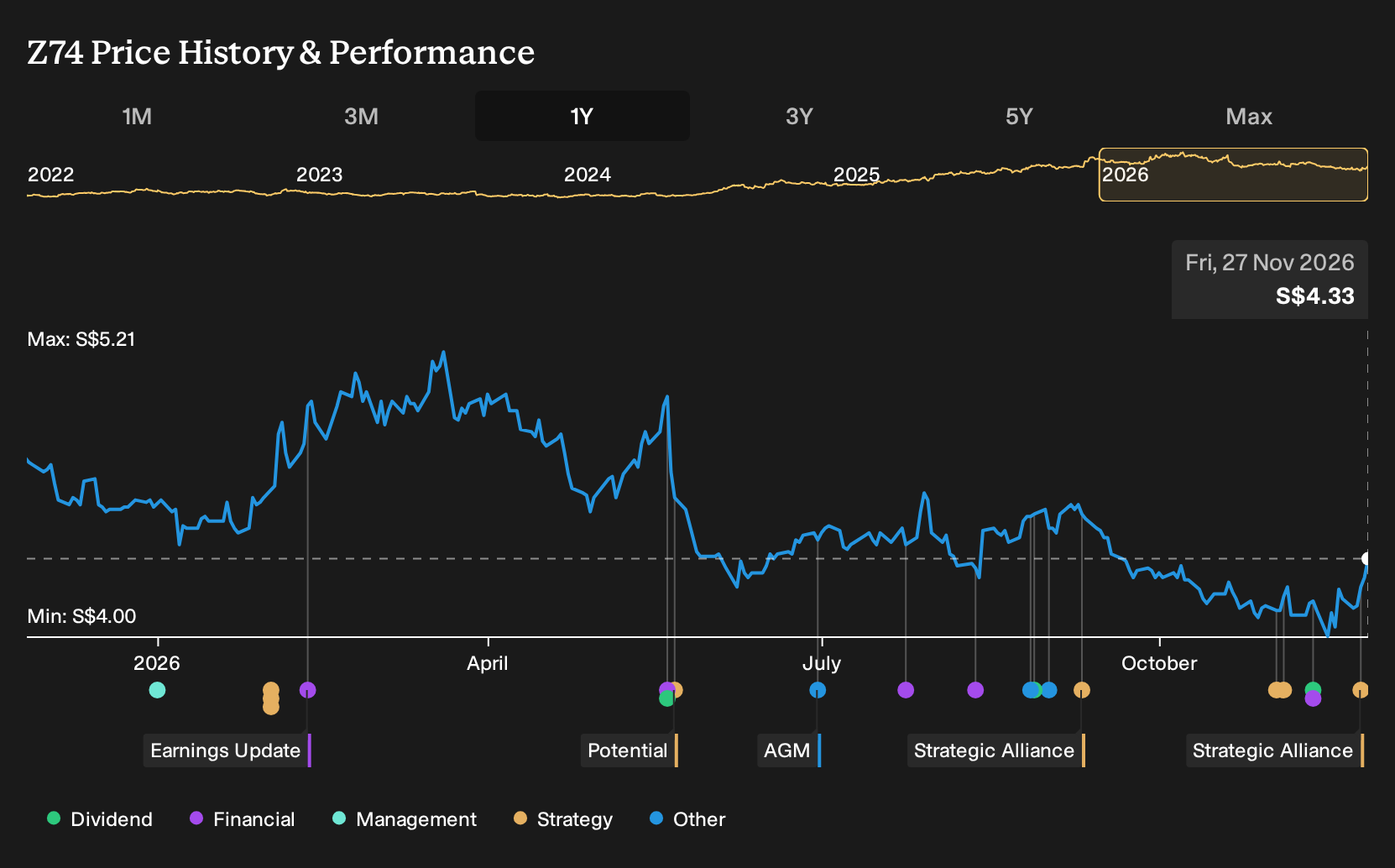
Exploring Other Perspectives
Three fair value estimates from the Simply Wall St Community cluster between S$5.15 and S$10.37, so some retail investors see Singapore Telecommunications as far cheaper than others. Set those views against risks like FX drag or slower EBIT gains, as well as the tariff and chip export headlines, then explore more of those community viewpoints before deciding where you sit.
Explore 2 other Singapore Telecommunications fair value estimates, including one that suggests it could be worth just SGD 5.15.
Decide For Yourself
Disagree with existing narratives? Extraordinary investment outcomes rarely come from following the herd, so consider conducting your own analysis.
- A great starting point for your Singapore Telecommunications research is our analysis highlighting 2 key rewards and 4 important warning signs that could impact your investment decision.
- See our latest analysis for Singapore Telecommunications. The report includes a comprehensive fundamental analysis summarized in a single visual, the Snowflake, which can help you evaluate Singapore Telecommunications' overall financial health at a glance.
Looking For More Investment Ideas Beyond Singapore Telecommunications?
Once you have a view on Singapore Telecommunications, it can help to compare it with other companies that share some of the qualities you care about, whether that is value, balance sheet strength, or resilience.
- If you are hunting for potential value opportunities with quality fundamentals, start with our curated 213 high quality undervalued stocks that already filter for stronger balance sheets and cash flows.
- For investors who prefer steadier profiles and fewer surprises, scan through a 202 resilient stocks with low risk scores that focus on businesses with more resilient risk scores.
- When balance sheet strength is non negotiable, build your watchlist from a list of solid balance sheet and fundamentals (185 results) and compare how those companies stack up against Singapore Telecommunications on leverage and liquidity.
Have feedback on this article? Concerned about the content? Get in touch with us directly. Alternatively, email editorial-team@simplywallst.com