


EN
What Lockheed Martin Holders Got Right
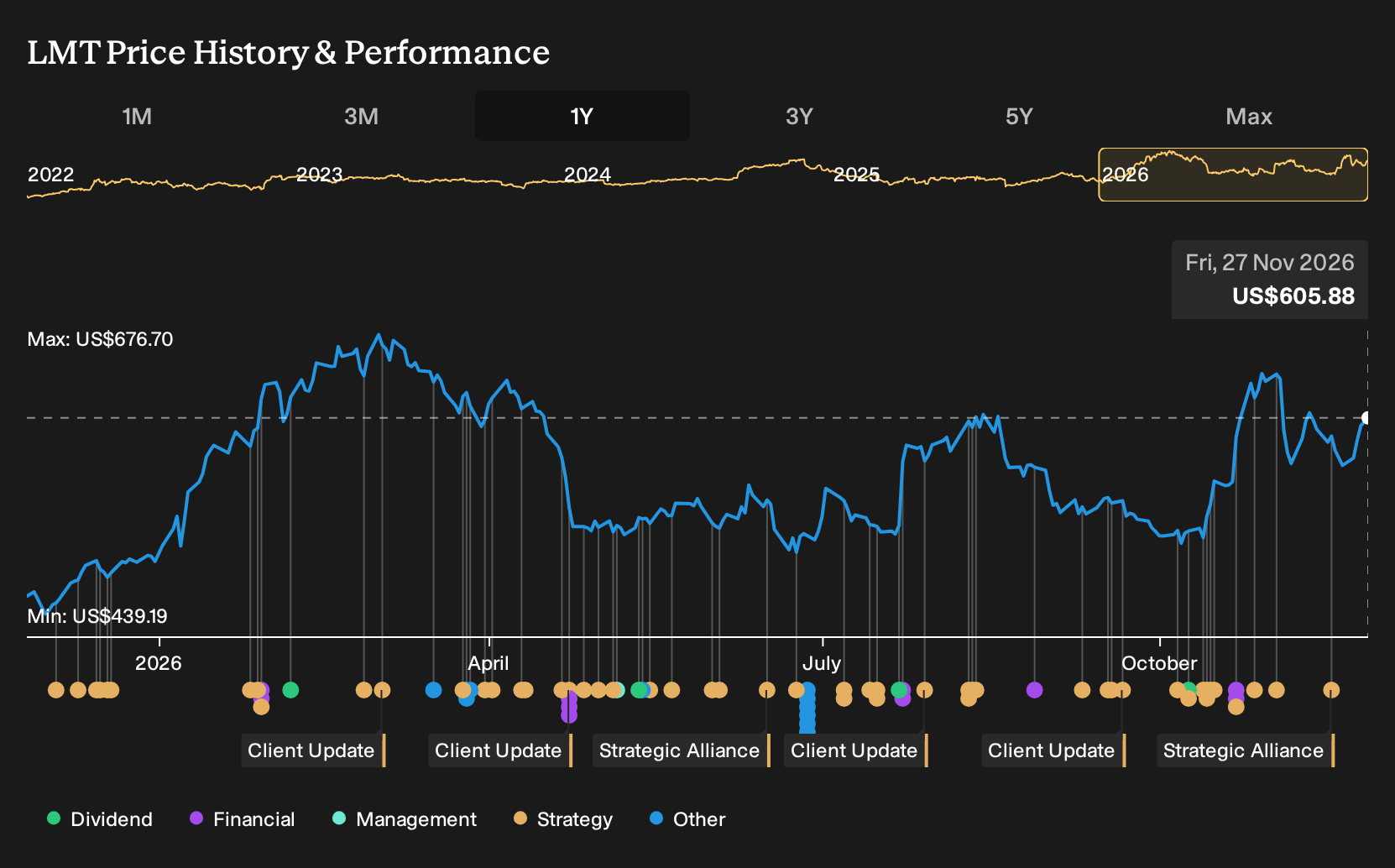
If Lockheed Martin sat on your watchlist instead of in your portfolio, the past year may feel like a missed call. For Lockheed Martin shareholders, the return over the past year was 35.7%, including dividends. The question now is not who guessed right, but what business clue could have helped you judge that surge in missile defense contracts and hypersonic programs was more than hype. Was the key assumption simply that record-long munitions agreements would actually translate into durable earnings power?
The move put Lockheed Martin in the middle of this trade. Scan 29 best rare earth metal stocks for other companies exposed to it.
The Argument You Would Have Been Weighing Up On Lockheed Martin
The shares cost US$454 at the start of the period, so anyone looking at Lockheed Martin had to decide how ambitious to be about digital defense, missiles, and space.
The bullish story pointed to a Fair Value of US$670, a price level implied by expectations of faster recurring revenue growth from next generation air and missile defense programs and space contracts, supported by higher assumed margins and earnings by 2028.
The cautious view anchored on a Fair Value of US$398, based on the risk that defense budgets and ESG pressures might restrain demand for large programs such as the F-35 and leave earnings more vulnerable to cost overruns and fixed price contracts.
What The Results Changed For The Lockheed Martin Debate
Lockheed Martin’s later period was defined by large missile and aircraft wins, including a US$35b THAAD deal and a 10 year F-35 framework. This supported the optimistic view that long contracts could help sustain higher recurring revenue. Q3 2026 also reported higher revenue, higher net income, and a slightly higher net margin of 8.9% versus 8.7%, which challenged the most cautious profitability concerns. Taken together, the evidence pointed in both directions but leaned toward the bullish narrative.
The central question was whether record munitions and fighter agreements would appear in actual sales and margins. When you assess another contractor, watch the order backlog, the length of contracts, and the reported net margin to see whether promised “long cycle” programs are turning into cash rather than remaining only announcements.
What Lockheed Martin's Run Has Already Priced In
Lockheed Martin now trades at US$606 after a 35.7% gain over the past year. The bearish analyst Narrative on Simply Wall St places its Fair Value below that level, reflecting concern that enthusiasm around missiles, space and mission integration might already be generously reflected in the quote.
That Narrative argues buyers at today’s price need continued smooth conversion of the record backlog into cash, while complex joint ventures, global co production and AI heavy systems avoid costly setbacks. The key assumption to test is whether high output munitions programs and mission integration bets can deliver cash without running into redesign, delay or inventory strain.
"Although Lockheed Martin is tying a larger share of its future revenue to space programs and new interceptor concepts, the recent cut to 2026 space profit guidance due to reduced equity earnings from a launch anomaly investigation signals that technical setbacks in joint ventures can absorb more value than current models assume and may drag on segment margins and consolidated earnings if further issues emerge."
Not everyone reads the same price the same way. → See the lower figure this Narrative lands on, and how it gets there
Which Company Could Surprise You Next?
What if your next investment idea came before the headlines? Go straight to the companies whose prices and our estimates still disagree. Three places to start, with the names waiting behind the link.
- Company 1 - 46% below our estimate - target larger LED display installations as software and services shape project value.
- Company 2 - 48% below our estimate - direct intensive AI infrastructure use into advertising tools and integrated messaging products.
- Company 3 - 20% below our estimate - expand manufacturing and coverage for incretin treatments while advancing complementary therapeutic programs.
That is three of the list. See every one of the 32 undervalued companies on it →
Have feedback on this article? Concerned about the content? Get in touch with us directly. Alternatively, email editorial-team@simplywallst.com