


EN
Michael Burry Says Anthropic Is ‘Eating Palantir’s Lunch.’ Now That ANT Stock Is Public, 1 Number Suggests He Could Be Right About PLTR.
In April, Michael Burry posted on X that Anthropic (ANT) is "eating Palantir's (PLTR) lunch." He was referring to Ramp spending data showing that Anthropic was winning 73% of all new enterprise AI spending, though he later deleted that post. Palantir dropped as much as 8% that day. At the time, Burry also said he still held put options on Palantir, a bet that the stock would fall. His last disclosed filing showed puts covering about 5 million shares. Now that Anthropic is public, investors can compare the two companies side by side for the first time. As I wrote recently, Anthropic's record IPO raised $81.3 billion on November 19 and made Amazon (AMZN) and Google about $260 billion richer. I think that's a worry for Palantir, because AI labs like Anthropic are a bigger threat to it than its valuation. Palantir's AIP runs on models from Anthropic and OpenAI. So Anthropic is a supplier to Palantir, but it is also selling to the same businesses.
In the third quarter, Palantir posted revenue of $2.31 billion, up 96% year-on-year. This was the first time it had passed $2 billion in a quarter. U.S. commercial revenue of $984 million jumped 148%, surpassing U.S. government revenue for the first time, even though U.S. government revenue also grew 96% to $953 million. Full-year guidance was raised to about $8.53 billion, which is about 91% growth. Net income also more than doubled to $1.13 billion. So the company posted a blowout quarter in terms of most measures. CEO Alex Karp said, "I don't believe anyone's had consistent results like this in the history of software AI, ever." These numbers don't look like a company that's losing to anyone.
The Number That Supports Burry's Worry
The revenue was strong, but Palantir's bookings seem to be slowing down. Total contract value grew just 6% year-on-year to $2.92 billion in Q3. In comparison, it surged 49% in Q2. Management blamed shorter contracts, meaning customers are signing for less time. This means they will get the option to switch sooner than if they had signed long-term contracts, which is exactly what Burry is worried about. The stock is already about 24% below its 52-week high in October. Revenue is still close to doubling, so for now, it's hard to say that Burry is right. But I think the bookings slowdown is worth keeping an eye on. If it carries on, the threat he's talking about could start squeezing revenue too. Palantir's first 2027 guidance in early February should give a clearer picture.
About Palantir Stock
Palantir builds software that helps governments and businesses use their data and AI. It began with defense and intelligence work, and its AIP platform, which runs AI models like Anthropic's inside a customer's systems, now drives most of its growth. Founded in 2003, Palantir is based in Miami and led by co-founder and CEO Alex Karp.
Palantir's stock is down 4% this year, a bit better than the iShares Expanded Tech-Software ETF's 7% (IGV) drop. It nearly doubled between June 25 and October 9. The rally was driven by a blowout Q2 report in August, when Palantir raised its full-year guidance by its largest amount ever. Since its October 9 peak, the stock has fallen about 24%. Slowing bookings, the November AI sell-off, and fresh competition from a newly listed Anthropic have all weighed on the stock.
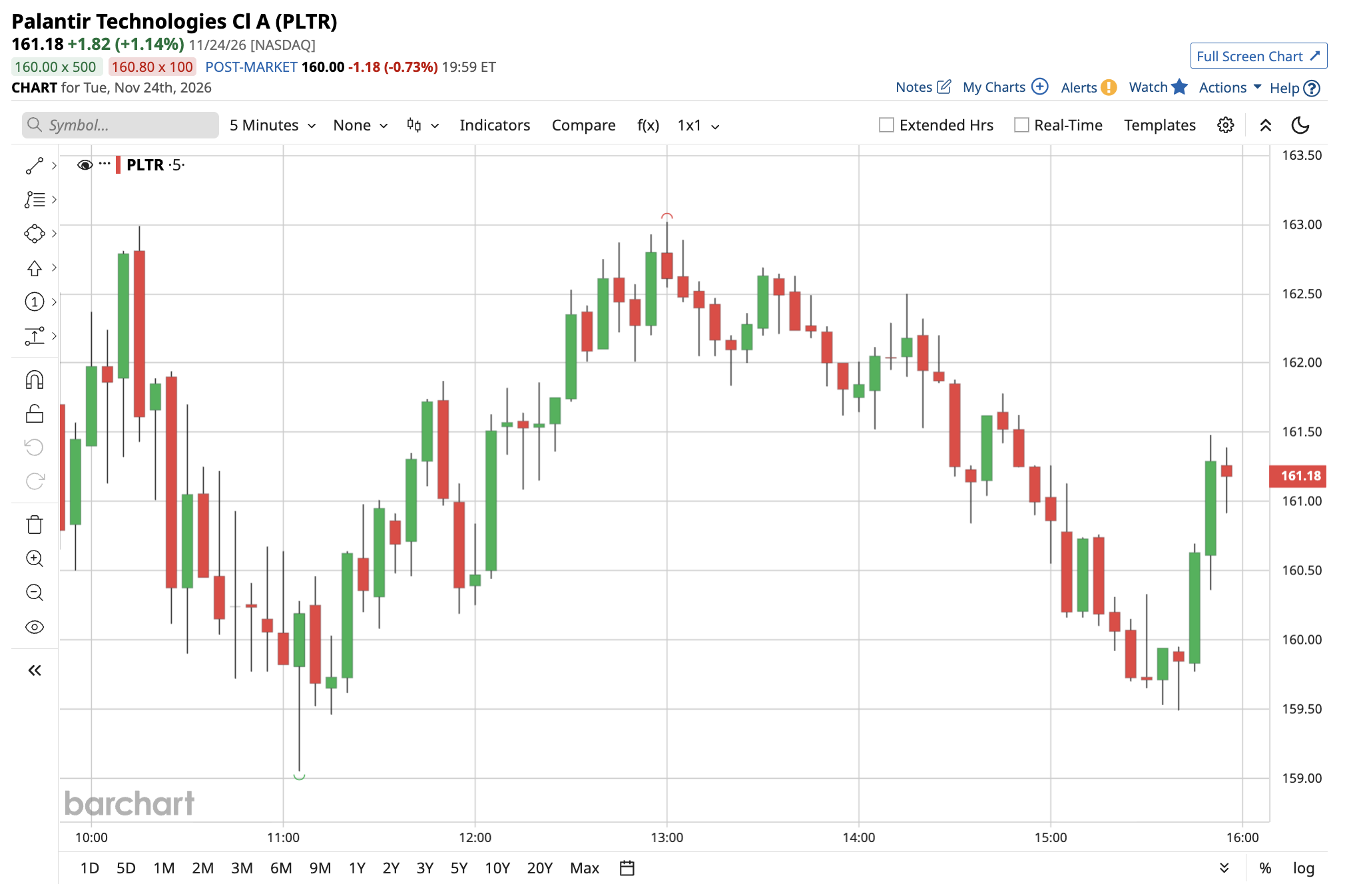
Palantir's forward non-GAAP P/E is 93.65x, about 25% below its five-year average of 124.33x, while its forward price-to-sales ratio of 44.91x is about 23% above its 36.56x average. That's more than double Anthropic's 21.20x, even though Anthropic is growing much faster. The strong EPS outlook helps explain why investors still pay such a high price-to-sales multiple. Analysts expect earnings to grow about 127% in 2026, then 47% to 54% a year through 2029. The balance sheet is exceptional. Palantir holds $10.56 billion in cash against just $225 million in debt, making it essentially debt-free. But I still think paying more than twice Anthropic's sales multiple only makes sense if bookings recover, so that's the number investors should watch.
What Do Analysts Expect for Palantir Stock?
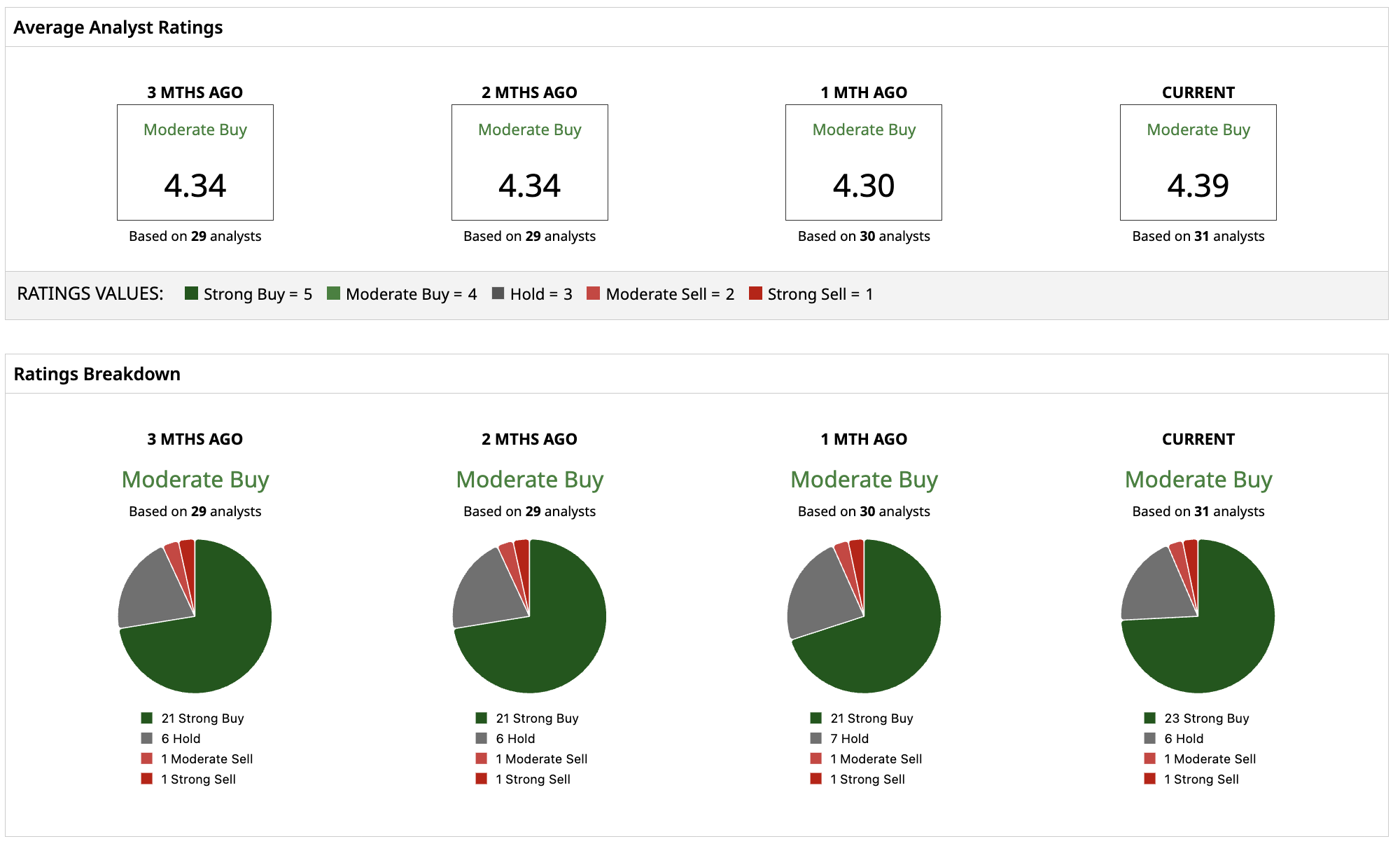
Based on 31 Wall Street analysts, Palantir holds a “Moderate Buy” rating with a mean price target of $223.93, indicating 39% upside.
On the date of publication, Jabran Kundi did not directly have a position in any of the securities mentioned in this article. All information and data in this article is solely for informational purposes. For more information please view the Barchart Disclosure Policy here.