


EN
ECB Rate Shift Focus Might Change The Case For Investing In Allianz (XTRA:ALV)
- Allianz SE presented at the Deutsches Eigenkapitalforum 2026 at the Steigenberger Airport Hotel in Frankfurt on 23 November 2026, updating investors on its digital transformation, AI use and broader operational plans across insurance and asset management.
- Income focused investors are paying closer attention to Allianz as the ECB prepares a data driven policy approach, which links the company’s dividend profile and capital position more tightly to funding conditions and Eurozone rate decisions.
- This article examines how Allianz's investment narrative intersects with rising income investor focus as ECB policy becomes more data driven.
Scan beyond Allianz and compare its income and rate sensitivity profile with other large caps on our curated 39 dividend fortresses for the current ECB policy shift.
Allianz Investment Narrative Recap
To own Allianz, you need to be comfortable with a steady, execution heavy story. The analyst consensus narrative on Simply Wall St frames the business around digital transformation, AI supported efficiency, and disciplined capital use across insurance and asset management. The Frankfurt conference mainly reaffirmed this path, so in the near term the key catalyst still sits in Allianz actually converting those technology projects into lower expense ratios and more stable underwriting results.
The biggest current risk has not shifted. Property and casualty still faces affordability pressure for retail clients and rising severity in large commercial claims, which could push the combined ratio higher. FX volatility and exposure to hyperinflationary markets add another layer of earnings noise, especially when ECB policy makes funding conditions more sensitive for income focused holders.
The recent focus on record third party net inflows of €84b in the first half of 2026 in asset management ties directly into the income and rate discussion. Higher fee based revenue can help Allianz balance insurance volatility when ECB policy becomes more data driven and bond markets react more sharply to each datapoint.
If those inflows remain resilient and are matched by cost discipline, they become a meaningful operational support for earnings and capital strength. Weak execution on integrating new mandates or a reversal in flows would cut into that buffer, leaving Allianz more exposed to FX swings, large loss volatility and any pressure on premium volumes as household budgets stay tight.
Income Focus Meets Analyst Assumptions
Allianz's narrative projects €194.5b revenue and €13.0b earnings by 2029. This is based on analysts assuming 17.6% yearly revenue growth and an earnings increase of about €1.4b from €11.6b today.
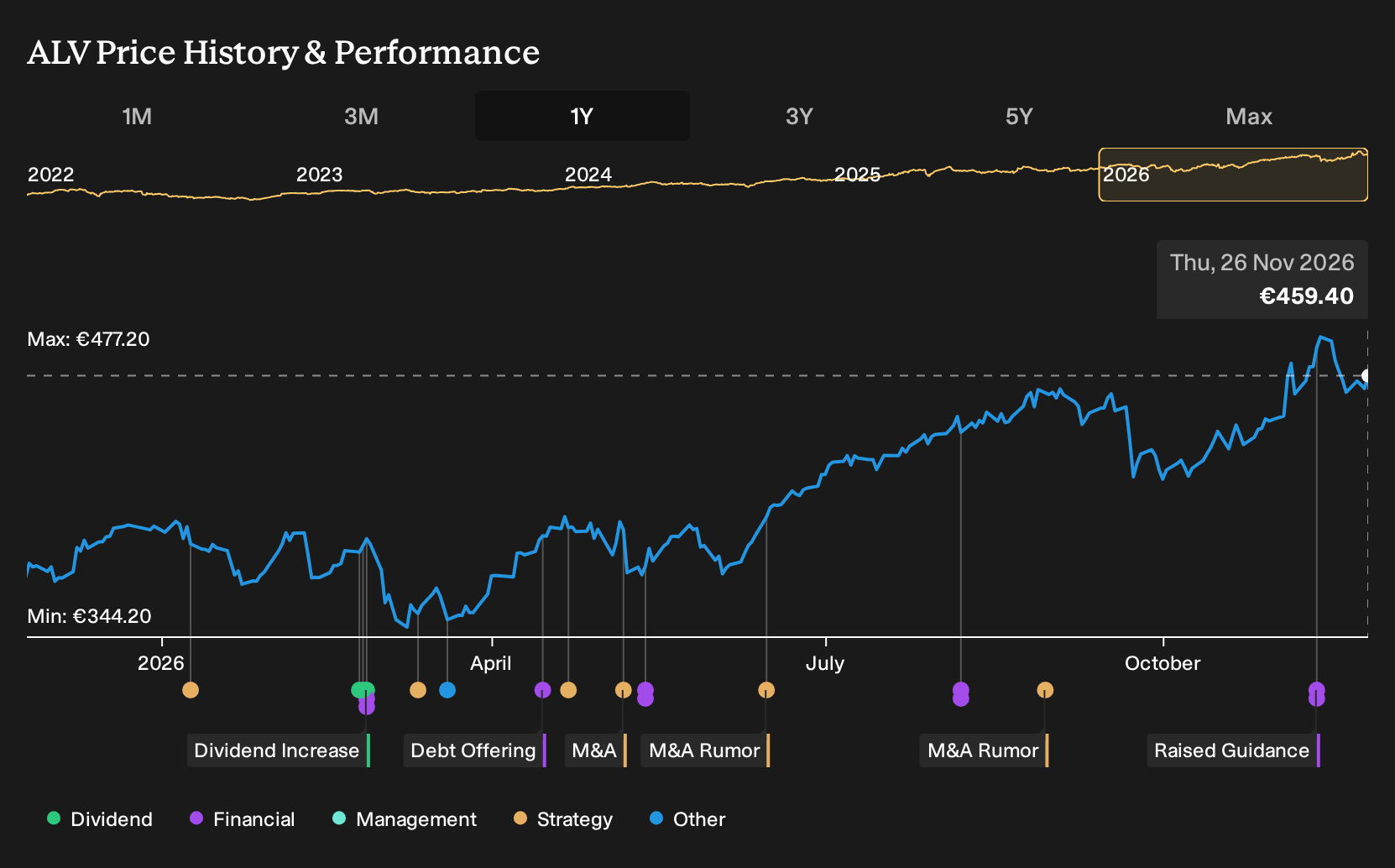
Uncover why Allianz's fair value indicates a 3% potential downside to its current price, which leaves little room for error.
Exploring Other Perspectives
Some of the most optimistic analysts frame Allianz’s AI cost cuts as the real swing factor rather than ECB rate sensitivity, projecting revenue of about €226.6b and earnings of €14.2b by 2029 before this Frankfurt conference. You can compare that optimistic script with more cautious views and decide which story fits your own expectations.
Explore 4 other Allianz fair value estimates, including one that suggests as much as 99% upside from the current price.
Decide For Yourself
Don't just follow the ticker. Dig into the data and build a conviction that's truly your own.
- A great starting point for your Allianz research is our analysis highlighting 4 key rewards that could impact your investment decision.
- See our latest analysis for Allianz. The report includes a comprehensive fundamental analysis summarized in a single visual, the Snowflake, making it easy to evaluate Allianz's overall financial health at a glance.
Looking For More Investment Ideas Beyond Allianz?
Once you understand where Allianz fits in your portfolio, it often helps to line it up against other companies with different income, risk, and balance sheet profiles using the wider Simply Wall St Screener.
- For investors who care most about resilient balance sheets and fundamentals, start with this curated list of solid balance sheet and fundamentals (185 results) to see which large caps meet a similar quality bar.
- If you are hunting for mispriced opportunities rather than established giants, scan through a focused 553 high quality undiscovered gems that highlights companies with solid underlying metrics that the market may not be watching closely yet.
- For anyone who wants to dial back volatility, there is a specialised 201 resilient stocks with low risk scores that filters for businesses with more measured risk scores so you can compare potential ideas side by side.
Have feedback on this article? Concerned about the content? Get in touch with us directly. Alternatively, email editorial-team@simplywallst.com