


EN
Cloud Outage Might Change Microsoft (MSFT) Stock Narrative
- Microsoft is contending with AI-heavy capital spending, a recent 24 hour global Microsoft 365 outage tied to a Windows scalability bug, and an internal Code Red effort to tighten reliability and incident response.
- These pressures are pushing investors to focus less on headline AI wins and more on cash conversion, infrastructure payback, and operational resilience in Microsoft’s core cloud services.
- We will look at how Microsoft’s long term investment case is affected by Code Red reliability fixes and AI driven capex pressure.
Scan how Microsoft’s Code Red reliability push and sovereign cloud deals compare with other large platforms by reviewing the hand picked 52 AI infrastructure stocks shaping the next phase of AI data center buildouts.
Microsoft Investment Narrative Recap
To own Microsoft here, you need to believe heavy AI and data center capex eventually translates into durable cloud, productivity and agentic AI cash flows, not just headline product launches. According to CubanEros, an investor in the Simply Wall St Community, the key watchpoint is whether this spend, now funded from operating strength, keeps earning high returns without straining the balance sheet.
In the short term, the main catalyst is execution on AI infrastructure while keeping Microsoft 365 and Azure reliable after the Code Red outage. The biggest risk is ongoing reliability or security incidents that undermine that trust and delay payback on AI spend. Recent announcements do not materially change that risk reward balance.
The extended sovereignty partnership with Atos matters most right now because it sits exactly where investors are focused: AI heavy spend, cash conversion, and whether Microsoft can win long duration workloads that fit strict European sovereignty rules. These projects test whether today’s data center outlay supports higher value, highly regulated cloud and AI demand.
For your checklist, Atos’ “sovereignty by design” work atop Microsoft’s EU Data Boundary shows how Code Red reliability goals, security controls and AI services need to mesh in practice. Execution risk is real because complex sovereign environments raise operational demands and cost. If Microsoft runs these securely and efficiently, they support the current capex cycle rather than extend it.
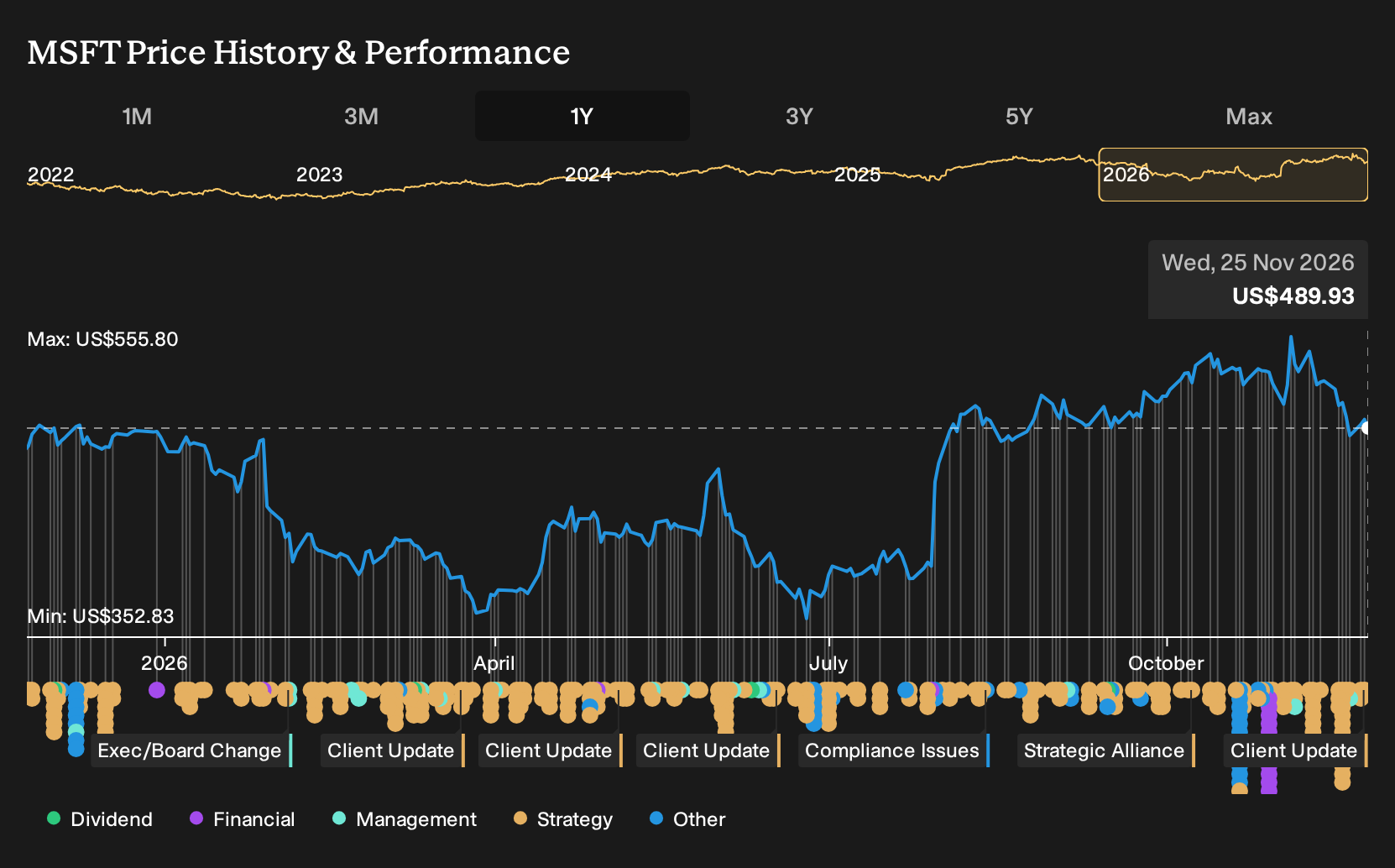
CubanEros estimates a fair value of US$419.91 for Microsoft using a discounted cash flow style framework that combines 10.2% annual revenue growth with a future profit margin of 39.3%, stating that this mix supports a premium multiple on what they view as resilient cash generation.
Uncover why Microsoft's fair value indicates a 14% potential downside to its current price, which could expose a premium that may not hold.
Exploring Other Perspectives
One alternate view puts Code Red reliability worries in the shadow of Microsoft’s heavy AI capex. The lowest analysts were already braced for profit margins to narrow from 41.2% to 33.6%, even while forecasting revenue around US$555.6b and earnings near US$186.7b by 2029. That is a much more cautious story on AI returns. It shows how sharply opinions can differ and why it helps to compare several narratives before deciding how this Atos sovereignty deal might reshape your own Microsoft thesis.
Explore 65 other Microsoft fair value estimates, including one that suggests up to 14% downside from the current price.
Decide For Yourself
Disagree with existing narratives? Extraordinary investment returns rarely come from following the herd, so consider your own analysis and judgment.
- A great starting point for your Microsoft research is our analysis highlighting 4 key rewards and 2 important warning signs that could impact your investment decision.
- See our latest analysis for Microsoft. The report includes a comprehensive fundamental analysis summarized in a single visual, the Snowflake, making it easier to evaluate Microsoft's overall financial health at a glance.
Looking for more ideas beyond Microsoft?
Once you have a view on Microsoft, it can help to compare that thesis with other opportunities that have different balance sheet strength, cash flow profiles, or income potential. The Simply Wall St Screener gives you a quick way to scan for stocks that fit the type of portfolio you want to build, rather than working through tickers one by one.
- If capital preservation and steadier profiles matter most to you, consider reviewing a curated 30 resilient stocks with low risk scores that prioritises resilience over headline excitement.
- If reliable income is your priority, take a look at a shortlist of 39 dividend fortresses that could suit investors who want yield alongside fundamental support.
- If you are hunting for opportunities that the market may be overlooking, test your thesis against a focused group of 21 high quality undiscovered gems that pair quality fundamentals with lower visibility.
Have feedback on this article? Concerned about the content? Get in touch with us directly. Alternatively, email editorial-team@simplywallst.com