


EN
Will Pay Freeze Talks Change Volkswagen (XTRA:VOW3) Narrative
- Volkswagen has intensified 2026 collective bargaining with IG Metall by requesting significant labour cost relief, including a proposed pay freeze for 2027 and 2028, cuts to special payments, and removal of legacy wage components under its Future Plan 2030.
- The push to trim wage structures and reduce around 50,000 positions by 2030 highlights how deeply Volkswagen is trying to reset its fixed cost base after years of generous pay and a complex organisation.
- This raises the question of how Volkswagen's long-running cost pressures, together with the proposed pay freeze, could reshape the investment narrative.
Scan for other automakers already moving on cost discipline and restructuring, and compare Volkswagen with a curated group of list of solid balance sheet and fundamentals (188 results)
Volkswagen Investment Narrative Recap
To own Volkswagen today, an investor needs to believe the group can turn a sprawling, pressured auto empire into a leaner, more disciplined operator while still funding EV and software spending. According to PittTheYounger, an investor in the Simply Wall St Community, the current mix of low profit margins and past execution missteps already weighs heavily on that belief.
The key short term catalyst is whether management can visibly lower its fixed cost base without disrupting production or product plans. The labour cost push and US warranty lawsuit both point to rising execution risk, especially with debt coverage and dividend sustainability already flagged as weak spots.
The most relevant update is Volkswagen’s aggressive labour stance tied to Future Plan 2030. The proposed 2027 to 2028 pay freeze and cuts to special payments are directly linked to the cost reset that PittTheYounger sees as essential, given thin 0.3% net margins and heavy reliance on higher risk funding.
Success in this effort could support the earnings recovery that external forecasts already reflect. Failure, on the other hand, would leave the group juggling legal disputes such as the New Jersey repair case, elevated staff unrest and a dividend that is not covered by earnings or free cash flow. For existing holders, execution on restructuring remains the key variable.
PittTheYounger pins Volkswagen’s fair value at €84.54 by assuming revenue expands 1.2% a year and that future profit margin reaches 2.5%. Together, these assumptions imply a modestly profitable giant that earns its way back to a more typical earnings multiple rather than a premium one.
Uncover why Volkswagen's fair value indicates a 30% potential upside to its current price, which could narrow quickly.
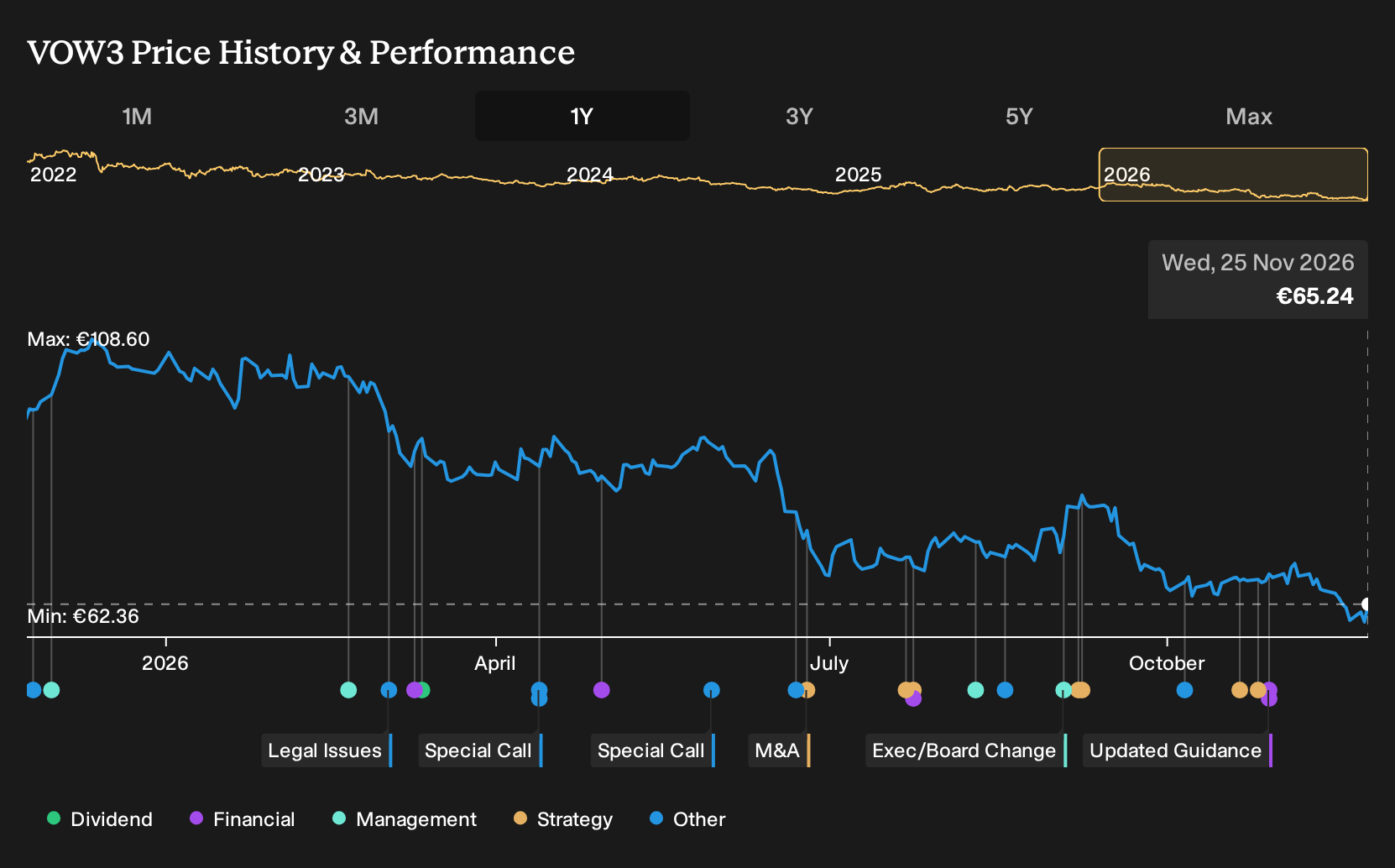
Exploring Other Perspectives
Some of the most optimistic analysts focus on Volkswagen turning its huge cost cutting plan into a profitability catalyst. Before the recent labour and warranty headlines, the bullish cohort was modelling revenue reaching about €350.8b and earnings of €20.4b, which is far above the €5.2b baseline. Those views could shift once this latest news is absorbed; treat them as one possible future and compare several narratives before deciding where you land.
Explore 6 other Volkswagen fair value estimates, including one that suggests potential upside of up to 881% from the current price!
The Verdict Is Yours
Disagree with existing narratives? Extraordinary investment returns rarely come from following the herd, so trust your own analysis.
- A great starting point for your Volkswagen research is our analysis highlighting 2 key rewards and 4 important warning signs that could impact your investment decision.
- See our latest analysis for Volkswagen. The report includes a comprehensive fundamental analysis summarized in a single visual, the Snowflake, making it easy to evaluate Volkswagen's overall financial health at a glance.
Looking for more Volkswagen investment ideas and peers?
Once you have a view on Volkswagen, it helps to set it against a wider watchlist so you can see where the real trade offs are. The Simply Wall St Screener can surface other companies with balance sheets, income statements and risk profiles that fit the kind of portfolio you want to build, rather than leaving you to scan tickers one by one.
- If capital preservation is your first filter, start with companies that pair sturdy financial positions with consistent fundamentals by reviewing the 202 resilient stocks with low risk scores.
- For investors who care most about quality at a sensible entry point, let the Screener surface candidates that combine solid business strength with potentially favourable pricing through the 228 high quality undervalued stocks.
- Income focused readers who still want resilience can narrow in on payout levels backed by robust finances by checking the 237 dividend fortresses.
Have feedback on this article? Concerned about the content? Get in touch with us directly. Alternatively, email editorial-team@simplywallst.com