


EN
Warren Buffett vs. Greg Abel: 1 Berkshire CEO Called Buying Airline Stocks a ‘Mistake.’ The Other Keeps Buying This Ticker.
Berkshire Hathaway (BRK.A) (BRK.B) CEO Greg Abel has now led the firm for three full quarters, and in all three of them, he's continued to add Delta Air Lines' (DAL) stock.
In the first quarter of 2026, Berkshire bought Delta shares worth $2.65 billion. In the second quarter, it raised its stake in Delta by 44%. In its latest 13F filing on Nov. 16, it shows that in the third quarter, it raised its stake by another 12% to 64,450,000 shares.
Berkshire is now one of the airline's largest shareholders. This is especially interesting because the company's last CEO, Warren Buffett, completely walked away from airline stocks years ago. So this is a big change under the new CEO.
In May 2020, amid the COVID-19 pandemic, Berkshire sold all four of its big U.S. airline stocks.
"That was my mistake," said Buffett on buying airline stocks.
His reasoning was that he wasn't sure people would ever fly as much as they did before the pandemic, and that airlines kept piling on debt just to survive. He believed that airlines were a business that spent and borrowed heavily, competed on prices, and got crushed when something went wrong.
Why Greg Abel Sees Delta Differently
A lot has changed at Delta since Buffett's statement. Its American Express (AXP) deal is on track for the full year to exceed $9 billion, which means the money keeps coming even when ticket sales slow down. It is reducing the number of cheaper seats it offers, while main cabin unit revenue grew 17% year-on-year. So it's earning more by focusing on premium travelers.
It also plans to pay down more than $2 billion of debt in 2026, which was one of Buffett's biggest concerns about airline stocks. Despite absorbing a $6 billion increase in fuel costs, it expects to generate a pre-tax profit of roughly $4.5 billion.
I don't think either Abel or Buffett has to be wrong. Buffett's concern over airlines made sense back then. But Delta seems to be pulling away from the risks associated with airlines, so backing it feels reasonable too.
Delta isn't the only example of Abel doing things differently than Buffett. As I recently covered when Berkshire poured nearly $1 billion into Bending Spoons (BSP), Abel is willing to back a young tech company, which Buffett mostly avoided.
About Delta Air Lines Stock
Delta is one of the biggest airlines in the U.S., but its edge now comes mostly from outside the plane ticket itself. Its premium seats and its American Express credit card deal are a big reason why Berkshire sees it differently from the airlines Buffett walked away from. Founded in 1925, Delta is based in Atlanta, Georgia, and is led by CEO Ed Bastian.
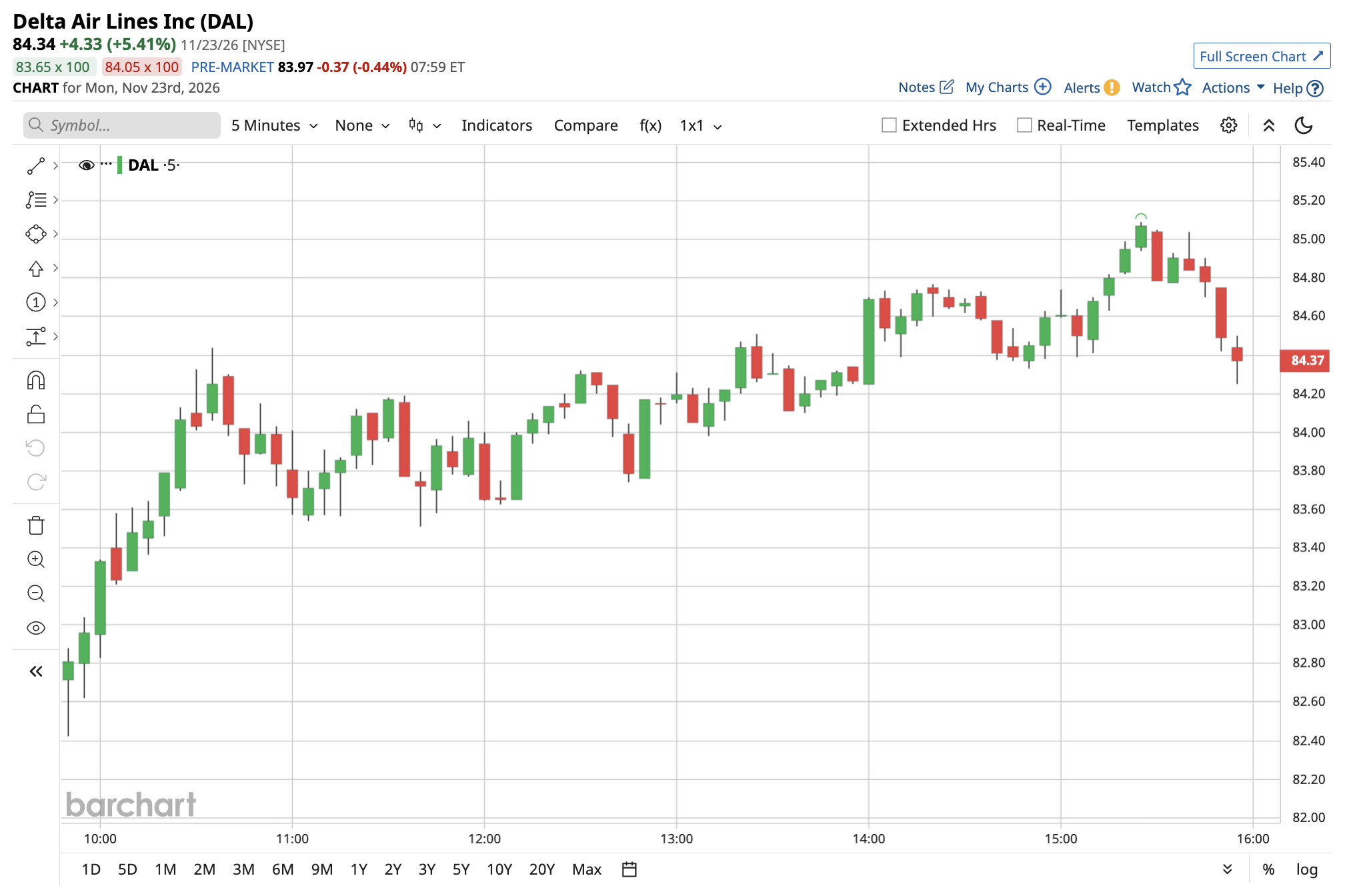
Delta's stock is up about 22% this year, well ahead of the U.S. Global Jets ETF (JETS), which is down 4% during the same period. Strong results, falling oil prices after the Strait of Hormuz reopened, and Berkshire's new stake pushed the stock to an all-time high of $95.68 in early July. It has pulled back since then as higher fuel costs weighed on profits.
Delta looks expensive compared to its own history. Its forward non-GAAP price-to-earnings (P/E) ratio of 14.93x is about 49% above its five-year average of 10.03x, and its forward price-to-sales ratio of 0.70x is around 26% above its 0.55x average. Earnings are expected to dip about 8% this year, mainly due to higher fuel costs. But analysts then expect EPS to bounce back with 38% growth in 2027 and 29% in 2028, bringing the P/E down to about 8.4x by 2028.
Debt is still significant, with $19.94 billion against just $3.79 billion in cash, though Delta is paying it down. Overall, Abel's bet makes sense to me, but at the current price, investors are paying more for it than they would have in the past.
What Do Analysts Expect for Delta Air Lines Stock?
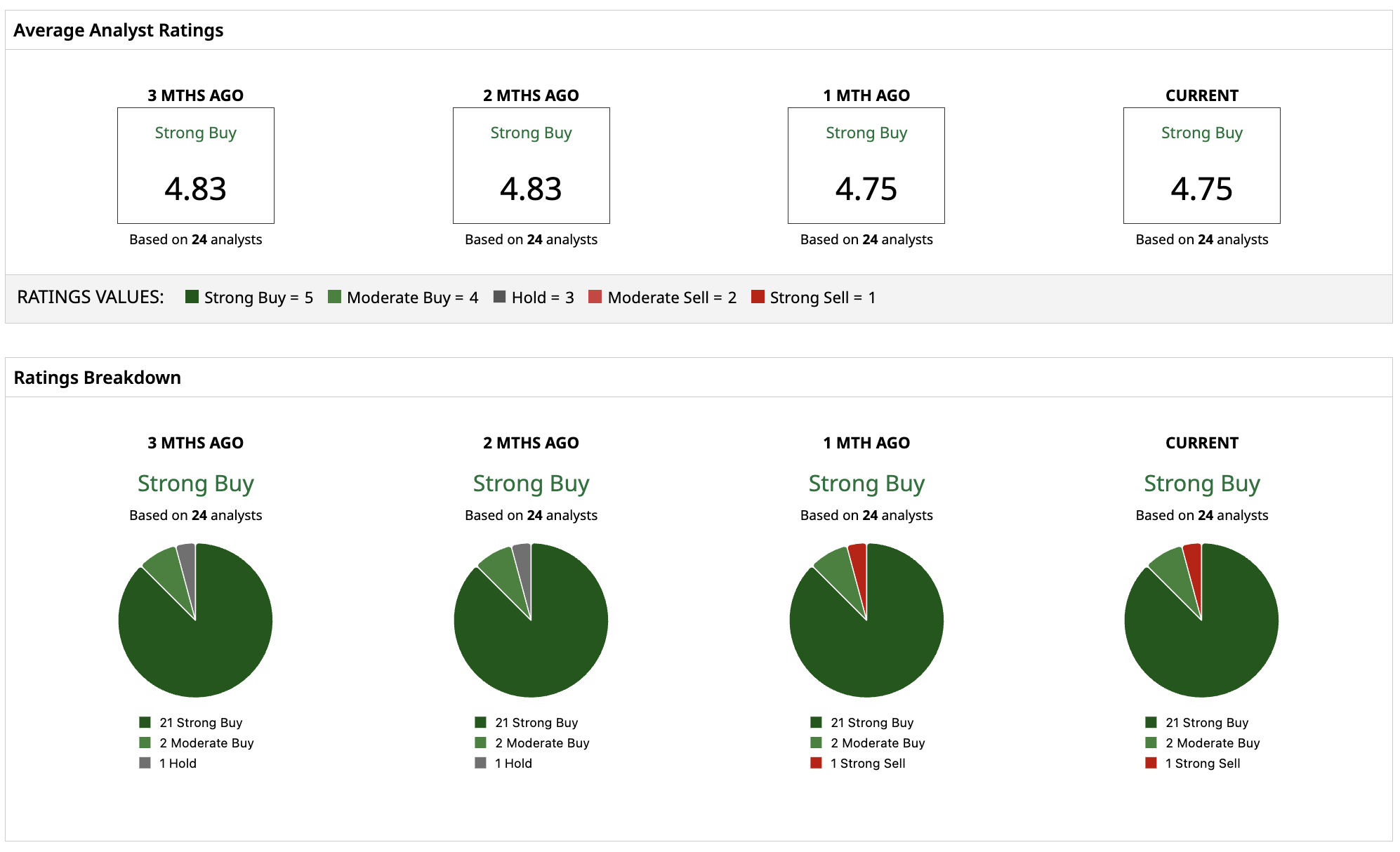
Based on 24 Wall Street analysts, Delta holds a Strong Buy rating with a mean price target of $103.10, indicating 22% upside.
On the date of publication, Jabran Kundi did not directly have a position in any of the securities mentioned in this article. All information and data in this article is solely for informational purposes. For more information please view the Barchart Disclosure Policy here.