


EN
Advertising software stocks Q3 teardown: PubMatic vs the rest

Looking back on advertising software stocks’ Q3 earnings, we examine this quarter’s best and worst performers, including PubMatic NASDAQ:PUBM and its peers.
The digital advertising market is large, growing, and becoming more diverse, both in terms of audiences and media. As a result, there is a growing need for software that enables advertisers to use data to automate and optimize ad placements.
The 5 advertising software stocks we track reported a very strong Q3. As a group, revenues beat analysts’ consensus estimates by 5.7% while next quarter’s revenue guidance was 4.4% above.
Thankfully, share prices of the companies have been resilient as they are up 7.2% on average since the latest earnings results.
PubMatic NASDAQ:PUBM
Powering billions of daily ad impressions across the open internet, PubMatic (NASDAQ:PUBM) operates a technology platform that helps publishers maximize revenue from their digital advertising inventory while giving advertisers more control and transparency.
PubMatic reported revenues of $79.58 million, up 17.1% year on year. This print exceeded analysts’ expectations by 4.6%. Overall, it was a favorable quarter for the company with full-year EBITDA guidance exceeding analysts’ expectations and EBITDA guidance for next quarter beating analysts’ expectations.
"We delivered an outstanding third quarter, with revenue growth accelerating for the third consecutive quarter and adjusted EBITDA more than doubling year-over-year,” said Rajeev Goel, co-founder and CEO of PubMatic. “Our investments in advertiser performance are translating into faster, more profitable growth and a more diversified business. At the same time, AI is accelerating the shift from sell-side targeting to sell-side decisioning, enabling buyers to act on richer intelligence closer to the inventory and first party insights. Our proprietary platform intelligence, agentic leadership and AI-native infrastructure position us to lead this shift, deliver more value to buyers and publishers and expand our market opportunity."
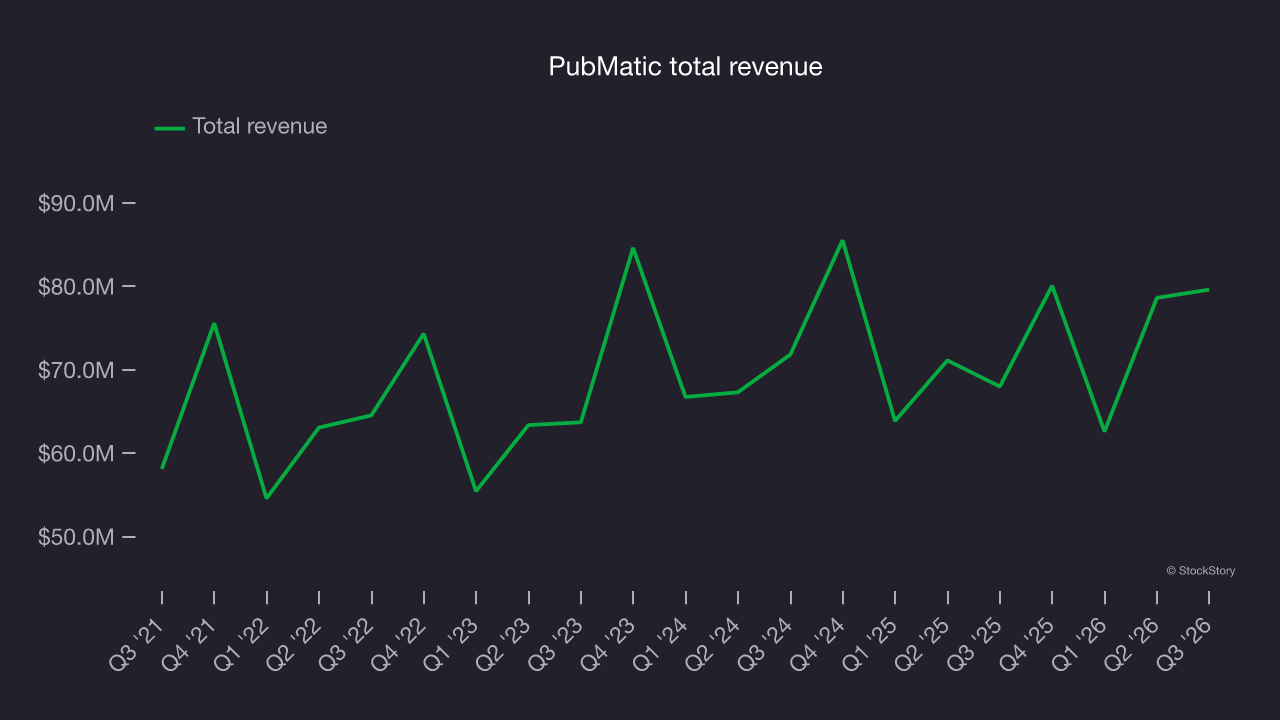
PubMatic delivered the weakest guidance update and weakest full-year guidance update in the group. The market was likely pricing in the results, and the stock is flat since reporting. It currently trades at $19.21.
Is now the time to buy PubMatic? Access our full analysis of the earnings results here, it’s free.
Best Q3: The Trade Desk (NASDAQ:TTD)
Built as an alternative to "walled garden" advertising ecosystems, The Trade Desk (NASDAQ:TTD) provides a cloud-based platform that helps advertisers and agencies plan, manage, and optimize digital advertising campaigns across multiple channels and devices.
The Trade Desk reported revenues of $736 million, flat year on year, outperforming analysts’ expectations by 13%. The business had an exceptional quarter with a solid beat of analysts’ billings estimates and EBITDA guidance for next quarter exceeding analysts’ expectations.
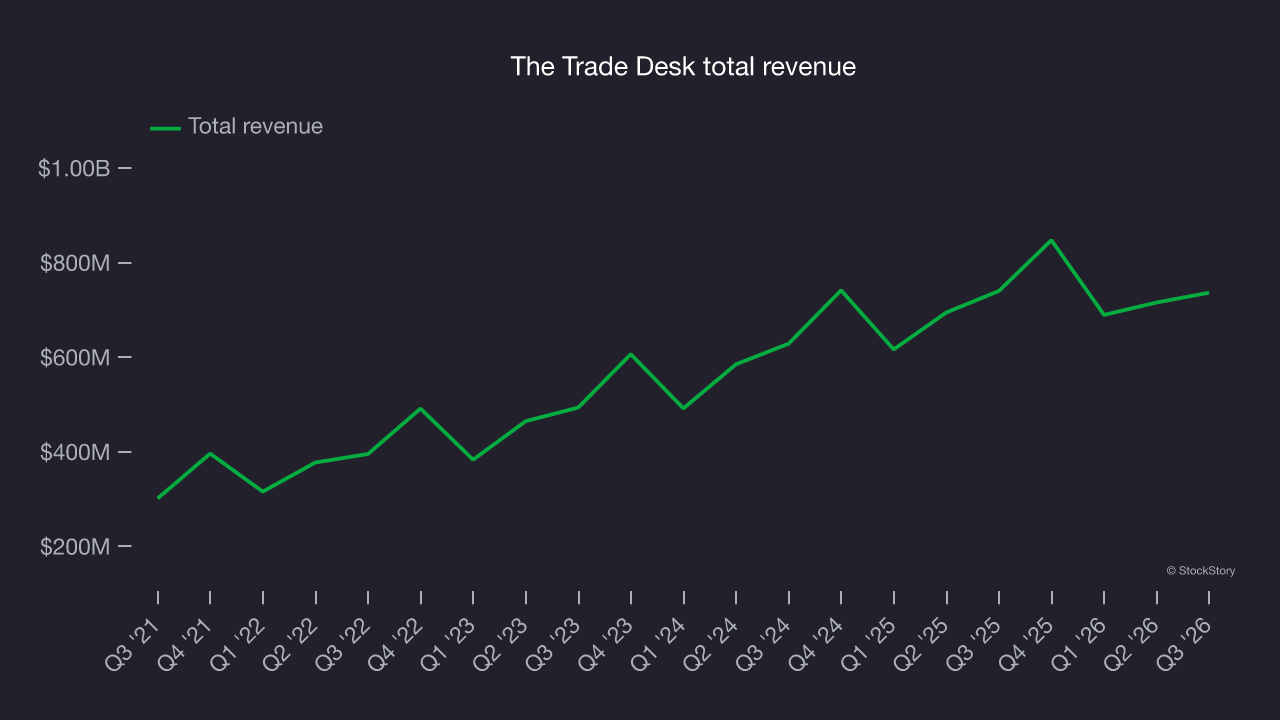
The Trade Desk pulled off the biggest analyst estimate beat and highest guidance raise among its peers. Although it had a fine quarter compared to its peers, the market seems unhappy with the results as the stock is down 4.9% since reporting. It currently trades at $14.20.
Is now the time to buy The Trade Desk? Access our full analysis of the earnings results here, it’s free.
Weakest Q3: DoubleVerify (NYSE:DV)
Using advanced analytics to evaluate over 17 billion digital ad transactions daily, DoubleVerify (NYSE:DV) provides AI-powered technology that verifies digital ads are viewable, fraud-free, brand-suitable, and displayed in the intended geographic location.
DoubleVerify reported revenues of $205.6 million, up 9% year on year, exceeding analysts’ expectations by 1.1%. It was a satisfactory quarter as it also performed sufficiently in other areas of the business.
DoubleVerify delivered the weakest performance against analyst estimates of the whole group. The stock is flat since the results and currently trades at $13.60.
Read our full analysis of DoubleVerify’s results here.
AppLovin (NASDAQ:APP)
Sitting at the crossroads of the mobile advertising ecosystem with over 200 free-to-play games in its portfolio, AppLovin (NASDAQ:APP) provides software solutions that help mobile app developers market, monetize, and grow their apps through AI-powered advertising and analytics tools.
AppLovin reported revenues of $2.18 billion, up 55.5% year on year. This number beat analysts’ expectations by 5.4%. It was an impressive quarter as it also put up EBITDA guidance for next quarter exceeding analysts’ expectations and revenue guidance for next quarter exceeding analysts’ expectations.
AppLovin pulled off the fastest revenue growth in the group. The stock is up 40.4% since reporting and currently trades at $381.53.
Read our full, actionable report on AppLovin here, it’s free.
Zeta Global (NYSE:ZETA)
Powered by an AI engine that processes over one trillion consumer signals monthly, Zeta Global (NYSE:ZETA) operates a data-driven cloud platform that helps companies target, connect, and engage with consumers through personalized marketing across channels like email, social media, and video.
Zeta Global reported revenues of $492.7 million, up 46.1% year on year. This result surpassed analysts’ expectations by 4.6%. Overall, it was a favorable quarter as it also logged a solid beat of analysts’ billings estimates and full-year EBITDA guidance exceeding analysts’ expectations.
Zeta Global scored the highest full-year guidance raise among its peers. The stock is flat since reporting and currently trades at $32.20.
Read our full, actionable report on Zeta Global here, it’s free.
Market update
Over the past year, investors have been forced to repeatedly answer the same question: What is the market’s biggest risk? The answer has changed several times, and each shift has reshaped market leadership.
Late in 2025 and early 2026, artificial intelligence became the market’s primary uncertainty. Investors questioned whether AI would erode software pricing power and weaken competitive moats as AI made it easier to replicate once-differentiated products.
By the spring, technology took a back seat to geopolitics. The U.S. conflict with Iran briefly became the market’s dominant narrative, raising concerns about oil prices, inflation, and global growth. But as energy markets remained orderly and fears of a prolonged supply disruption faded, investors quickly turned their focus back to fundamentals.
Want to invest in winners with rock-solid fundamentals? Check out our Top 5 Growth Stocks and add them to your watchlist. These companies are poised for growth regardless of the political or macroeconomic climate.