


EN
Consumer discretionary - toys and electronics stocks Q3 in review: Mattel vs peers

Earnings results often indicate what direction a company will take in the months ahead. With Q3 behind us, let’s have a look at Mattel NASDAQ:MAT and its peers.
The Consumer Discretionary sector, by definition, is made up of companies selling non-essential goods and services. When economic conditions deteriorate or tastes shift, consumers can easily cut back or eliminate these purchases. For long-term investors with five-year holding periods, this creates a structural challenge: the sector is inherently hit-driven, with low switching costs and fickle customers. As a result, only a handful of companies can reliably grow demand and compound earnings over long periods, which is why our bar is high and High Quality ratings are rare. Toys and electronic entertainment companies design and sell physical toys, board games, video game hardware, and related digital content, relying on intellectual property, licensed characters, and innovation to drive sales. Tailwinds include evergreen demand from children's demographics, growing adult-collector segments, and digital extensions that create new revenue streams from established franchises. Headwinds are considerable: demand is intensely seasonal (concentrated around holidays) making inventory planning risky. Children's attention is increasingly captured by screen-based entertainment and social media, reducing traditional toy engagement. Hit dependency on blockbuster franchises creates revenue volatility, while tariff exposure on imported goods and rising input costs compress margins.
The 4 consumer discretionary - toys and electronics stocks we track reported a favorable Q3. As a group, revenues beat analysts’ consensus estimates by 2.5% while next quarter’s revenue guidance was 2.9% above.
In light of this news, share prices of the companies have held steady. On average, they are relatively unchanged since the latest earnings results.
Mattel NASDAQ:MAT
Known for the creation of iconic toys such as Barbie and Hotwheels, Mattel (NASDAQ:MAT) is a global children's entertainment company specializing in the design and production of consumer products.
Mattel reported revenues of $1.81 billion, up 4.1% year on year. This print fell short of analysts’ expectations by 1.4%. Overall, it was a mixed quarter for the company with a beat of analysts’ EPS estimates but full-year EPS guidance missing analysts’ expectations significantly.
Roger Lynch, Chairman and CEO of Mattel, said: “My first few weeks leading Mattel have reinforced my belief in the company’s potential. I also see clearly where we must improve. We will focus our resources on our greatest opportunities and translate the strength of Mattel's portfolio and capabilities into more consistent financial performance. Our priorities are clear: strengthen our brands and win in toys, drive innovation and creativity, and invest with discipline to drive profitable growth.”
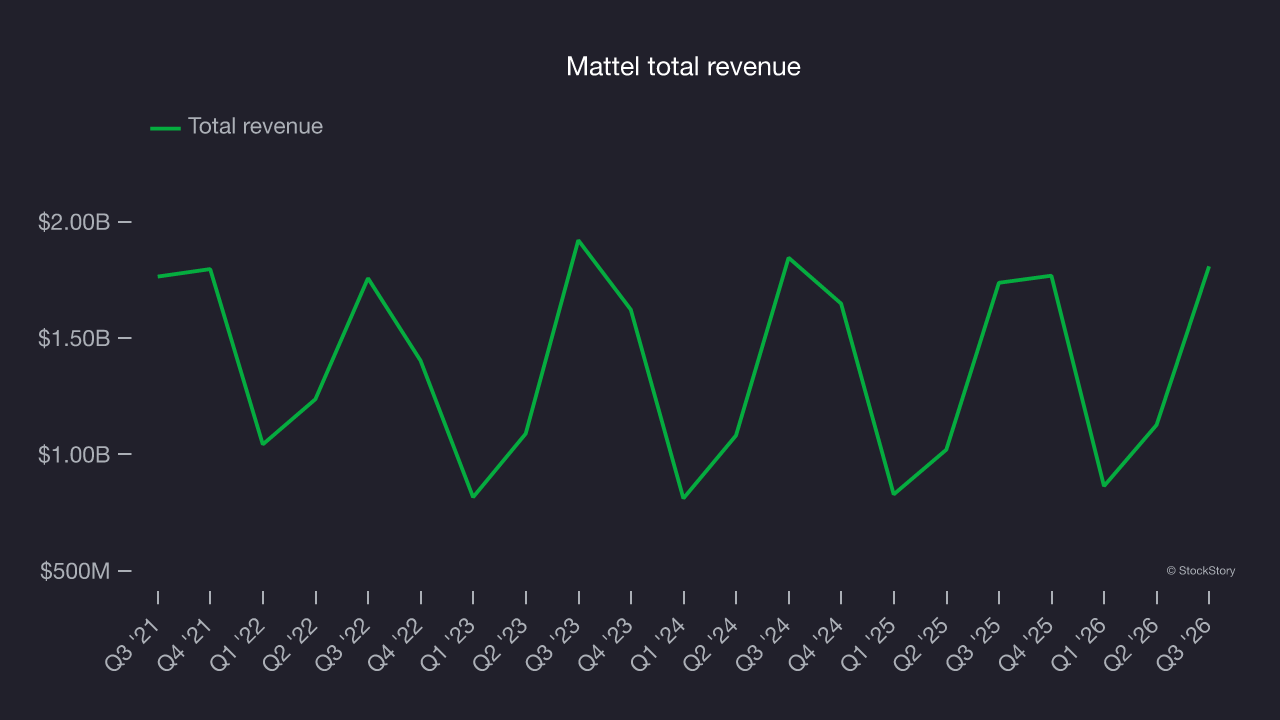
Mattel delivered the weakest performance against analyst estimates in the group. The market seems disappointed with the results as the stock is down 6.5% since reporting and currently trades at $13.99.
Read our full report on Mattel here, it’s free.
Best Q3: Hasbro (NASDAQ:HAS)
Credited with the creation of toys such as Mr. Potato Head and the Rubik’s Cube, Hasbro (NASDAQ:HAS) is a global entertainment company offering a diverse range of toys, games, and multimedia experiences for children and families.
Hasbro reported revenues of $1.60 billion, up 15% year on year, outperforming analysts’ expectations by 7.9%. The business had an impressive quarter with a beat of analysts’ EPS estimates and EBITDA estimates.
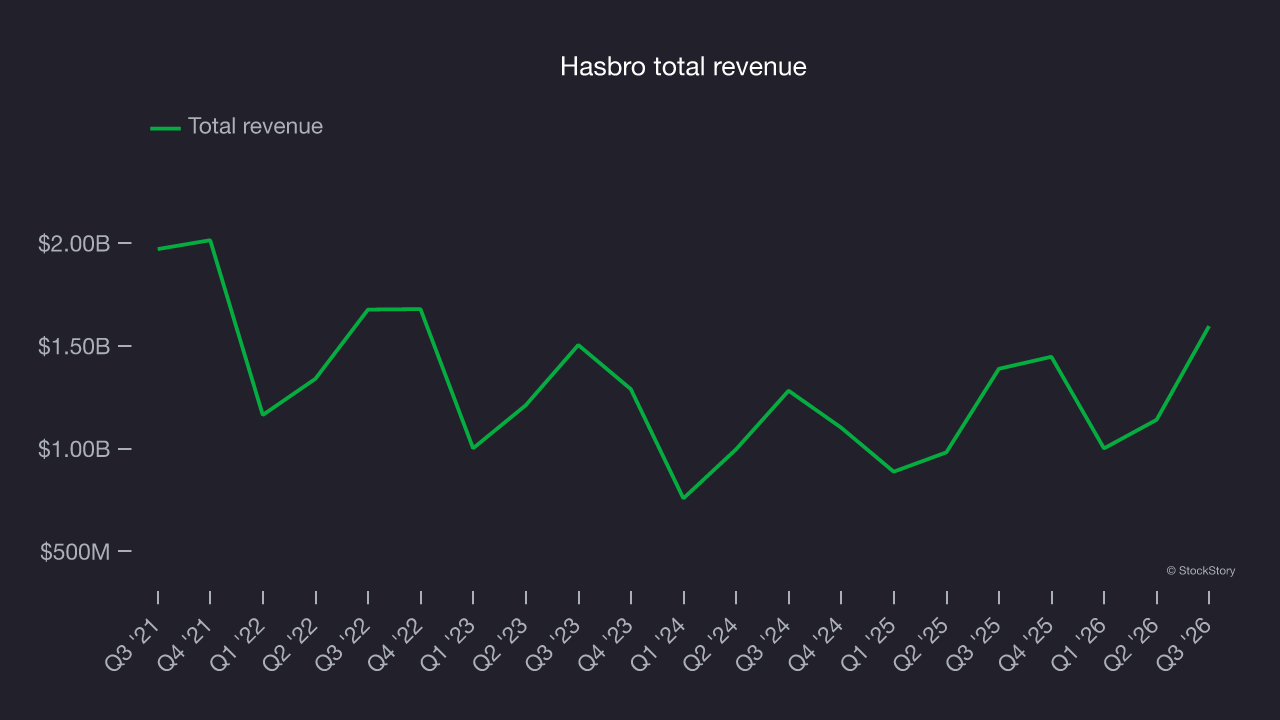
Hasbro delivered the biggest analyst estimate beat and fastest revenue growth among its peers. The market seems happy with the results as the stock is up 11.1% since reporting. It currently trades at $109.43.
Is now the time to buy Hasbro? Access our full analysis of the earnings results here, it’s free.
Funko (NASDAQ:FNKO)
Boasting partnerships with media franchises like Marvel and One Piece, Funko (NASDAQ:FNKO) is a company specializing in creating and distributing licensed pop culture collectibles.
Funko reported revenues of $258.3 million, up 3% year on year, exceeding analysts’ expectations by 3.5%. It may have had the worst quarter among its peers, but its results were still good as it also locked in a beat of analysts’ EPS estimates and a solid beat of analysts’ EBITDA estimates.
As expected, the stock is down 5.9% since the results and currently trades at $5.77.
Read our full analysis of Funko’s results here.
Bark (NYSE:BARK)
Making a name for itself with the BarkBox, Bark (NYSE:BARK) specializes in subscription-based, personalized pet products.
Bark reported revenues of $87.56 million, down 18.1% year on year. This result met analysts’ expectations. Overall, it was a favorable quarter as it also logged EBITDA guidance for next quarter exceeding analysts’ expectations and a beat of analysts’ EPS estimates.
Bark had the slowest revenue growth of the whole group. The stock is up 2.7% since reporting and currently trades at $8.58.
Read our full, actionable report on Bark here, it’s free.
Market update
Over the past year, investors have been forced to repeatedly answer the same question: What is the market’s biggest risk? The answer has changed several times, and each shift has reshaped market leadership.
Late in 2025 and early 2026, artificial intelligence became the market’s primary uncertainty. Investors questioned whether AI would erode software pricing power and weaken competitive moats as AI made it easier to replicate once-differentiated products.
By the spring, technology took a back seat to geopolitics. The U.S. conflict with Iran briefly became the market’s dominant narrative, raising concerns about oil prices, inflation, and global growth. But as energy markets remained orderly and fears of a prolonged supply disruption faded, investors quickly turned their focus back to fundamentals.
Want to invest in winners with rock-solid fundamentals? Check out our Top 5 Growth Stocks and add them to your watchlist. These companies are poised for growth regardless of the political or macroeconomic climate.