


EN
Morgan Stanley Downgrades Ambarella Stock After Disappointing Earnings Results
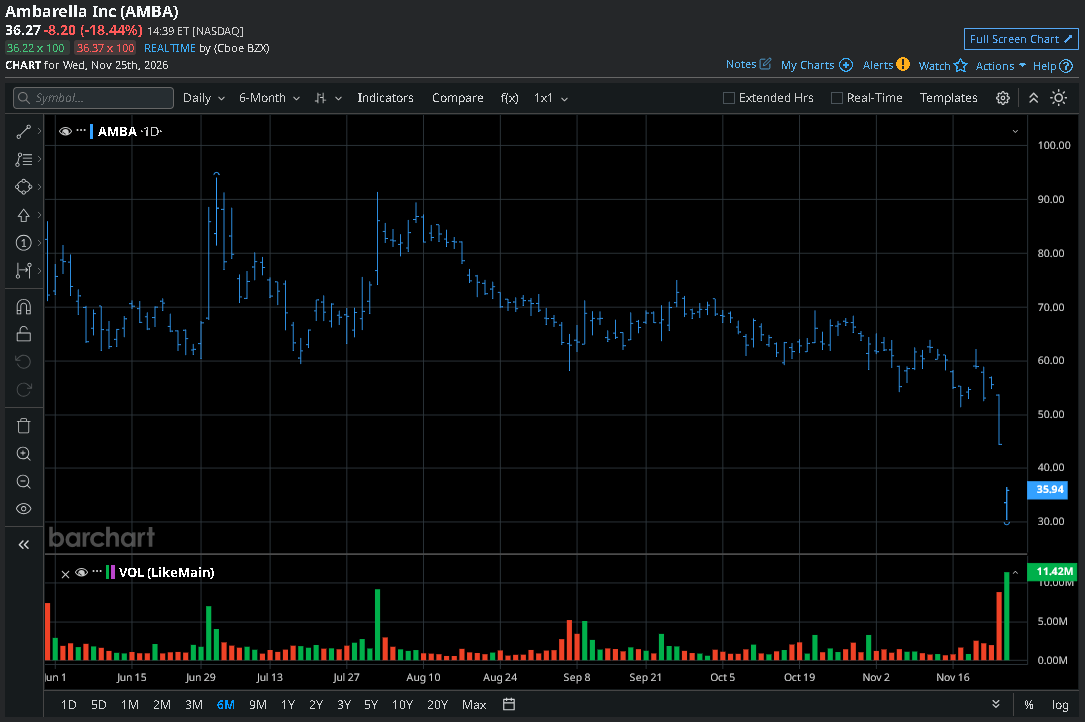
Ambarella (AMBA) shares tanked on Wednesday after the chip designer reported weaker-than-expected Q3 and issued disappointing guidance for the future.
That then resulted in Morgan Stanley’s senior analyst Joseph Moore cautioning against betting on a swift recovery in AMBA stock, which is now down about 60% versus its year-to-date high in the final week of May.
What Triggered a Sell-Off in Ambarella Stock
For the January quarter, management expects revenue to fall between $70 million and $75 million. The midpoint of that range implies a 37% sequential decline and falls sharply below the $112 million consensus.
The problem starts with a component Ambarella’s customers need alongside its processors. As memory becomes too expensive or hard to secure, manufacturers will likely cut production and order fewer AMBA chips.
According to the Morgan Stanley analyst, the squeeze first hit consumer connected devices but has since spread to enterprise and automotive customers, widening the impact on Ambarella’s sales.
AMBA shares’ relative strength index (RSI) now sits in the mid-20s, indicating intense selling pressure that may drive it even lower in the months ahead.
Morgan Stanley’s Bearish Call on AMBA Shares
Moore trimmed his price objective on Ambarella shares this morning to $42, citing higher memory prices and shortages that are forcing some of the company’s customers to rethink how many devices they can afford to build.
Morgan Stanley reduced its 2027 sales estimate for AMBA to $485 million tops — down about 17% from its earlier projection.
The firm still sees merit in Ambarella’s tech, but its automotive business has taken much longer to develop than he expected, and the analyst believes it will take years for sales through partners to reach meaningful scale.
Note that insiders have also predominantly unloaded AMBA in recent months, the optics of which are clearly bearish for the semiconductor company.
How Wall Street Recommends Playing Ambarella
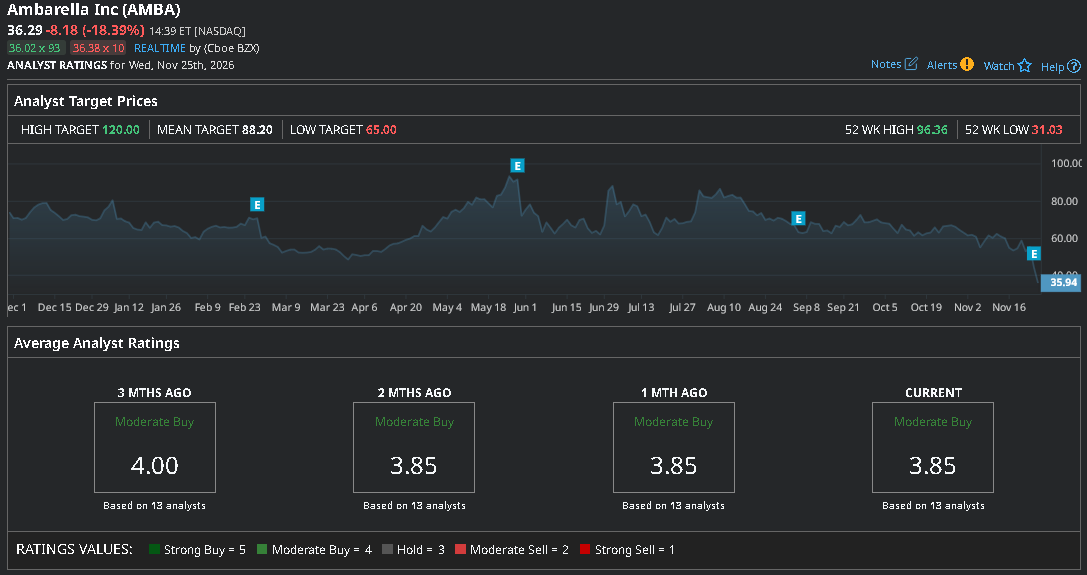
Heading into Nov. 25, Wall Street had a consensus Moderate Buy rating on Ambarella with a mean price target of about $88.
However, it’s reasonable to expect downward revisions much like Morgan Stanley’s as other firms attempt to bake in management’s disappointing guidance into estimates in the weeks ahead.
On the date of publication, Wajeeh Khan did not directly have a position in any of the securities mentioned in this article. All information and data in this article is solely for informational purposes. For more information please view the Barchart Disclosure Policy here.