


EN
Zevia, Bunge Global, and Coca-Cola Consolidated shares skyrocket and plummet, what you need to know
What happened?
A number of stocks traded in opposite directions in the afternoon session after third-quarter 2026 U.S. economic growth accelerated, October 2026 personal income rose and weekly unemployment claims declined.
The U.S. Bureau of Economic Analysis (BEA) reported in its second estimate that real gross domestic product (GDP) increased at an annual rate of 4.3% in the third quarter of 2026, up from 2.2% in the second quarter of 2026.
In a separate release, the BEA reported that personal income increased $201.8 billion, or 0.7% at a monthly rate, in October 2026, while disposable personal income rose $200.5 billion, or 0.8%. Personal consumption expenditures (PCE) increased $63.8 billion, or 0.3%, reflecting increases of $11.8 billion in spending on goods and $52.1 billion in spending on services.
The U.S. Department of Labor reported that seasonally adjusted initial unemployment claims fell by 13,000 to 189,000 in the week ending November 21, 2026, from the previous week's revised level of 202,000. The release also showed that the 4-week moving average decreased by 1,500 to 196,000.
Stronger economic growth, rising income and low unemployment claims can support household budgets and demand for everyday goods. Share prices of consumer staples companies often rise when investors expect steady consumer spending.
The stock market overreacts to news, and big price drops can present good opportunities to buy high-quality stocks.
Among others, the following stocks were impacted:
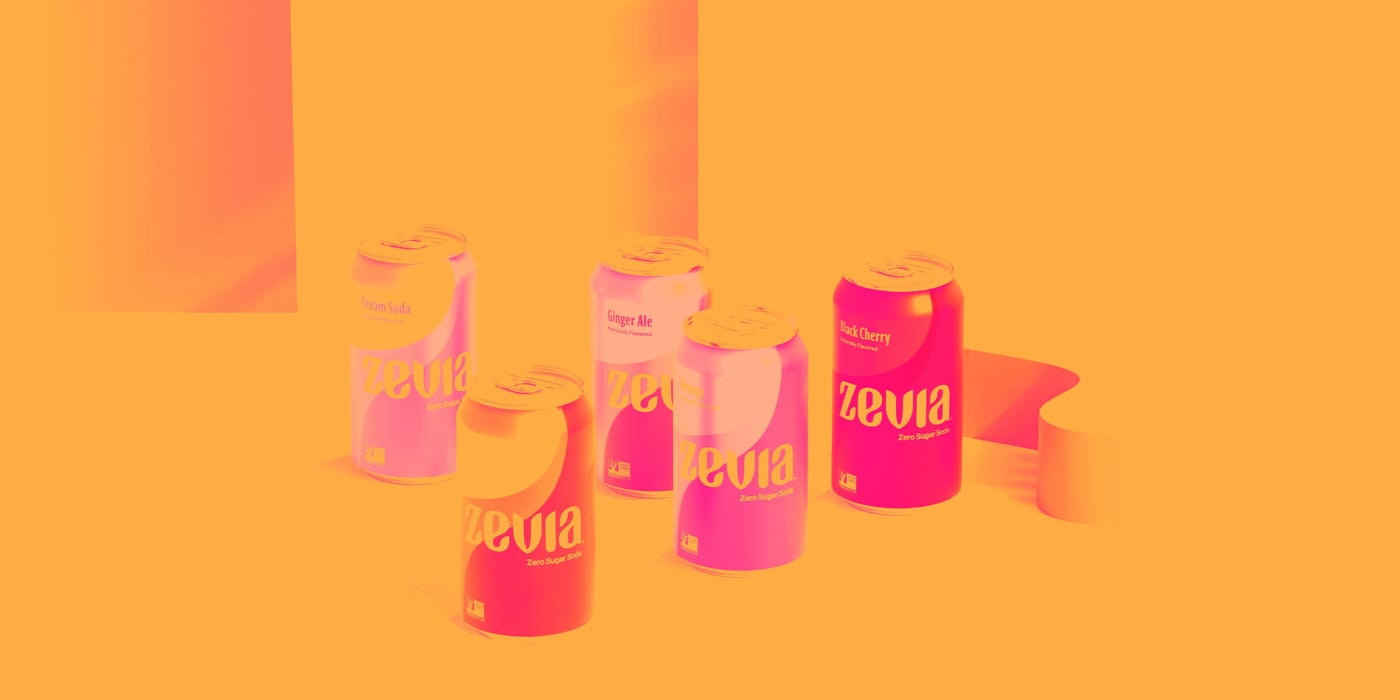
- Beverages, alcohol, and tobacco company Zevia fell 0.2%. Is now the time to buy Zevia? Access our full analysis report here, it’s free.
- Ingredients, flavors & fragrances company Bunge Global jumped 5.8%. Is now the time to buy Bunge Global? Access our full analysis report here, it’s free.
- Beverages, alcohol, and tobacco company Coca-Cola Consolidated jumped 5.2%.
Zooming in on Bunge Global
Bunge Global’s shares are not very volatile and have only had 4 moves greater than 5% over the last year. In that context, today’s move indicates the market considers this news meaningful, although it might not be something that would fundamentally change its perception of the business.
The biggest move we wrote about over the last year was 3 months ago when the stock dropped 3.3% on the news that national cattle shortages and volatile livestock prices squeezed operating margins and prompted outlook cuts across the food production industry. The historic U.S. cattle shortage, which has pushed herd sizes to a 75-year low following years of severe Western drought, has drastically elevated procurement costs for meatpackers, according to Reuters.
This persistent imbalance was highlighted when industry leader Tyson Foods cut its fiscal 2026 adjusted operating income outlook to a range of $2.1 billion to $2.3 billion, down $100 million from its previous forecast, due to worsening beef-segment losses. Tyson projected its full-year adjusted operating loss for the beef business will widen to between $500 million and $650 million, up from its prior estimate of a $350 million to $500 million loss, the company said in its latest financial disclosures. To mitigate these supply-chain headwinds and restructure its beef network, Tyson announced it is closing processing facilities in Joslin, Illinois, and Eagle Mountain, Utah, while pursuing a sale of its Pasco, Washington plant, according to the Wall Street Journal.
These closures follow the shutdown of a massive plant in Lexington, Nebraska earlier this year, collectively resulting in thousands of sector lay-offs. Despite plans by the Trump administration to lift a ban on Mexican cattle imports, chief operating officer Wes Morris noted on an earnings call that it will take up to a year for the industry to benefit, as imported feeder cattle must spend time grazing and fattening before slaughter.
Bunge Global is down 3.7% since the beginning of the year, and at $89.26 per share, it is trading 32.1% below its 52-week high of $131.41 from June 2026. Investors who bought $1,000 worth of Bunge Global’s shares 5 years ago would now be looking at only $986.49.
ALSO WORTH WATCHING: Nvidia’s Quiet Partner. Nvidia’s chips cost a hundred grand. The connectors that make them work cost even more. One company makes them all.
Every AI server needs specialized infrastructure the chip companies don’t make. High-speed cables. Power connectors. Thermal sensors. This 90-year-old company built a monopoly on it. The AI boom just started. This stock is still flying under the radar. Claim The Stock Ticker Here for FREE.