


EN
Nutanix’s Q3 CY2026 sales beat estimates but stock drops on weak guidance

Hybrid multicloud computing company Nutanix (NASDAQ:NTNX) beat Wall Street’s revenue expectations in calendar Q3 2026 [fiscal Q1 2027], with revenue rising 15.2% year on year to $772.4 million. The company expects next quarter’s revenue to be around $825 million, close to analysts’ consensus estimates. Its non-GAAP profit of $0.73 per share was 20.7% above analysts’ consensus estimates.
For more on Nutanix, read our full research report for free.
Nutanix Q3 CY2026 highlights:
- Revenue $772.4 million vs S&P analysts’ consensus estimates of $762.9 million (15.2% year-on-year growth, 1.3% beat)
- Adjusted EPS $0.73 vs S&P analysts’ consensus estimates of $0.61 (20.7% beat)
- Adjusted operating income $248.1 million vs analysts’ consensus estimates of $206.7 million (32.1% margin, 20% beat)
- Revenue guidance The company reconfirmed its revenue guidance for the full year of $3.21 billion at the midpoint
- Operating margin 18.5%, up from 7.4% in the same quarter last year
- Free cash flow margin 27.1%, down from 36.7% in the previous quarter
- Annual recurring revenue $2.63 billion vs analysts’ consensus estimates of $2.64 billion (15.3% year-on-year growth, in line)
- Billings $828.1 million at quarter end, up 17% year on year
- Market capitalization $15.57 billion
Revenue growth
A company’s long-term performance is an indicator of its overall quality. Any business can post a good quarter or two, but many enduring ones grow for years. Over the last five years, Nutanix grew its revenue at a 15.1% compounded annual growth rate. Though this growth is acceptable on an absolute basis, software companies need to deliver more than just revenue growth, given the sector’s potential for significant earnings volatility. The bar for the sector is particularly high, reflecting the non-essential and hit-driven nature of the products and services offered. Additionally, the five-year growth period starts around Covid, when revenue was depressed before rebounding. Still, there are other things to like about Nutanix.
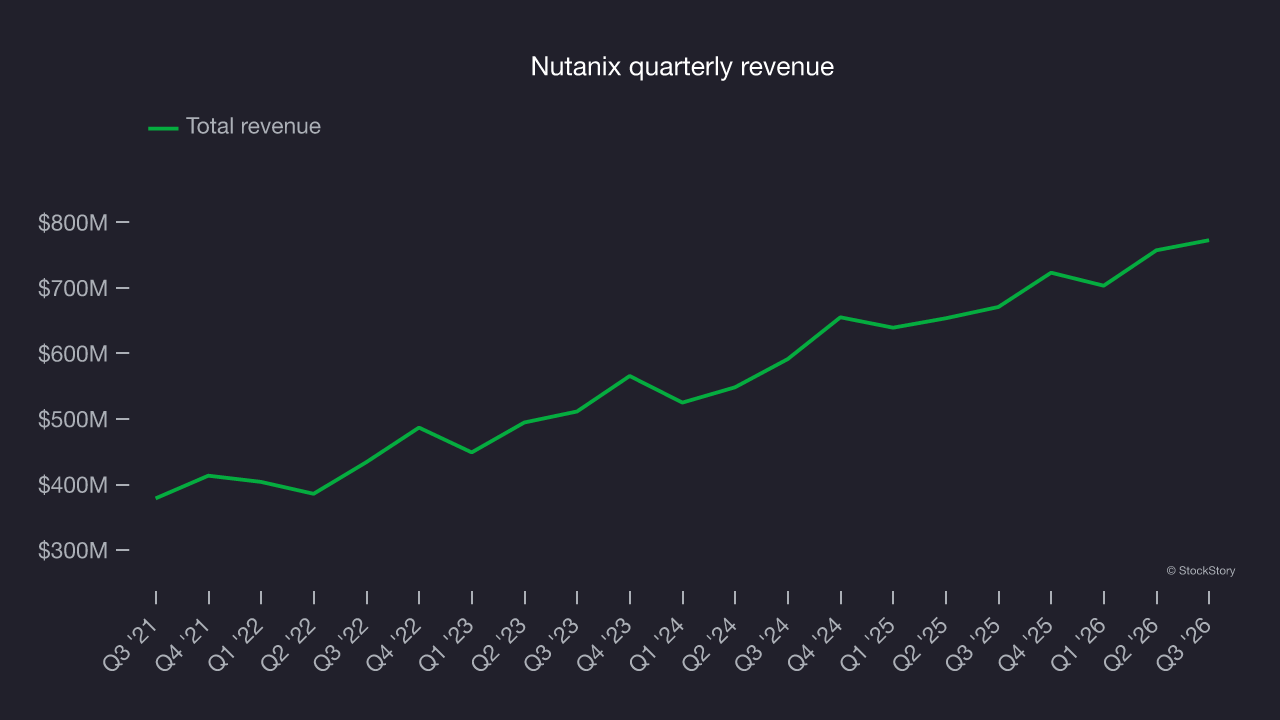
Long-term growth is the most important, but within software, a half-decade historical view may miss new innovations or demand cycles. Nutanix’s annualized revenue growth of 15.2% over the last two years aligns with its five-year trend, suggesting its demand was stable.
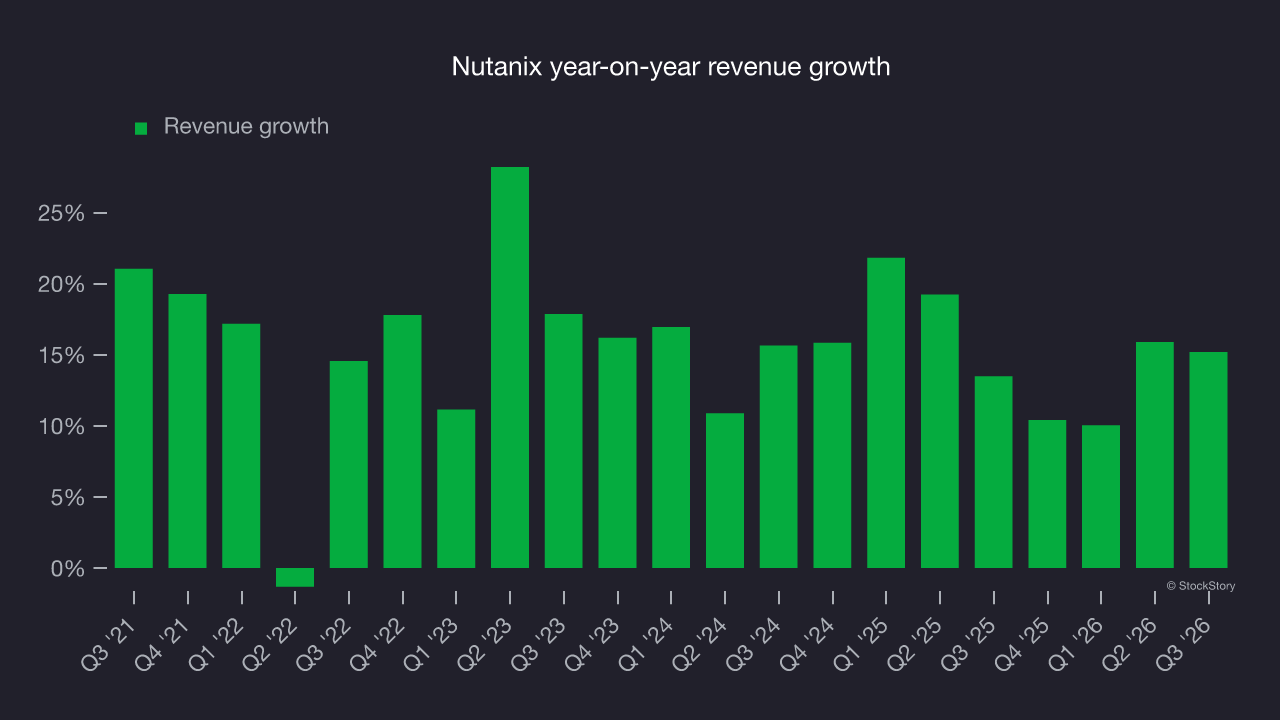
This quarter, Nutanix reported year-on-year revenue growth of 15.2%, and its $772.4 million in revenue exceeded Wall Street’s consensus estimates by 1.3%. Management is guiding for a 14.1% year-on-year increase in revenue next quarter.
Looking further ahead, sell-side analysts expect revenue to grow 12.5% over the next 12 months, according to S&P, a slight deceleration versus the last two years. This underwhelming projection indicates its products and services will see some demand headwinds. On the positive side, the company is performing well on other measures of financial health.
Annual recurring revenue
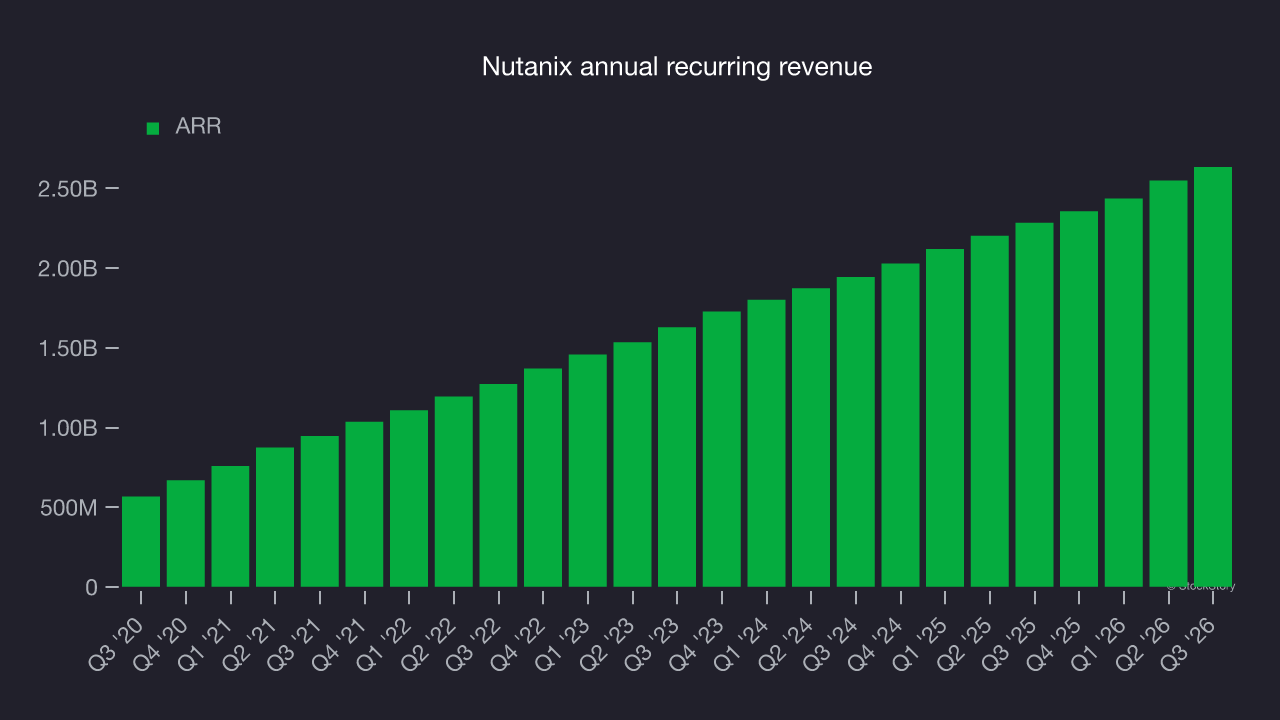
While reported revenue for a software company can include low-margin items like implementation fees, annual recurring revenue, or ARR, is the sum of the next 12 months of contracted revenue purely from software subscriptions, the high-margin, predictable revenue streams that make software-as-a-service businesses valuable.
Nutanix’s ARR reached $2.63 billion in Q3, and over the last four quarters, its growth slightly outpaced the sector as it averaged 15.5% year-on-year increases. This alternative top-line metric grew faster than total revenue, which likely means that the recurring portions of the business are growing faster than less predictable ones such as implementation fees. That could be a good sign for future revenue growth.
Customer acquisition efficiency
The customer acquisition cost, or CAC, payback period represents the months required to recover the cost of acquiring a new customer. Essentially, it’s the break-even point for sales and marketing investments. A shorter CAC payback period is ideal, as it implies better returns on investment and business scalability.
It’s relatively expensive for Nutanix to acquire new customers as its CAC payback period was 38.3 months this quarter. The company’s slow recovery of its sales and marketing expenses indicates it operates in a competitive market. On the positive side, once it acquires customers, they typically stay and increase their spending, a sign of high switching costs.
Key takeaways from Nutanix’s Q3 results
Nutanix came in well ahead of analysts’ adjusted operating income expectations this quarter. Also, its revenue narrowly outperformed Wall Street’s estimates. On the other hand, its full-year revenue guidance was in line. Investors were likely hoping for more, and shares traded down 9.2% to $49.59 immediately following the results.
When deciding whether to buy Nutanix stock, the latest quarter matters, but longer-term fundamentals and valuation matter far more. For more on those factors, read the full research report here (it’s free).