


EN
3 Dividend Stocks Share One Pattern: Strong Buy Ratings and Prices Near 52-Week Lows
Recent volatility in tech has shown up in unexpected corners of the market. Even companies outside tech have seen their share prices slide, though perhaps for differing reasons.
That being said, volatility creates potential opportunities to snag dividend-paying shares at bargain prices, though not every stock trading at a low is an automatic buy. It still pays to see why the company is down and what the analysts think about its future prospects.
So in this article, I went bargain hunting to find the biggest, top-rated, dividend-paying companies and see which ones might deserve a spot in a dividend portfolio.
How I Screened for Top-Rated Dividend Stocks Near Their Lows
Using Barchart's Stock Screener, I selected the following filters to get my list:
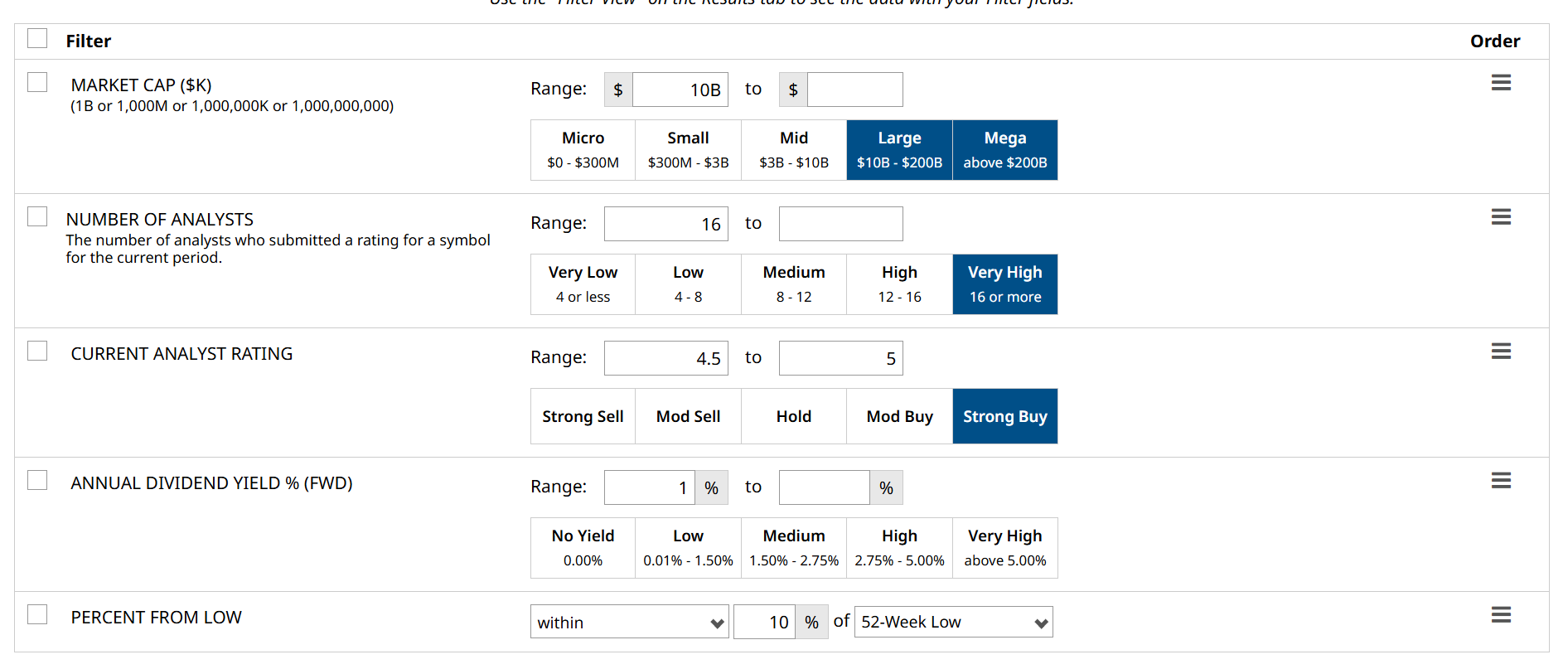
- Market Cap: $10 billion or more, which keeps the list focused on large- and mega-cap companies with the scale to sustain dividends through rough patches.
- Number of Analysts: 16 or more, since wider Wall Street coverage tends to give a more reliable rating consensus.
- Current Analyst Rating: 4.5 to 5, so only stocks that analysts rate a "Strong Buy" made the cut.
- Annual Dividend Yield % (FWD): 1% or higher, so that every company on the list pays investors a meaningful dividend. I'll sort this column from highest to lowest later.
- Percent From Low: Within 10% of the 52-week low. That way, the list shows highly rated dividend payers whose shares are still trading close to their lows for the year, which may give investors a better entry point.
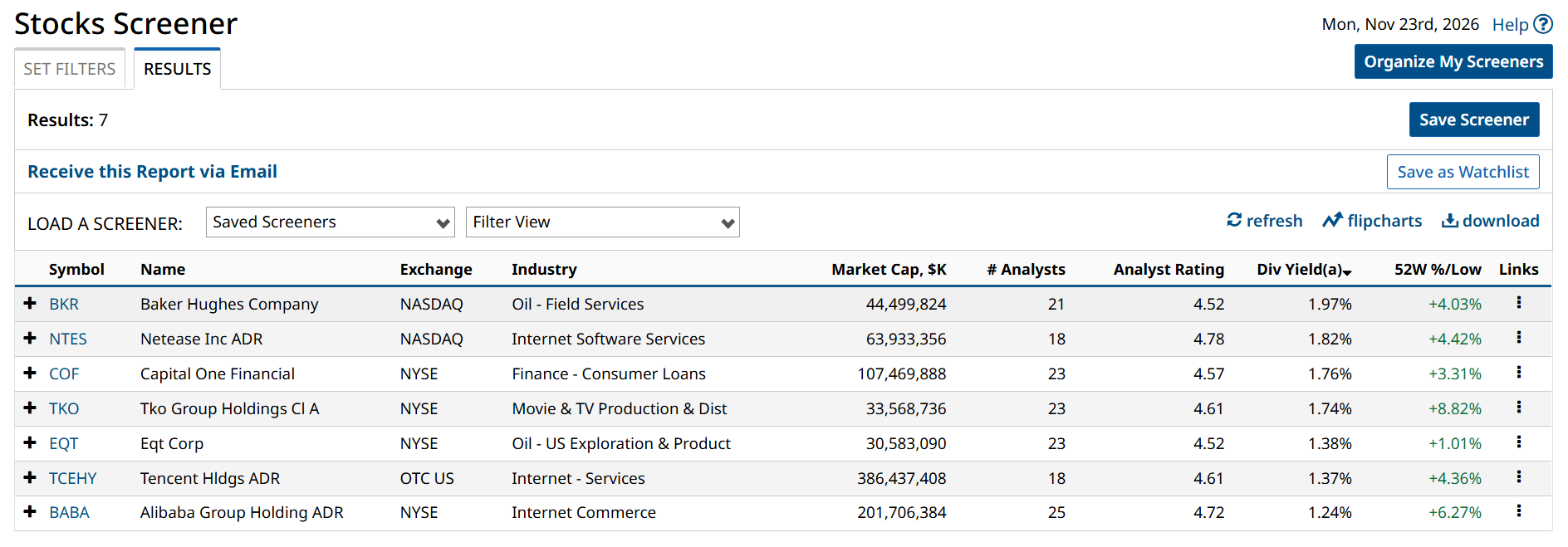
I ran the screen, got seven results, sorted them by forward dividend yield from highest to lowest, and looked at the top three.
Kicking off this list is:
Baker Hughes (BKR): Highest Yield of the Group, 35% Below Its High
Baker Hughes is one of the world's largest oilfield service providers. It supplies the equipment, digital tools, and services that help energy companies produce, refine, and transport oil and gas, and it has been pushing further into LNG and newer energy markets.
On Nov. 19, for example, the company announced that its consortium with McDermott had won a contract from INPEX for the next phase of the Ichthys LNG development. And just a week earlier, it signed an agreement with TPAO to explore next-generation geothermal power.
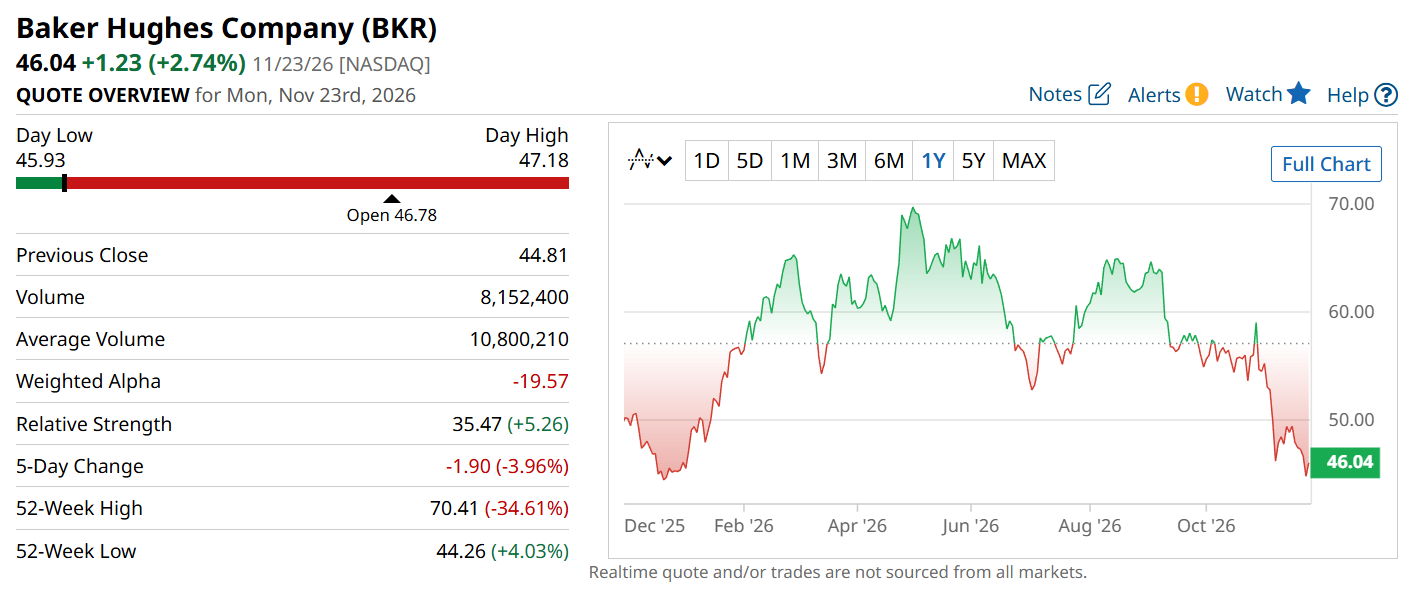
The stock closed around $46 on Nov. 23, putting it just 4% above its 52-week low of $44.26 and about 34.6% below its 52-week high of $70.41. Indeed, shares have clearly fallen out of favor in recent months.
Even so, the company’s forward annual dividend of 92 cents works out to a 1.97% yield, which is the highest on this list.
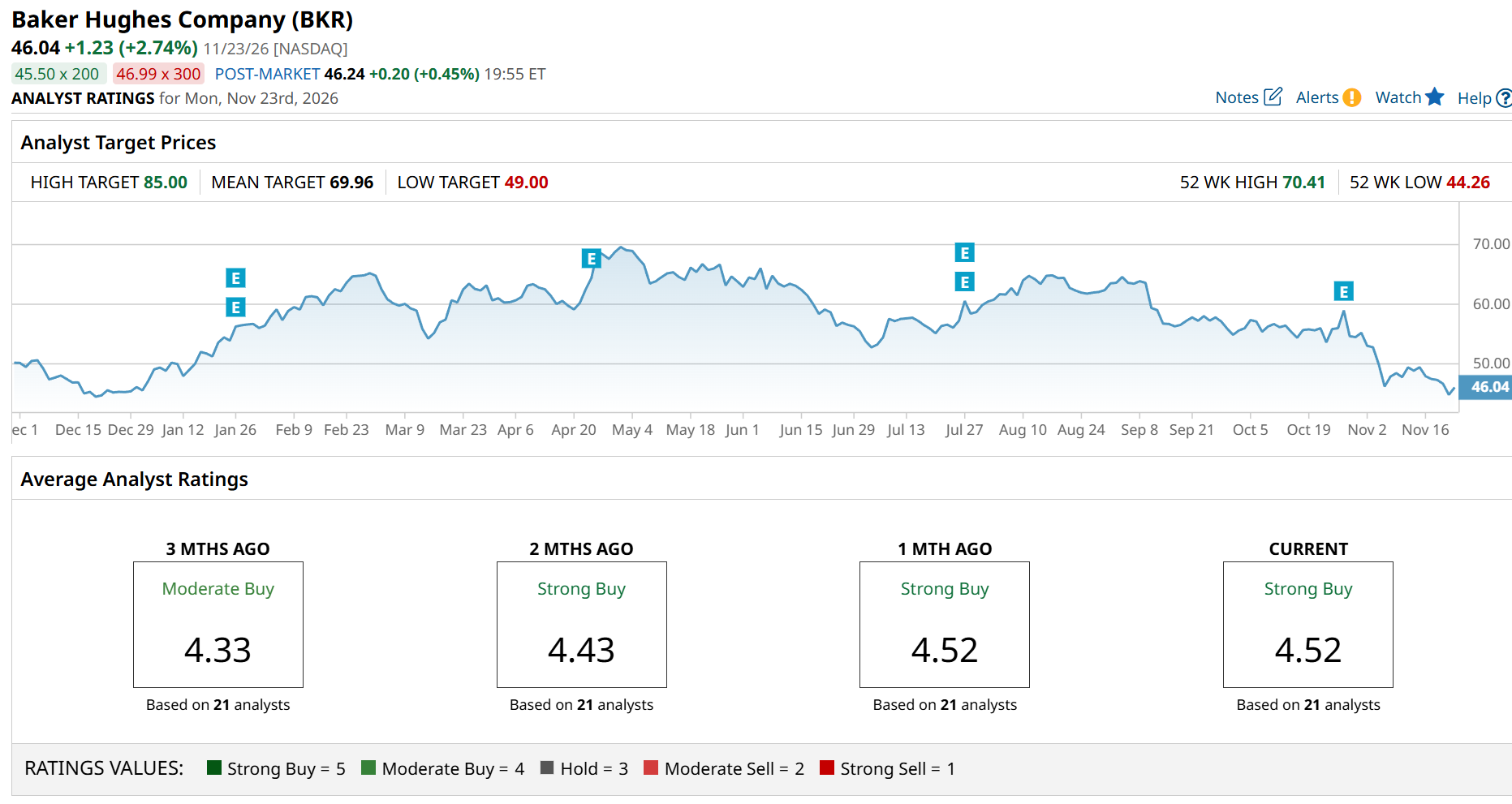
Wall Street remains firmly bullish, with 21 analysts covering the stock and rating it a consensus "Strong Buy" with an average score of 4.52. In that case, the high target price of $85 suggests potential upside of about 85% from current levels.
NetEase (NTES): Highest Analyst Score on the List After Earnings Sell-Off
NetEase is a Chinese internet technology company best known for its online games, both those it builds in-house and those it licenses. It also runs NetEase Cloud Music and holds a stake in the education company Youdao.
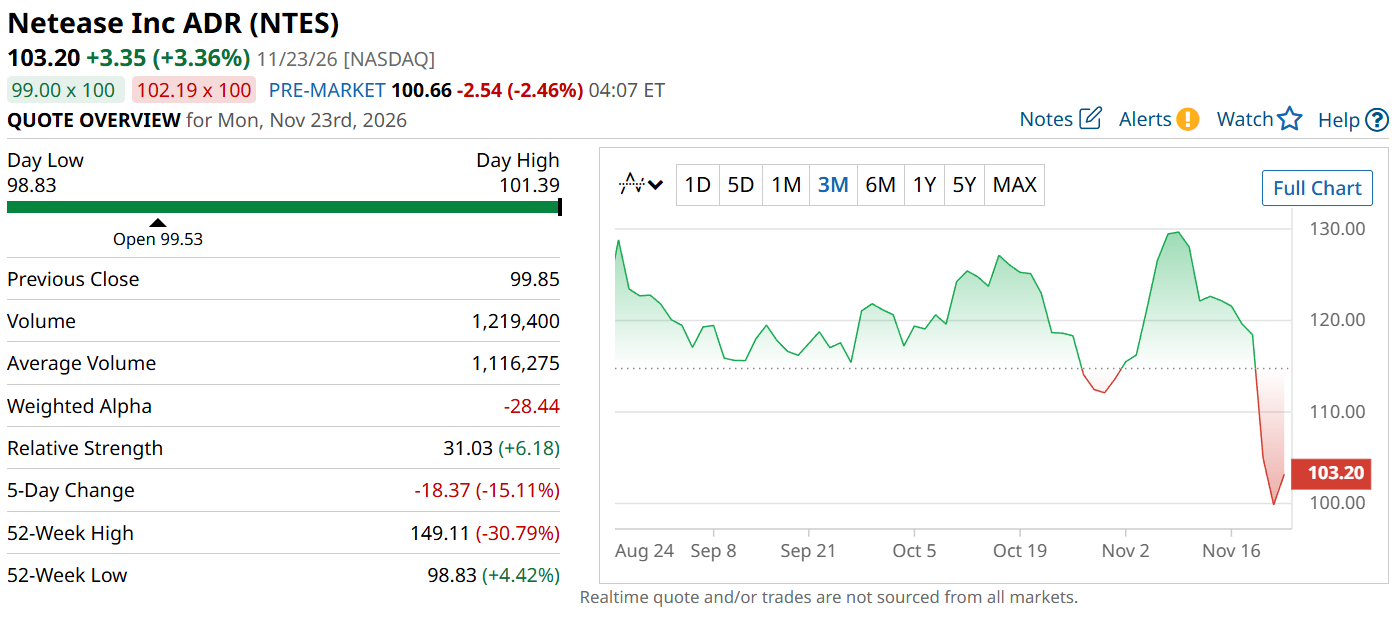
The stock took a hit after NetEase reported third-quarter 2026 results on Nov. 19, since both earnings per share and revenue came in below Wall Street's consensus, and shares fell more than 15% over the following five trading days.
As a result, NetEase closed at $103.20 on Nov. 23- that's just 4.42% above the 52-week low of $98.83 it set on Nov. 20, and about 31% below its 52-week high. Meanwhile, the company’s forward annual dividend of $1.91 translates into a 1.8% yield.
Despite the miss, analysts haven't walked away from the stock. Of the 18 analysts covering NetEase, 16 rate it a "Strong Buy," and the other two rate it "Hold," giving it a consensus score of 4.78, the highest of the three.
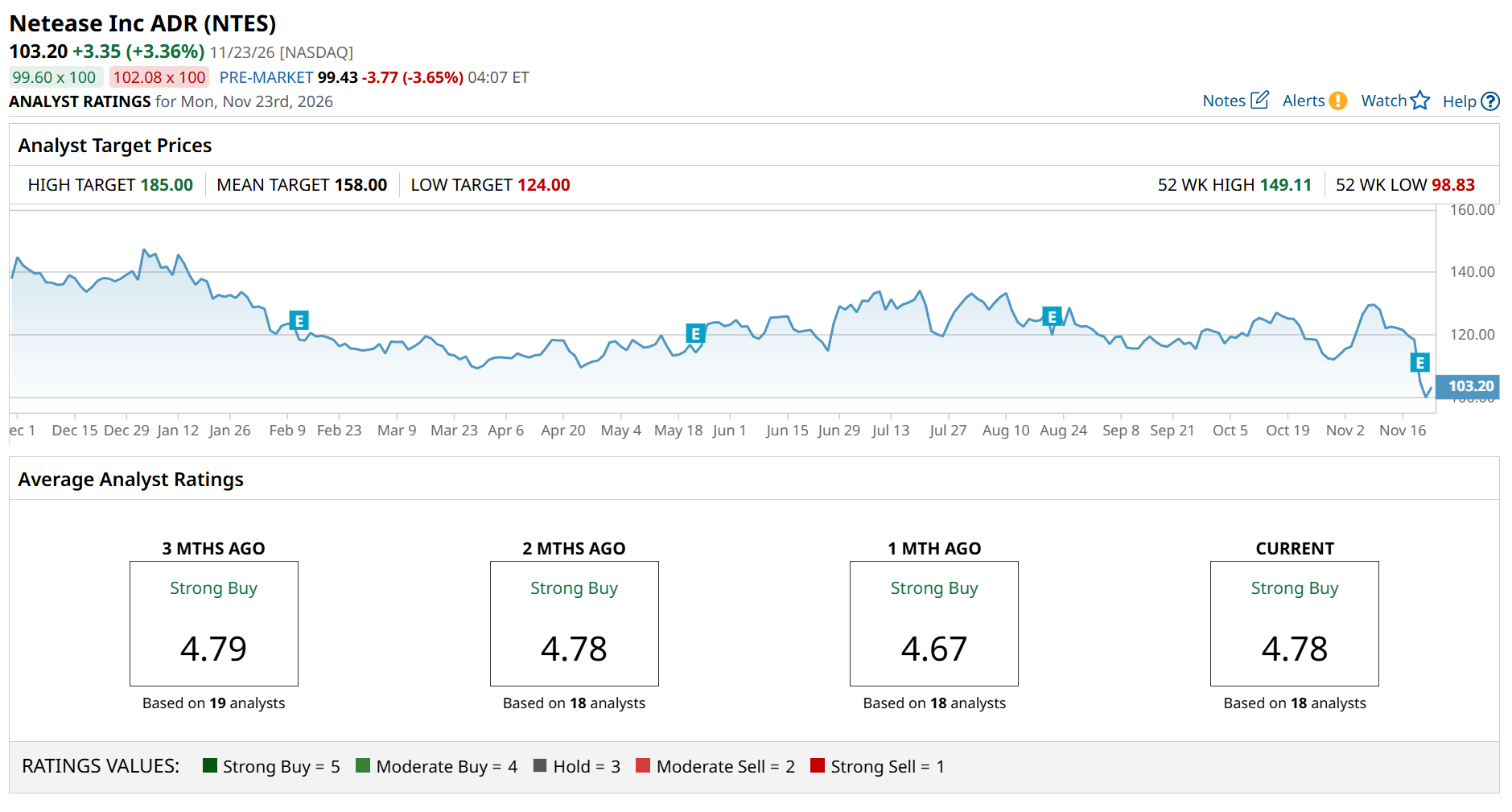
Their high target price of $185 implies potential upside of about 79%.
Capital One (COF): $3.20 Annual Dividend, Shares Just 3% Above Their Low
Capital One Financial is one of the largest consumer lenders in the U.S. and is best known for its credit cards, but it also provides auto loans, deposit accounts, and commercial lending to consumers, small businesses, and commercial clients. It also operates the Discover Network and Diners Club International payment networks. The company posted earnings of $6.69 per share in its most recent quarter, which was reported on Oct. 20, and yet the stock has lagged the broader market anyway.
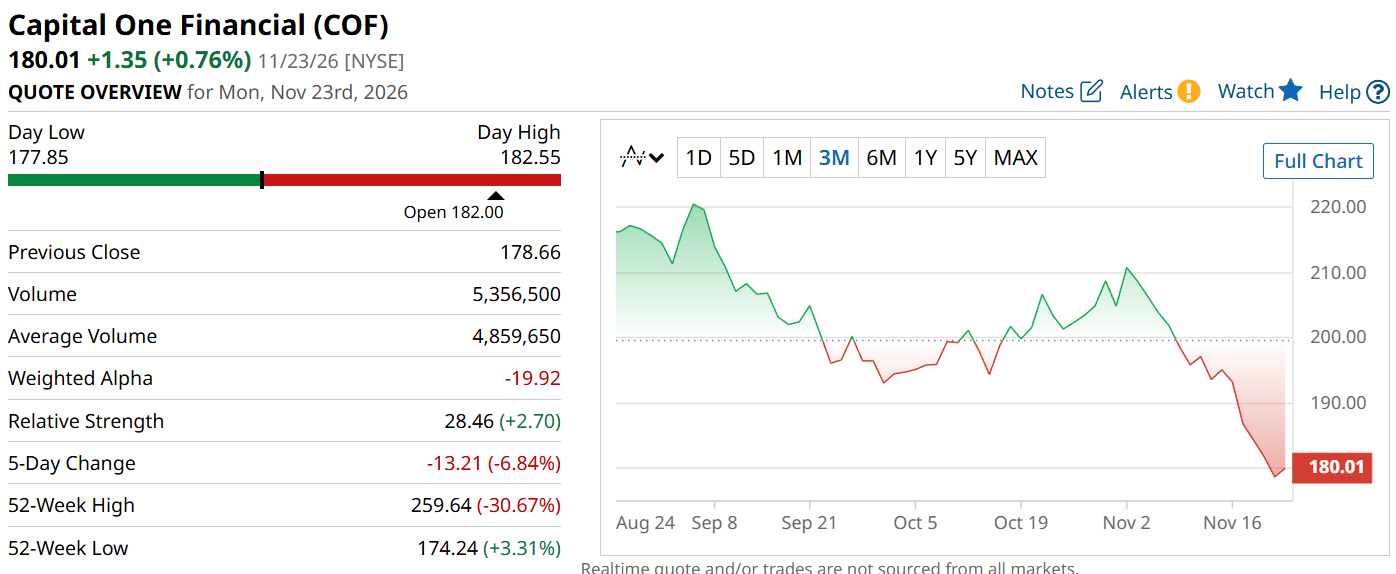
COF stock closed around $180 on Nov. 23, leaving it just 3.31% above its 52-week low of $174.24 and about 31% below its 52-week high of $259.64. Capital One’s forward annual dividend of $3.20 translates to a 1.76% yield.
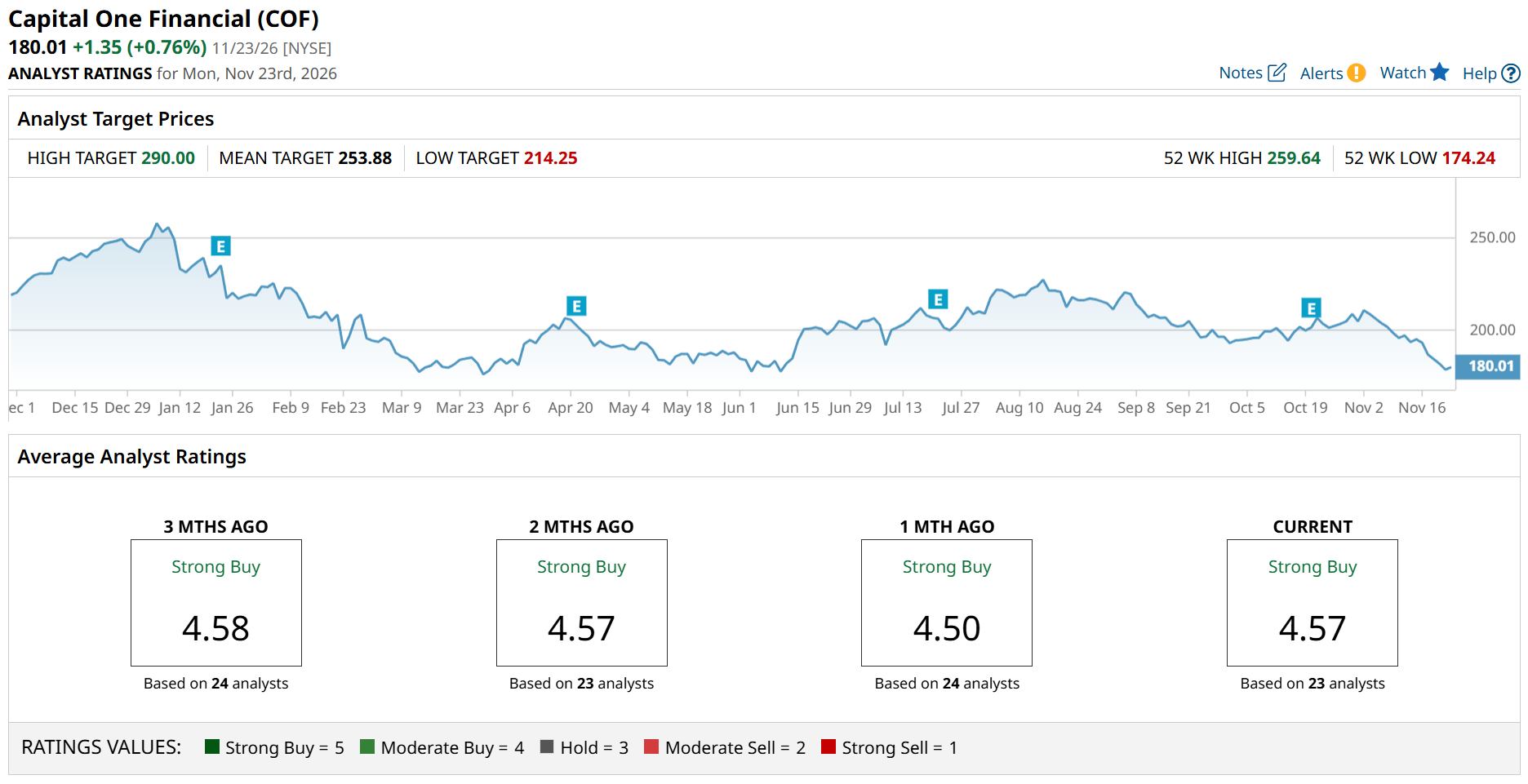
On Wall St., analysts are still very optimistic. Most analysts covering the stock rate it a "Strong Buy," two have it at "Moderate Buy," and four at "Hold," for a consensus score of 4.57. Their high target price of $290 points to potential upside of about 61.1%.
The Common Thread and What to Weigh Before Buying
These three stocks come from different corners of the market, but the screener turned up the same pattern in each. All three are large companies that pay a dividend and have "Strong Buy" ratings from Wall Street, and yet their shares are trading close to their 52-week lows. So investors looking for a lower entry point into highly rated dividend payers may want to dig deeper into each one.
That said, a stock near its low can always fall further, so investors should still weigh what's been pushing these shares down before deciding.
On the date of publication, Rick Orford did not directly have a position in any of the securities mentioned in this article. All information and data in this article is solely for informational purposes. For more information please view the Barchart Disclosure Policy here.