


EN
Kohl’s Q3 2026 sales top estimates
Department store chain Kohl’s (NYSE:KSS) reported Q3 2026 results topping the market’s revenue expectations, with revenue up 1.8% year on year to $3.64 billion. Its GAAP profit of $2.15 per share was significantly above analysts’ consensus estimates.
For more on Kohl's, read our free full research report.
Kohl's Q3 2026 highlights:
- Revenue $3.64 billion vs S&P analysts’ consensus estimates of $3.54 billion (1.8% year-on-year growth, 2.6% beat)
- EPS (GAAP) $2.15 vs analysts’ consensus estimates of -$0.01 (significant beat)
- GAAP EPS guidance $4.40 at the midpoint for the full year, beating analysts’ consensus estimates by 105%
- Operating margin 6%, up from 2% in the same quarter last year
- Free cash flow -$122 million, down from $16 million in the same quarter last year
- Same-store sales rose 1.2% year on year (-1.7% in the same quarter last year)
- Market capitalization $2.40 billion
Revenue growth
A company’s long-term performance is an indicator of its overall quality. Any business can deliver a good quarter or two, but the best consistently grow over the long term.
With $15.49 billion in revenue over the past 12 months, Kohl's is one of the larger companies in the consumer retail industry and benefits from a well-known brand that influences purchasing decisions. However, its scale is a double-edged sword because there is only so much real estate to build new stores, placing a ceiling on its growth. To accelerate revenue growth, Kohl's likely needs to optimize its pricing or pursue international expansion.
Kohl’s demand was weak over the last three years. Its revenue fell by 4.1% annually as it closed stores and recorded lower revenue at existing locations.
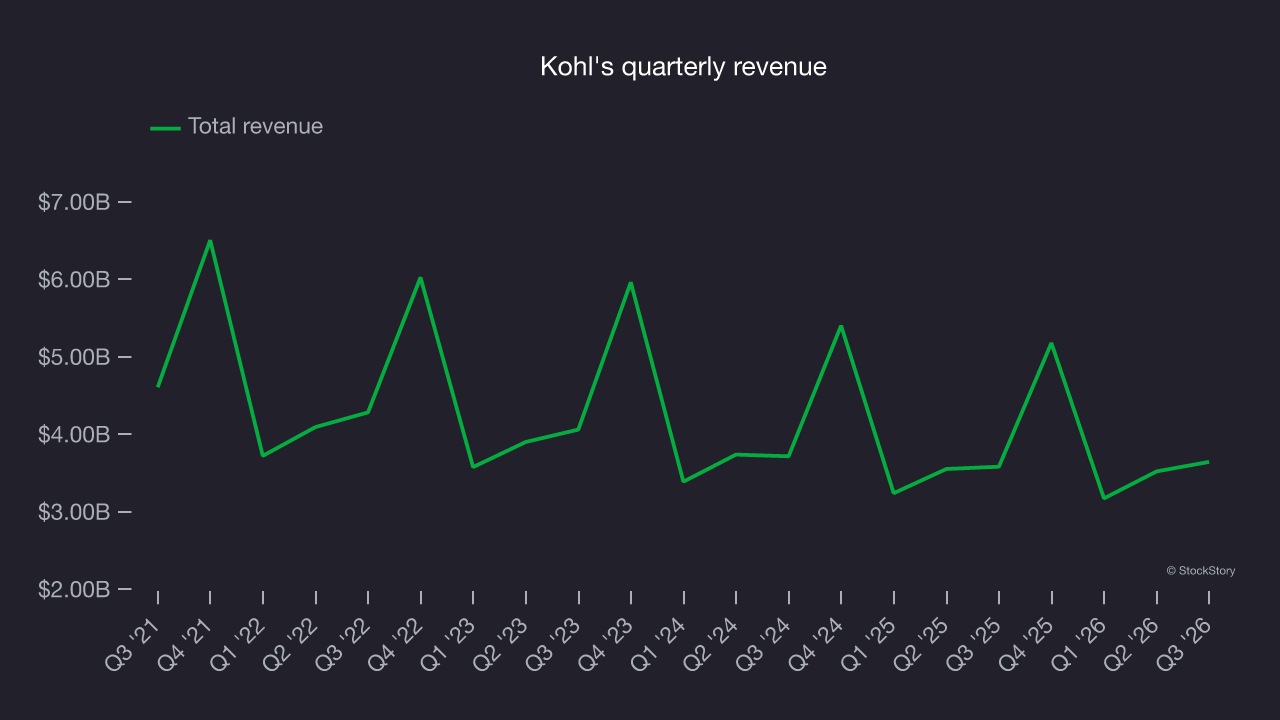
This quarter, Kohl's reported modest year-on-year revenue growth of 1.8% but beat Wall Street’s consensus estimates by 2.6%.
Looking ahead, sell-side analysts expect revenue to remain flat over the next 12 months, according to S&P. While this projection suggests its newer products will fuel better top-line performance, it is still below the sector average.
Store performance
Number of stores
The number of stores a retailer operates is a critical driver of how quickly company-level revenue can grow.
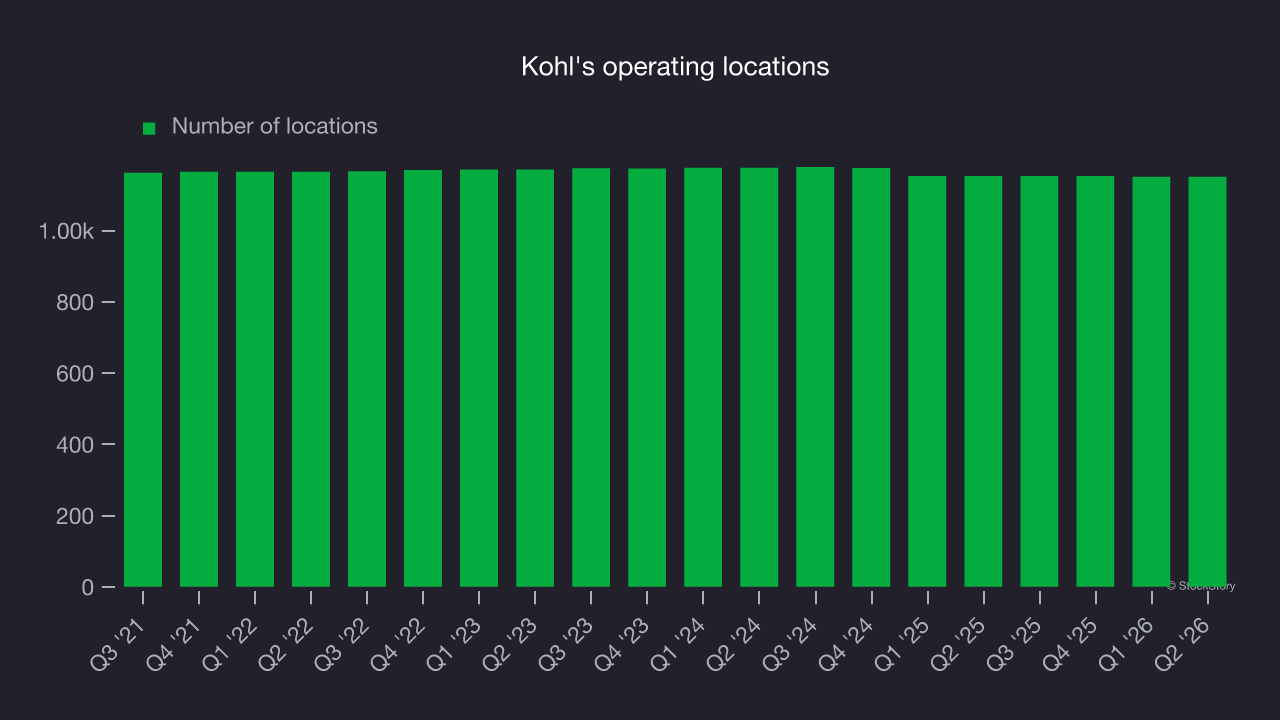
Kohl's has generally reduced its store count over the last two years, averaging 1.2% annual declines.
When a retailer shutters stores, it usually means that brick-and-mortar demand is less than supply, and it is responding by closing underperforming locations to improve profitability.
Note that Kohl's reports its store count intermittently, so some data points are missing in the chart below.
Same-store sales
A company’s store base only paints one part of the picture. When demand is high, it makes sense to open more. But when demand is low, it’s prudent to close some locations and use the money in other ways. Same-store sales give insight into this topic because they measure organic growth for a retailer’s e-commerce platform and brick-and-mortar shops that have existed for at least a year.
Kohl’s demand has been shrinking over the last two years as its same-store sales have averaged 2.5% annual declines. This performance isn’t ideal, and Kohl's is attempting to boost same-store sales by closing stores (fewer locations sometimes lead to higher same-store sales).
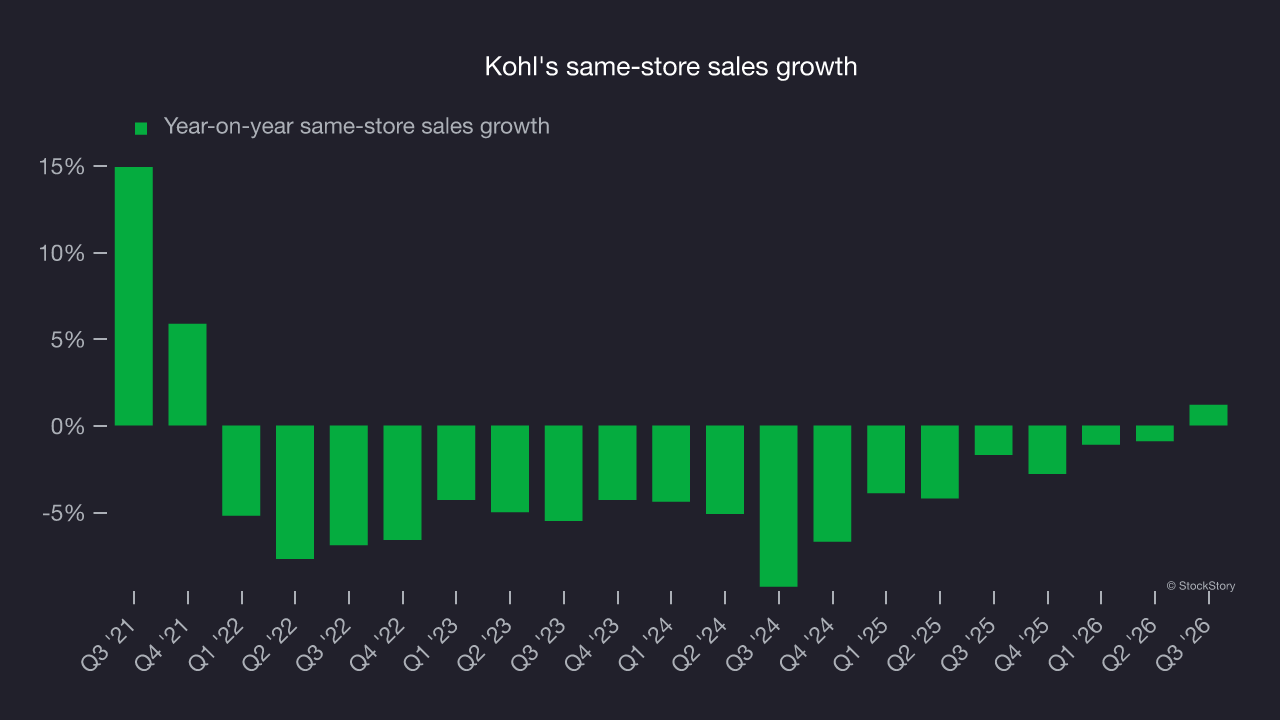
In the latest quarter, Kohl’s same-store sales rose 1.2% year on year. This growth marked a turnaround from its historical levels, showing the business is regaining momentum.
Key takeaways from Kohl’s Q3 results
A wide beat on gross margin and EPS above analysts’ consensus estimates made Kohl’s Q3 a solid quarter. Shares rose 2.4% to $21.71 immediately after the report.
Kohl's may have had a good quarter, but longer-term fundamentals and valuation matter more than the latest results when deciding whether to invest. For more on Kohl's, read the full research report here (it’s free).