


EN
Missed Texas Instruments' 85% Run? What Holders Had To Believe
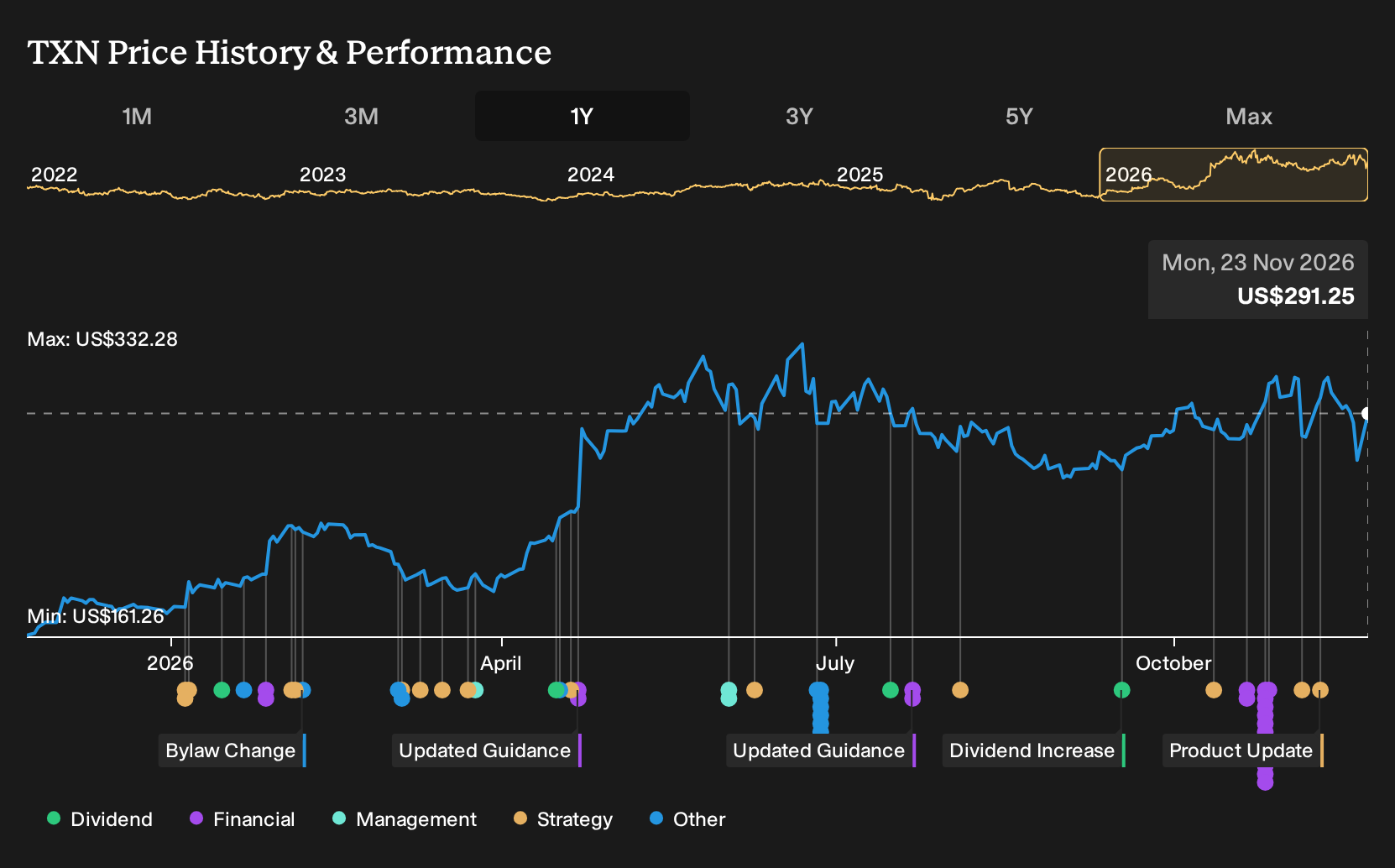
Texas Instruments spent this year talking about AI hungry data centers, new high cell count EV battery monitors and even a Silicon Labs deal, yet the real headline for investors sat quietly in their brokerage statements. For Texas Instruments shareholders, the return over the past year was 84.5%, including dividends. If you were deciding back on 2025-11-23 whether to buy, what exactly did you need to believe before any of that upbeat news arrived?
Texas Instruments is not the only name tied to this theme. Zero in on 41 power grid technology and infrastructure stocks and compare how each one is priced.
The Argument You Would Have Been Weighing On Texas Instruments
The shares cost US$159 at the start of the period, so any Texas Instruments thesis began with what that price already assumed.
The bullish narrative saw a fair value of US$206, a price implied by expectations of resilient gross margins and low inventories if industrial and automotive demand normalized. That view leaned on domestic 300mm fabs, tax incentives and long-life analog portfolios to support future earnings and cash generation.
The cautious view put fair value at US$125, a level tied to worries that maturing analog and embedded markets and rising regulatory costs would squeeze profitability. That camp focused on risks from US China trade restrictions, tougher competition from Asian manufacturers and future oversupply from industry-wide fab expansion.
What The Results Changed For The Texas Instruments Argument
Texas Instruments then reported revenue of US$6,055m and net income of US$2,411m in Q3 2026, up from US$4,742m and US$1,356m a year earlier. Net margin moved from 28.6% to 39.8%. That combination of higher sales and a wider margin supported the earlier optimistic view that domestic fabs and long-life analog products could support strong profitability, although future regulatory and capacity risks were not resolved.
The lesson is simple. When a story depends on margins and asset utilisation, do not just watch headline revenue. Track net income, net margin and capacity buildout against what Texas Instruments once treated as the bullish and cautious cases.
What Texas Instruments' 85% Run Already Prices In
With Texas Instruments now at US$291, the bearish analyst Narrative on Simply Wall St sees its Fair Value below the market level, arguing that the recent 84.5% gain over the past year already bakes in strong execution.
The Narrative centers on whether heavy 300mm fab spending and broad end market exposure really translate into durable cost leverage and cash generation. A buyer today effectively assumes that expanded U.S. manufacturing, pricing and data center demand offset depreciation and any slower industrial or automotive volumes.
"Although Texas Instruments highlights long term cost and supply benefits from its more than US$20b 300mm U.S. fab buildout and higher internal production, the July 2026 concerns about rising depreciation and the potential for weaker industrial and automotive demand suggest the expanded footprint could compress gross margins and limit the uplift to net earnings if utilization falls short of expectations."
That disagreement has a full argument behind it. → Uncover the lower Fair Value this Narrative argues for
How Could You Get There Earlier?
You may be late to this rally, but that does not have to mean arriving late to every opportunity. Start with companies whose prices leave room for a different view of their future. Here are three trading below our estimates.
- Company 1 - 26% below our estimate - pursues rapid expansion of franchised and company-owned teahouses while scaling GMV and memberships.
- Company 2 - 47% below our estimate - expands tech-led small business lending and deposits through digital portals and enhanced checking products.
- Company 3 - 22% below our estimate - grows account, card and asset balances while onboarding more partners onto its payments platform.
Three companies from the same screener. Open all 37 potentially undervalued companies →
Have feedback on this article? Concerned about the content? Get in touch with us directly. Alternatively, email editorial-team@simplywallst.com