


EN
Zoom surprises with Q3 CY2026 sales

Video communications platform Zoom (NASDAQ:ZM) reported calendar Q3 2026 [fiscal Q3 2027] results exceeding the market’s revenue expectations, with revenue up 4.9% year on year to $1.29 billion. The company expects next quarter’s revenue to be around $1.30 billion, close to analysts’ consensus estimates. Its non-GAAP profit of $1.59 per share was 7% above analysts’ consensus estimates.
For more on Zoom, read our full research report for free.
Zoom Q3 CY2026 highlights:
- Revenue $1.29 billion vs S&P analysts’ consensus estimates of $1.28 billion (4.9% year-on-year growth, 1% beat)
- Adjusted EPS $1.59 vs S&P analysts’ consensus estimates of $1.49 (7% beat)
- Adjusted operating income $537.2 million vs analysts’ consensus estimates of $513.6 million (41.6% margin, 4.6% beat)
- Revenue guidance $1.30 billion at the midpoint for Q4 CY2026, roughly in line with what analysts were expecting
- Adjusted EPS guidance Management raised its full-year adjusted EPS guidance to $6.25 at the midpoint, a 2.4% increase
- Operating margin 24.6%, in line with the same quarter last year
- Free cash flow margin 43.2%, up from 37% in the previous quarter
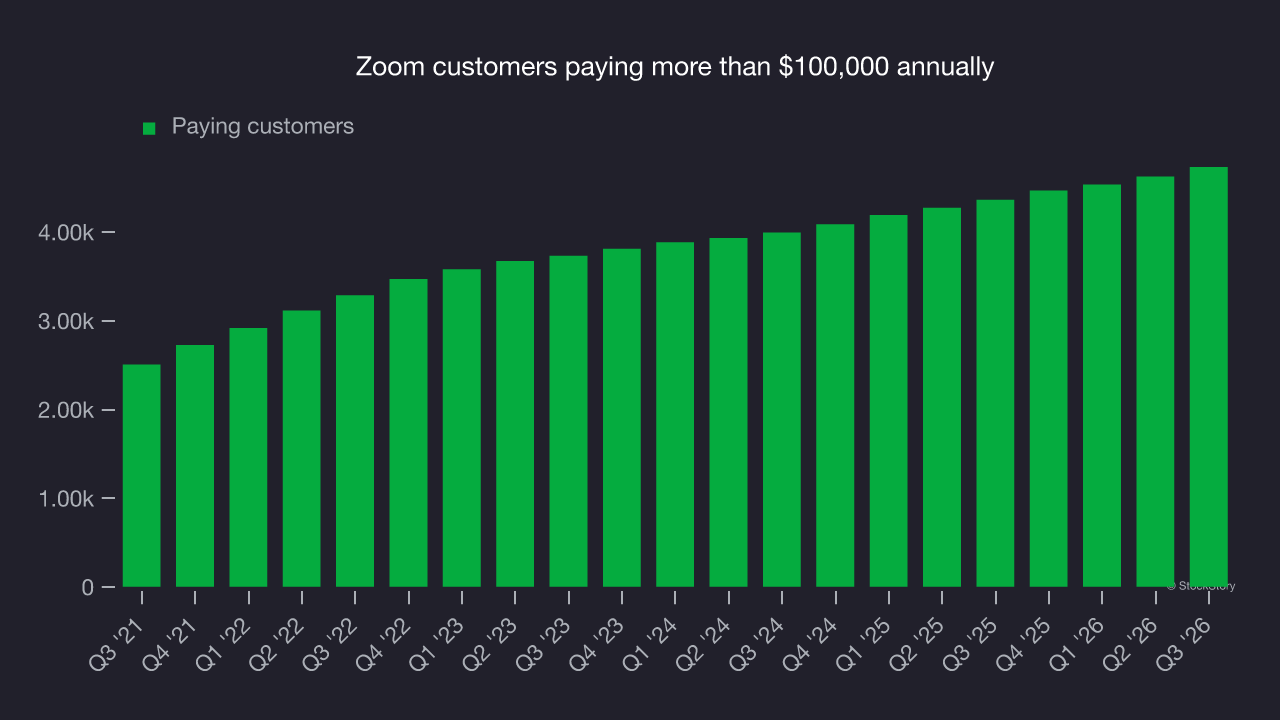
- Customers 4,732 customers paying more than $100,000 annually
- Net revenue retention rate 100%, up from 99% in the previous quarter
- Billings $1.25 billion at quarter end, up 4.3% year on year
- Market capitalization $23.71 billion
“Zoom delivered another strong quarter, with Enterprise revenue growth accelerating to its strongest pace in 13 quarters. Zoom Customer Experience was a key driver, posting its seventh consecutive quarter of high double-digit year-over-year ARR growth,” said Eric S. Yuan, Zoom’s founder and CEO. “This revenue momentum, combined with strong profitability and durable cash generation, gives us the flexibility to invest in growth and innovation while expanding capital returns through ongoing share repurchases and our new dividend program, reinforcing our commitment to lasting value for customers and shareholders.”
Revenue growth
Examining a company’s long-term performance can provide clues about its quality. Even a bad business can perform well for one or two quarters, but a high-quality one grows for years. Zoom’s revenue grew at a weak 5.3% compounded annual growth rate over the last five years, falling short of the software sector benchmark.
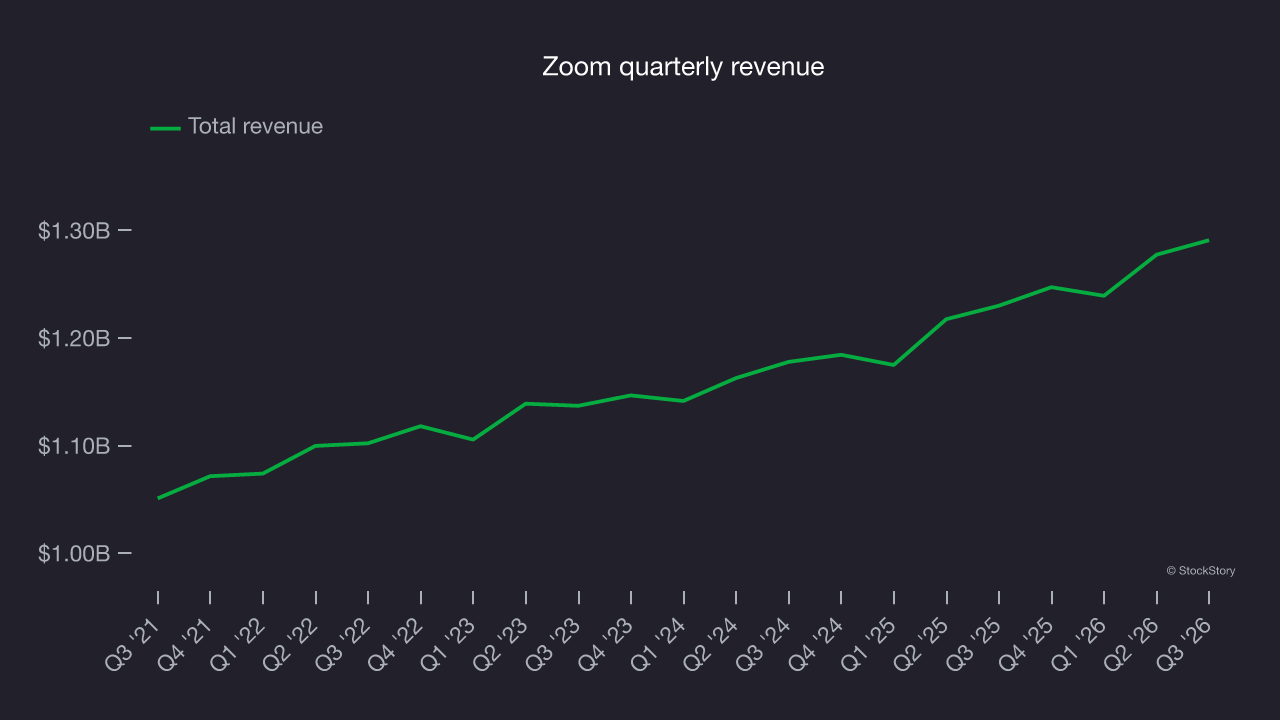
Long-term growth is the most important, but within software, a half-decade historical view may miss new innovations or demand cycles. Zoom’s annualized revenue growth of 4.5% over the last two years aligns with its five-year trend, suggesting its demand was consistently weak. 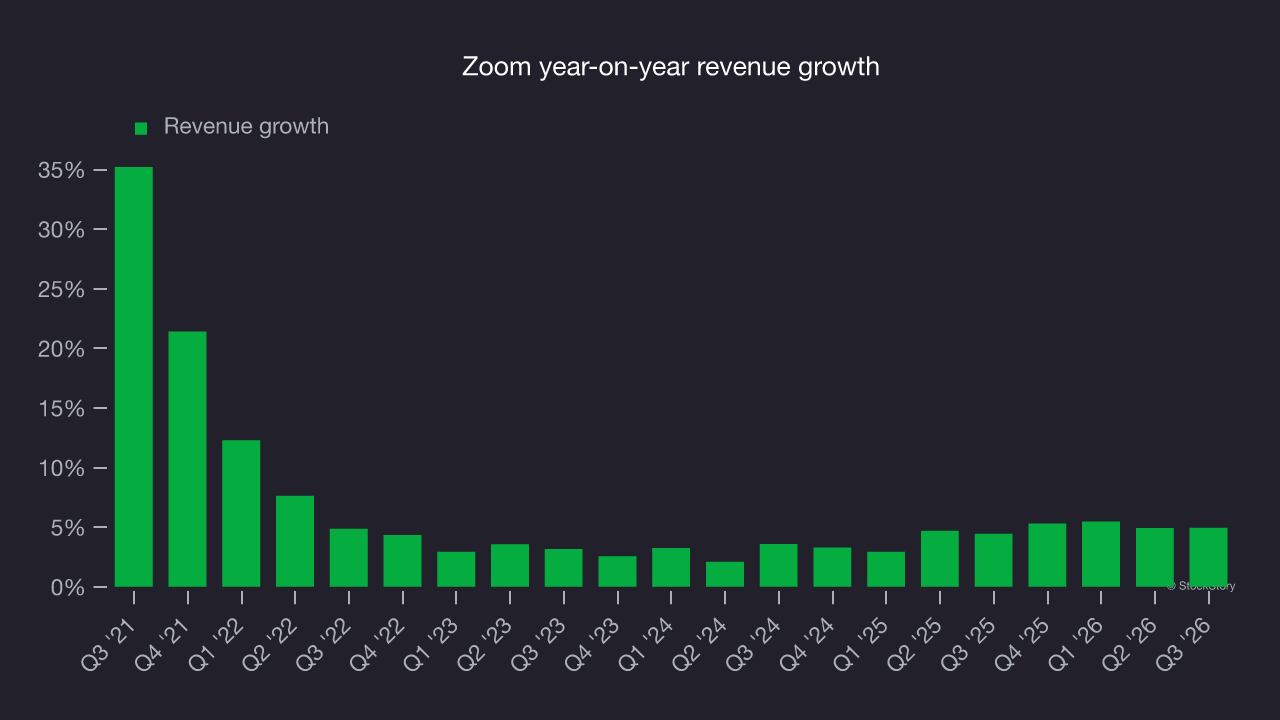
This quarter, Zoom reported modest year-on-year revenue growth of 4.9% but beat Wall Street’s consensus estimates by 1%. Management is guiding for a 3.9% year-on-year increase in revenue next quarter.
Looking further ahead, sell-side analysts expect revenue to grow 4% over the next 12 months, according to S&P, similar to its two-year rate. This underwhelming projection indicates its newer products and services will not yet drive faster revenue growth.
Billings
Billings is a non-GAAP metric that is often called “cash revenue” because it shows how much money the company has collected from customers in a certain period. This is different from revenue, which must be recognized in pieces over the length of a contract.
Zoom’s billings came in at $1.25 billion in Q3, and over the last four quarters, its growth was underwhelming as it averaged 5.3% year-on-year increases. This performance mirrored its total revenue growth and suggests that increasing competition is making it harder to acquire and retain customers. 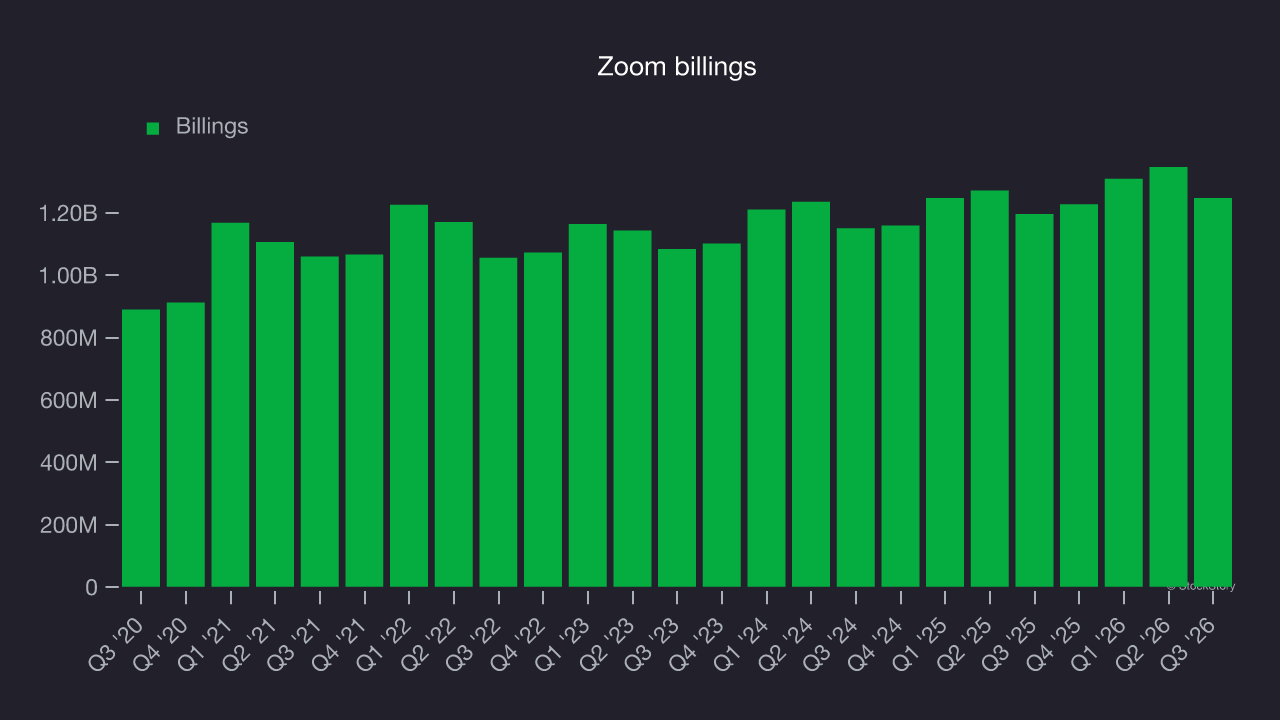
Enterprise customer base
This quarter, Zoom reported 4,732 enterprise customers paying more than $100,000 annually, an increase of 107 from the previous quarter. That represents considerably more contract wins than last quarter and is about in line with the pace over the previous year. This indicates that Zoom has made some recent improvements to its go-to-market strategy.
Key takeaways from Zoom’s Q3 results
Higher-than-expected adjusted operating income and full-year EPS guidance above Wall Street’s consensus gave Zoom’s quarter some key positives. But revenue guidance for next quarter only matched expectations. Investors were likely hoping for more, with shares edging lower 1.2% to $85.10 immediately after the results.
To assess whether Zoom is an attractive buy at its current price, consider the bigger picture of valuation and business quality alongside the latest earnings. Read our full research report here (it’s free).