


EN
As Cattle Prices Bounce, Lean Hogs Could Fall as Low as $40 Before Support Kicks In
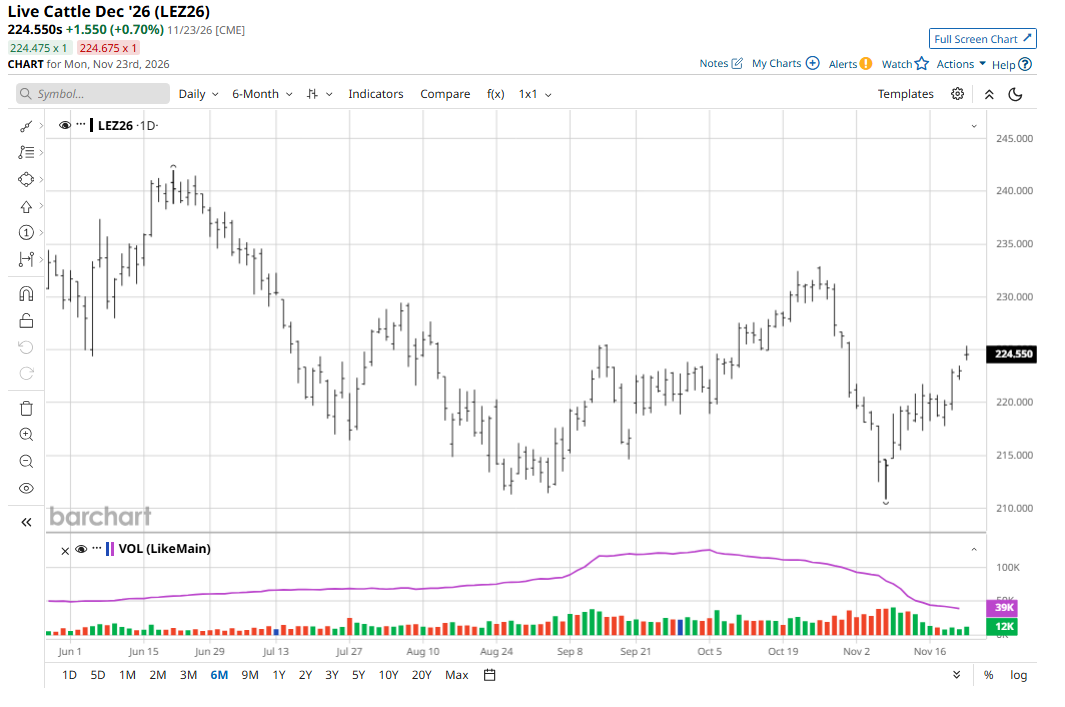
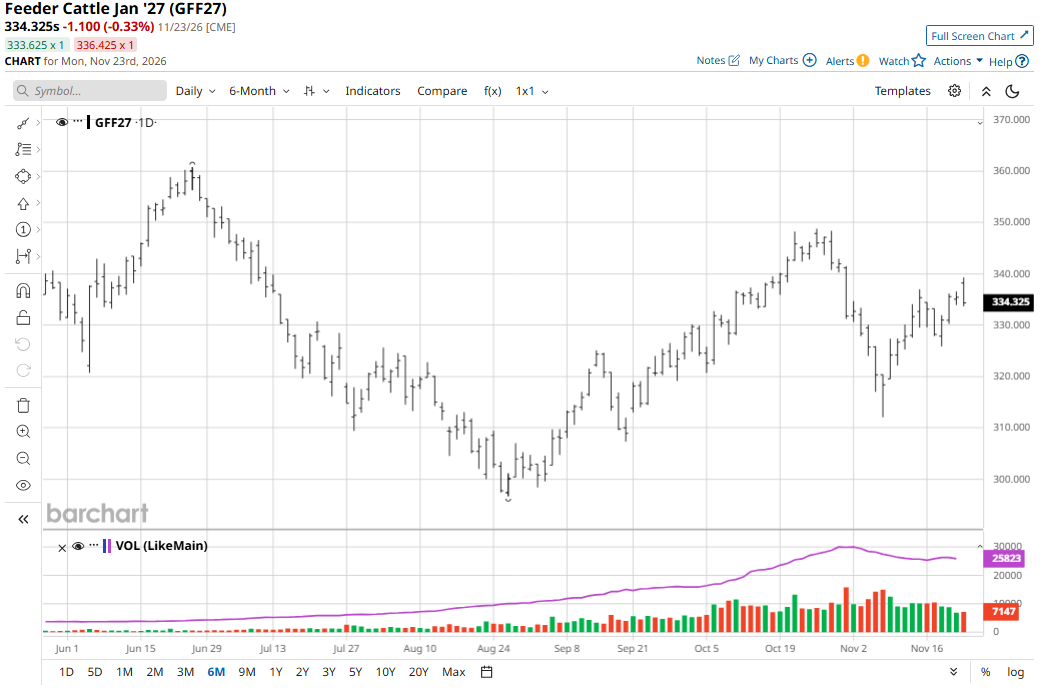
December live cattle (LEZ26) futures on Friday rose $0.15 to $223.00, hit a three-week high, and for the week were up $2.90. January feeder cattle (GFF27) futures lost $0.125 to $335.425 and for the week were up $0.075.
The cattle futures markets bulls last week had another good week overall, including December live cattle producing a technically bullish weekly high close on Friday, which suggested follow-through chart-based buying early this week.
However, gains in cattle futures markets were limited due to the keen risk-off atmosphere in the general marketplace late last week as the U.S. stock indexes melted down and hit six-month lows.
Bullish Monthly USDA Cattle-on-Feed Report
On Friday, the U.S. Department of Agriculture reported U.S. cattle on feed down 1%. Cattle and calves on feed for the slaughter market for feedlots with capacity of 1,000 or more head totaled 11.6 million head on Nov. 1. The U.S. cattle inventory was 1% below November 1, 2025. Placements of cattle in U.S. feedlots during October totaled 1.89 million head, 7% below 2025. Net placements were 1.84 million head. Placements were the lowest for October since the USDA report series began in 1996.
During October, placements of cattle and calves weighing less than 600 pounds were 490,000 head, 600-699 pounds were 400,000 head, 700-799 pounds were 395,000 head, 800-899 pounds were 341,000 head, 900-999 pounds were 190,000 head, and 1,000 pounds and greater were 75,000 head. Marketings of fed cattle during October totaled 1.62 million head, 5% below 2025. Marketings were the lowest for October since the series began in 1996. Other disappearance totaled 53,000 head during October, 2% below 2025.
The above USDA numbers are all price-friendly for cattle futures markets and should at the very least limit selling pressure this week. However, if risk aversion in the general market returns later this week, look for buying interest in all of the raw commodity futures markets, including cattle futures, to be squelched.
The USDA at midday on Friday reported more active cash cattle trading last week, with steers averaging $214.92 and heifers $215.34. The agency reported average cash cattle trading the week prior at $214.43.
Recent cattle slaughter levels have dropped below normal. A lack of liquidity has left cattle producers with weak cash basis as deferred live cattle futures prices hold premiums to cash. Meanwhile, boxed beef prices have settled into a consistent range, and packers have remained profitable since July, which is the longest stretch in several years. Tight supplies should continue to underpin cash and futures prices.
December live cattle futures as of Friday were trading at around an $8 premium to the latest cash market trade, suggesting futures traders expect cash cattle price strength in the coming weeks. Steady, solid demand for beef at the meat counter and recent, mostly upbeat U.S. economic data is also a positive for consumer confidence. However, any sustained bear market in stocks in the coming weeks and months would likely significantly dent consumer demand for beef at the meat counter.
Lean Hog Futures Bulls Still on the Ropes
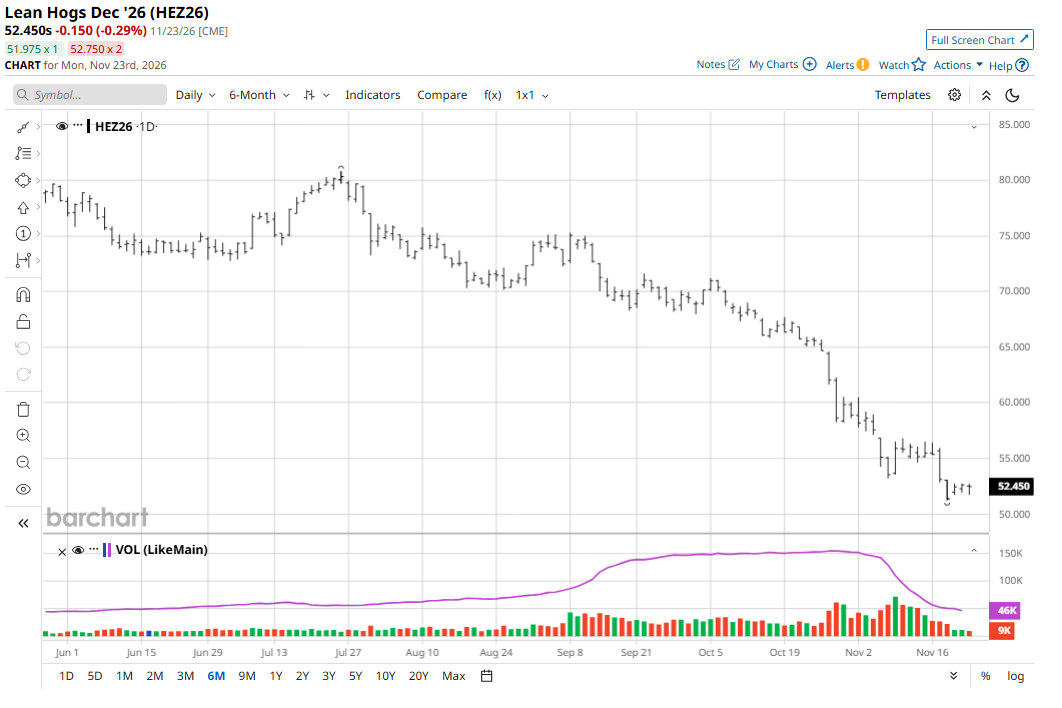
December lean hog (HEZ26) futures on Friday rose $0.175 to $52.60 and for the week were down $2.85. The past few weeks have seen a trainwreck in the lean hog futures markets that has pushed prices to six-year lows. Futures prices remain trapped in a downtrend on the daily bar chart. The scary part, from a technical perspective in lean hog futures, is that the longer-term charts do not show any significant price support levels showing up until the $40 area. The CME cash hog index and cash hog prices also continue to trend down.
The latest CME lean hog index is down $0.27 to $56.32. Today’s projected CME index price is down another $0.55 at $55.77. The national direct five-day rolling average cash hog price quote for Friday was $35.87.
Better pork packer margins are giving the hog market bulls some hope. Futures traders are watching for signs of stronger holiday demand for pork and any upbeat shifts in export interest for U.S. pork, which could help sustain a modest price recovery.
There is some improved optimism in the pork marketplace around potential increased exports to Thailand and a recent purchase of $41 million of pork for food banks and other federal nutrition assistance programs. These developments have helped offset concerns about ample supplies and soft export sales to other major buyers. The pork cutout value has held in a range, supported by strength in loins in bellies.
Let me know what you think. I enjoy hearing from my valued Barchart readers all around the globe. Email me at jim@jimwyckoff.com.
On the date of publication, Jim Wyckoff did not directly have a position in any of the securities mentioned in this article. All information and data in this article is solely for informational purposes. For more information please view the Barchart Disclosure Policy here.