


EN
How Investors Are Reacting To DHT Holdings (DHT) Stronger Earnings Report
- DHT Holdings reported third quarter 2026 net income of US$270.87 million and basic earnings per share of US$1.68, with nine month net income of US$633.73 million and basic earnings per share of US$3.93, all from continuing operations.
- The scale of earnings for both the recent quarter and year to date provides investors with detailed data on how DHT Holdings is converting current tanker market conditions into bottom line profit.
- This raises the question of how DHT Holdings’ higher earnings per share may influence the existing investment narrative surrounding its tanker exposure.
Scan how DHT Holdings' strong earnings from tanker exposure compare with other potential opportunities by reviewing our curated list of solid balance sheet and fundamentals (24 results) aligned with resilient shipping and infrastructure plays.
DHT Holdings Investment Narrative Recap
DHT Holdings appeals most to investors who think current tanker market conditions can support strong cash generation and a very high payout policy for a while longer. The big near term swing factor is how long spot and charter rates stay firm enough to back earnings at anything close to recent levels. The main business risk is that earnings or cash conversion soften while the firm keeps distributing 100% of ordinary net income as dividends, which could pressure both its funding flexibility and investor confidence.
The analyst consensus Narrative on Simply Wall St already bakes in falling revenue and earnings over the next three years, so this latest quarterly result does not remove the risk of a step down from today’s profitability. The short term catalyst is management’s ability to keep the fleet running efficiently, roll high rate charters and execute on renewal plans so vessel earnings remain healthy even if market conditions cool. Any clear sign that distributions are less covered by free cash flow would likely refocus attention on dividend sustainability rather than headline EPS.
The recent third quarter 2026 report, with US$270.87 million of net income and US$1.68 in basic EPS, is the clearest operational data point tied to this narrative. For the first nine months of 2026, net income reached US$633.73 million and EPS was US$3.93 from continuing operations, giving you a concrete sense of how DHT Holdings is monetising current VLCC exposure compared with what analysts expect longer term. These numbers sit against forecasts in the analyst consensus Narrative on Simply Wall St that call for earnings to decline on average over the next few years.
This contrast between robust reported profitability and expectations for weaker future earnings makes execution on catalysts even more important. Efficient fleet renewal, maintaining high rate time charters and managing leverage under the existing credit lines all matter for sustaining the current return profile implied by the dividend policy. At the same time, flagged risks such as large payouts relative to free cash flow and recent insider selling keep the spotlight on how repeatable these 2026 earnings really are.
DHT Holdings' narrative projects US$477.6 million revenue and US$282.2 million earnings by 2029. This assumes revenue declines by 15.7% per year and implies an earnings decrease of about US$191.5 million from current earnings of US$473.7 million.
Uncover how DHT Holdings' fair value indicates a 27% potential upside to its current price that could narrow quickly.
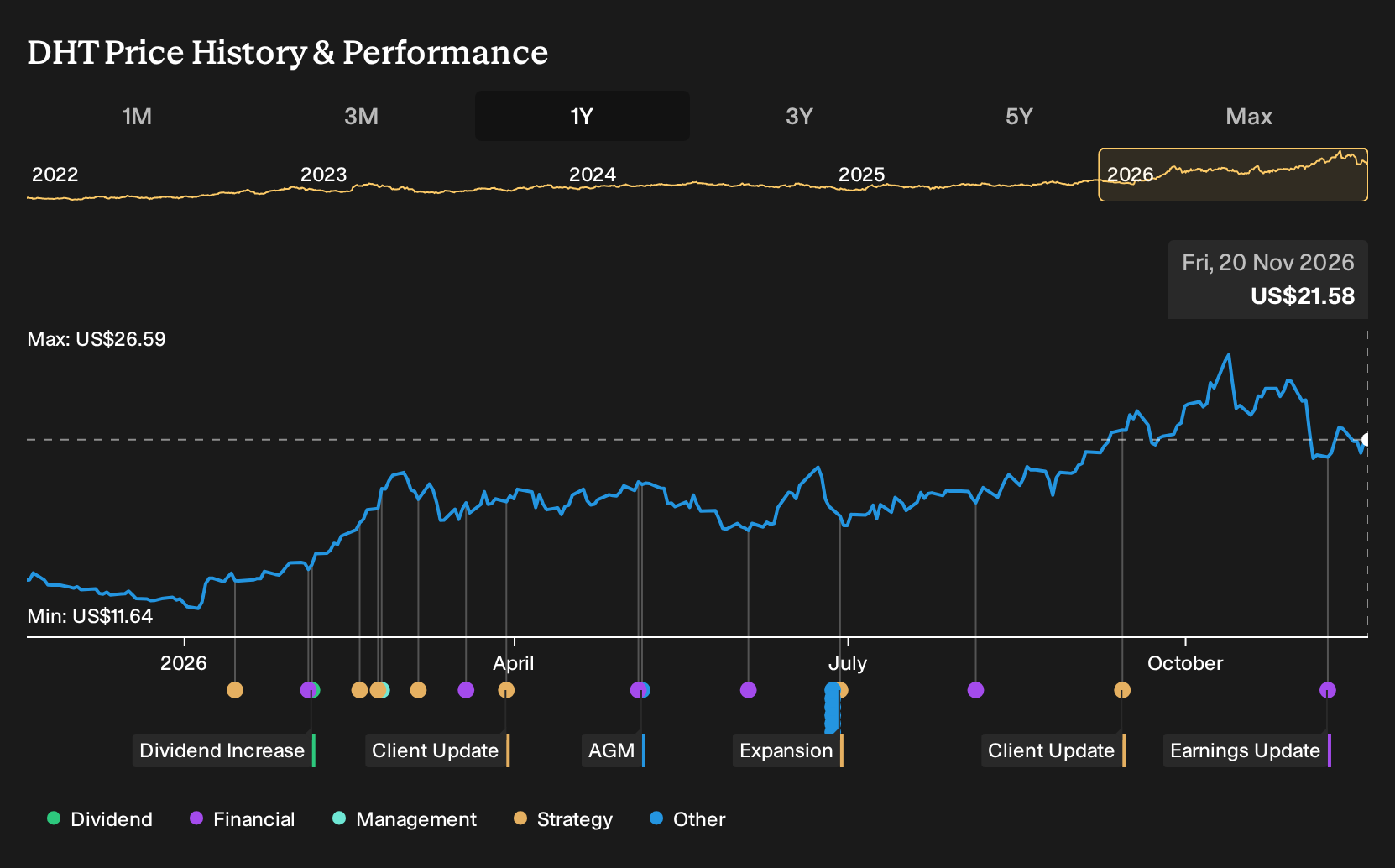
Exploring Other Perspectives
One alternate view on DHT Holdings focuses on a sharper earnings reset. The most cautious analysts were modelling revenue around US$306.0 million and net income of about US$130.7 million by 2029, far below consensus. Those figures shaped a more pessimistic story before this earnings release and may now need a fresh look from you.
Explore 7 other DHT Holdings fair value estimates, including one that suggests as much as 46% downside from the current price!
Decide For Yourself
Disagree with existing narratives? Extraordinary investment returns rarely come from following the herd, so consider conducting your own research and forming your own view.
- A great starting point for your DHT Holdings research is our analysis highlighting 4 key rewards and 4 important warning signs that could impact your investment decision.
- See our latest analysis for DHT Holdings. The report includes a comprehensive fundamental analysis summarized in a single visual, the Snowflake, making it easier to evaluate DHT Holdings' overall financial health at a glance.
Looking for more investment ideas beyond DHT Holdings?
If DHT Holdings has sharpened your focus on cash generation and payout policies, it can help to line it up against a wider field of potential opportunities. Use the Simply Wall St Screener to compare different types of businesses and stress test your own thesis against other profiles that match your risk tolerance and income goals.
- For investors who want resilient balance sheets and steady fundamentals, start with a list of solid balance sheet and fundamentals (24 results) that filters for sturdier financial profiles.
- If value is your priority and you are hunting for quality companies at attractive prices, scan the 40 high quality undervalued stocks that focus on strong cash flows and cleaner balance sheets.
- Income focused investors who care about consistent payouts can review a 11 dividend fortresses that highlights higher yielding businesses with robust underlying metrics.
Have feedback on this article? Concerned about the content? Get in touch with us directly. Alternatively, email editorial-team@simplywallst.com