


EN
Three Days Left To Buy Sakata Seed Corporation (TSE:1377) Before The Ex-Dividend Date
Some investors rely on dividends for growing their wealth, and if you're one of those dividend sleuths, you might be intrigued to know that Sakata Seed Corporation (TSE:1377) is about to go ex-dividend in just three days. The ex-dividend date is usually set to be two business days before the record date, which is the cut-off date on which you must be present on the company's books as a shareholder in order to receive the dividend. The ex-dividend date is an important date to be aware of as any purchase of the stock made on or after this date might mean a late settlement that doesn't show on the record date. This means that investors who purchase Sakata Seed's shares on or after the 27th of November will not receive the dividend, which will be paid on the 9th of February.
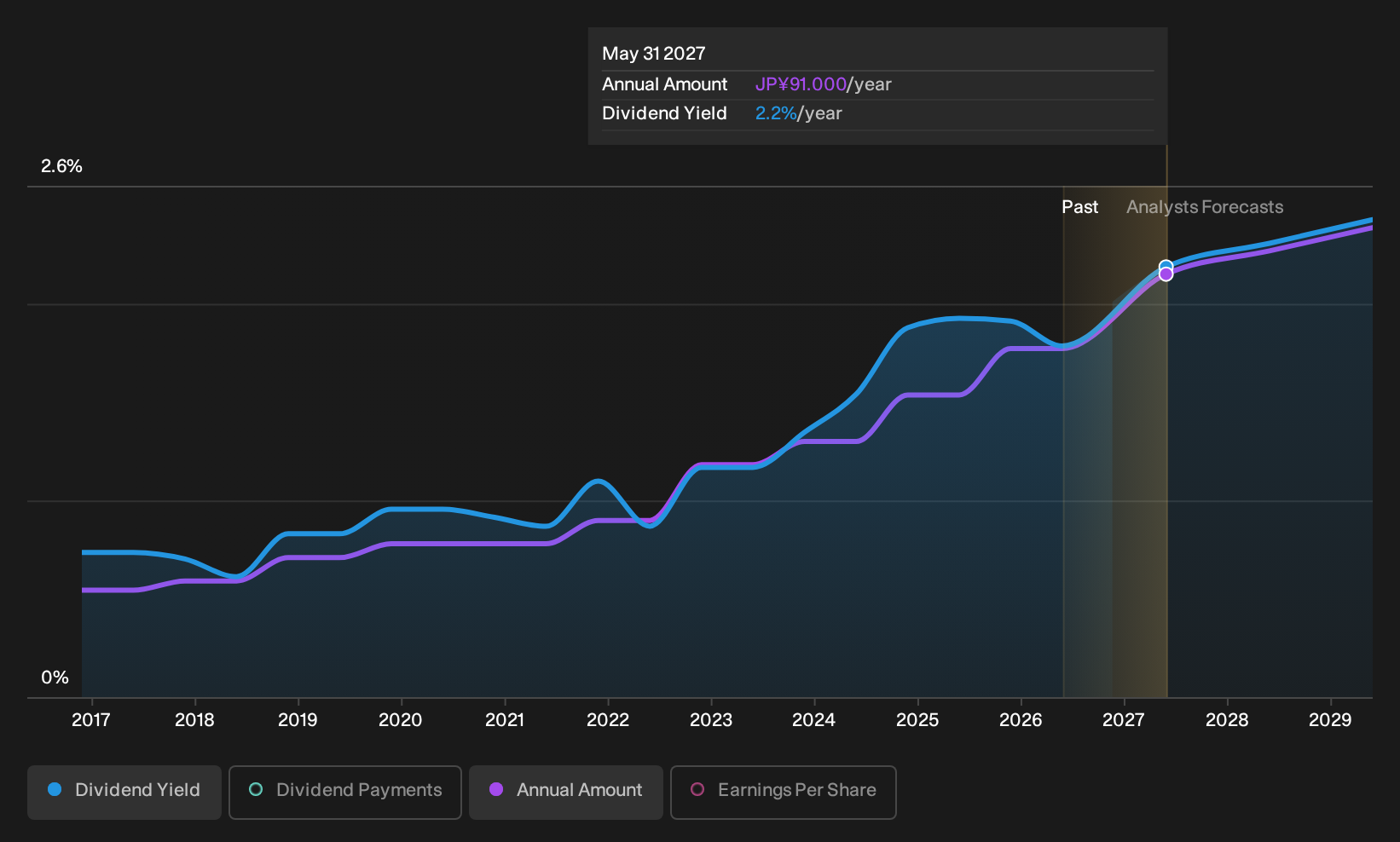
The company's next dividend payment will be JP¥40.00 per share, and in the last 12 months, the company paid a total of JP¥90.00 per share. Last year's total dividend payments show that Sakata Seed has a trailing yield of 2.2% on the current share price of JP¥4160.00. Dividends are a major contributor to investment returns for long term holders, but only if the dividend continues to be paid. So we need to investigate whether Sakata Seed can afford its dividend, and if the dividend could grow.
Dividends are typically paid out of company income, so if a company pays out more than it earned, its dividend is usually at a higher risk of being cut. Fortunately Sakata Seed's payout ratio is modest, at just 34% of profit. That said, even highly profitable companies sometimes might not generate enough cash to pay the dividend, which is why we should always check if the dividend is covered by cash flow. Over the past year it paid out 187% of its free cash flow as dividends, which is uncomfortably high. We're curious about why the company paid out more cash than it generated last year, since this can be one of the early signs that a dividend may be unsustainable.
Sakata Seed does have a large net cash position on the balance sheet, which could fund large dividends for a time, if the company so chose. Still, smart investors know that it is better to assess dividends relative to the cash and profit generated by the business. Paying dividends out of cash on the balance sheet is not long-term sustainable.
Sakata Seed paid out less in dividends than it reported in profits, but unfortunately it didn't generate enough cash to cover the dividend. Cash is king, as they say, and were Sakata Seed to repeatedly pay dividends that aren't well covered by cashflow, we would consider this a warning sign.
Check out our latest analysis for Sakata Seed
Click here to see the company's payout ratio, plus analyst estimates of its future dividends.
Have Earnings And Dividends Been Growing?
Businesses with strong growth prospects usually make the best dividend payers, because it's easier to grow dividends when earnings per share are improving. Investors love dividends, so if earnings fall and the dividend is reduced, expect a stock to be sold off heavily at the same time. With that in mind, we're encouraged by the steady growth at Sakata Seed, with earnings per share up 8.4% on average over the last five years. Earnings have been growing at a steady rate, but we're concerned dividend payments consumed most of the company's cash flow over the past year.
Many investors will assess a company's dividend performance by evaluating how much the dividend payments have changed over time. In the last 10 years, Sakata Seed has lifted its dividend by approximately 15% a year on average. We're glad to see dividends rising alongside earnings over a number of years, which may be a sign the company intends to share the growth with shareholders.
Final Takeaway
Is Sakata Seed an attractive dividend stock, or better left on the shelf? Sakata Seed has seen its earnings per share grow steadily and paid out less than half its profit over the last year. Unfortunately, its dividend was not well covered by free cash flow. It might be worth researching if the company is reinvesting in growth projects that could grow earnings and dividends in the future, but for now we're not all that optimistic on its dividend prospects.
So if you want to do more digging on Sakata Seed, you'll find it worthwhile knowing the risks that this stock faces. For example - Sakata Seed has 1 warning sign we think you should be aware of.
If you're in the market for strong dividend payers, we recommend checking our selection of top dividend stocks.
Have feedback on this article? Concerned about the content? Get in touch with us directly. Alternatively, email editorial-team (at) simplywallst.com.