


EN
BYD (SEHK:1211) Expands ATTO 3 EVO Overseas, Is It Really 49% Undervalued?
BYD (SEHK:1211) has pushed its ATTO 3 EVO electric SUV into a wide slate of Asia-Pacific and European markets, giving investors fresh real-world context for the group’s global expansion story.
That rollout comes against a tougher share price backdrop for BYD, with the stock down 12.37% over the past 30 days and 33.06% over 90 days. The 1-year total shareholder return has declined 32.46%, signalling fading momentum despite ongoing global expansion efforts.
Spot opportunities around BYD's shifting sentiment by scanning our hand picked 236 high quality undervalued stocks, which highlights stocks that the market may be mispricing right now.Bears point to BYD’s falling share price and legal friction in Europe, while bulls focus on fresh products and overseas build out. Which side does the current valuation actually support next?
Most Popular Narrative: 49% Undervalued
BYD last closed at HK$62.35, while the analyst consensus Narrative on Simply Wall St implies a fair value of about HK$122.68. This points to a large valuation gap that hinges on overseas growth and margin recovery actually coming through.
Planned expansion of BYD’s international sales to an expected 2.0 million vehicles in 2026 and 2.5 million vehicles in 2027, backed by investment in its own shipping fleet and overseas production, may add scale benefits that support revenue and earnings over time.
See why 21 investors see BYD as 49% undervalued.
Result: Fair Value of HK$122.68 (UNDERVALUED)
Still, weak China demand and policy barriers in key export markets could weigh on BYD’s margins and slow the overseas shift that supports the bullish narrative.
Find out about the key risks to this BYD narrative.
Another View On BYD’s Valuation
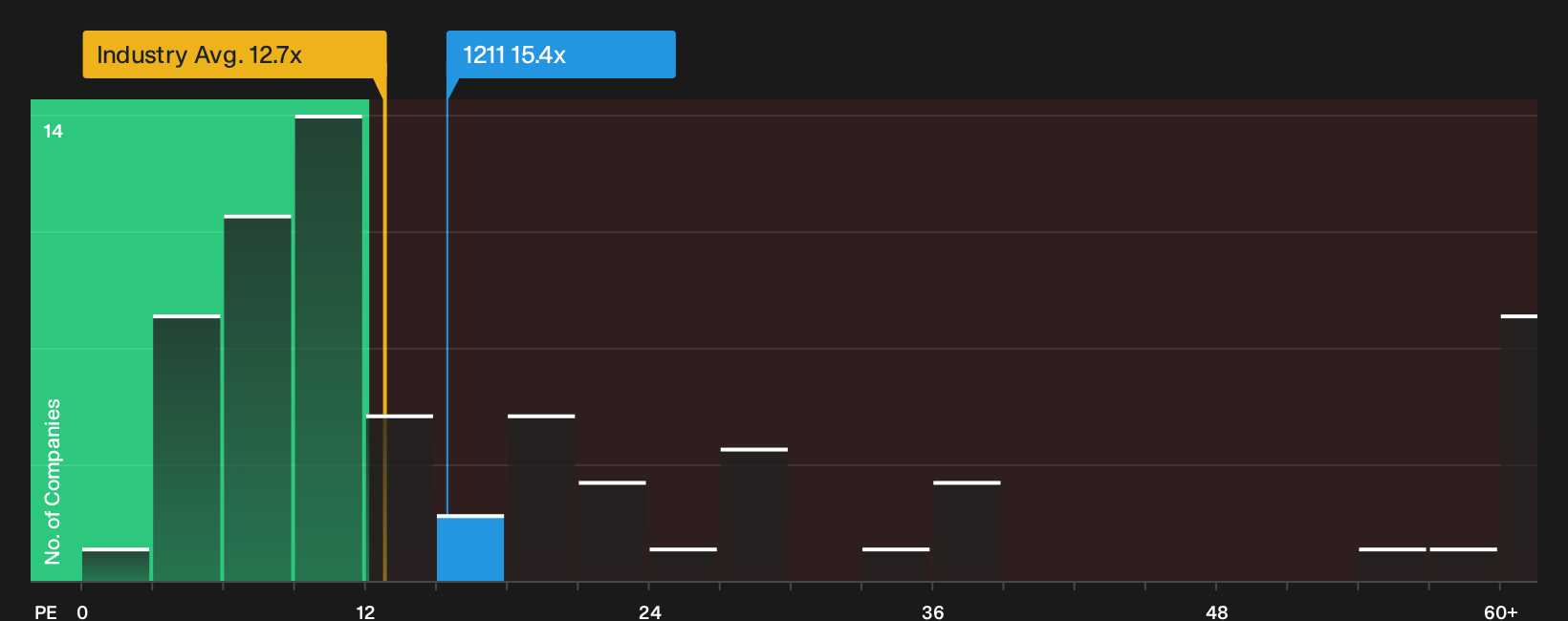
That big 49% discount to the HK$122.68 fair value from the analyst Narrative leans heavily on long term growth assumptions. On a simpler lens that looks only at today, BYD trades on a P/E of 15.4x compared with an estimated fair ratio of 10.5x.
The same P/E also sits above the Asian Auto industry average of 12.7x, while sitting below the peer group on 18.1x, which leaves investors weighing a higher entry multiple than the sector against a discount to closer rivals. Which reference point do you trust most when the growth story is this debated?
Numbers rarely tell a single story. It can help to see how that P/E gap fits into a fuller breakdown of earnings drivers and peer comparisons, then judge whether the premium is a risk or a potential setup for a re rating over time. See what the numbers say about this price — find out in our valuation breakdown.
Next Steps
If this mix of optimism and concern around BYD leaves you on the fence, pull up the numbers yourself and move quickly to form your own view. To weigh both sides in one place, review the 2 key rewards and 1 important warning sign.
Looking for more ideas beyond BYD?
Once you have a view on BYD, it can help to widen your watchlist and line up a few fresh ideas before the next round of market moves.
- Target resilient balance sheets by scanning a list of solid balance sheet and fundamentals (190 results) that surfaces businesses built on stronger financial footing.
- Hunt for mispriced opportunities through a curated 236 high quality undervalued stocks focused on quality companies the market may be overlooking right now.
- Explore income options by reviewing a 245 dividend fortresses that highlights higher-yielding payers with the potential to support regular cash distributions.
Have feedback on this article? Concerned about the content? Get in touch with us directly. Alternatively, email editorial-team@simplywallst.com