


EN
Wall Street Promised Nvidia $500 Billion. Michael Burry Wants to Know Where It Is.
Is this just a case of piling on, or does Michael Burry have a good point about Nvidia (NVDA)?
The famed “Big Short” investor has been hammering the artificial intelligence giant lately, and his newest target is a much-publicized $500 billion financing initiative that apparently hasn't gotten very far.
In August, Nvidia announced partnerships with six Wall Street financial giants to help customers finance purchases of AI computing infrastructure. The initiative was supposed to mobilize more than $500 billion in third-party capital over time.
Three months later, not a dollar has been deployed, according to a report Thursday from The Wall Street Journal.
Burry shared the report on X, adding another concern to his growing list of objections about Nvidia. And while the financing program's problems don't necessarily mean Nvidia's AI business is in trouble, they raise some interesting questions about how the industry intends to pay for its enormous expansion.
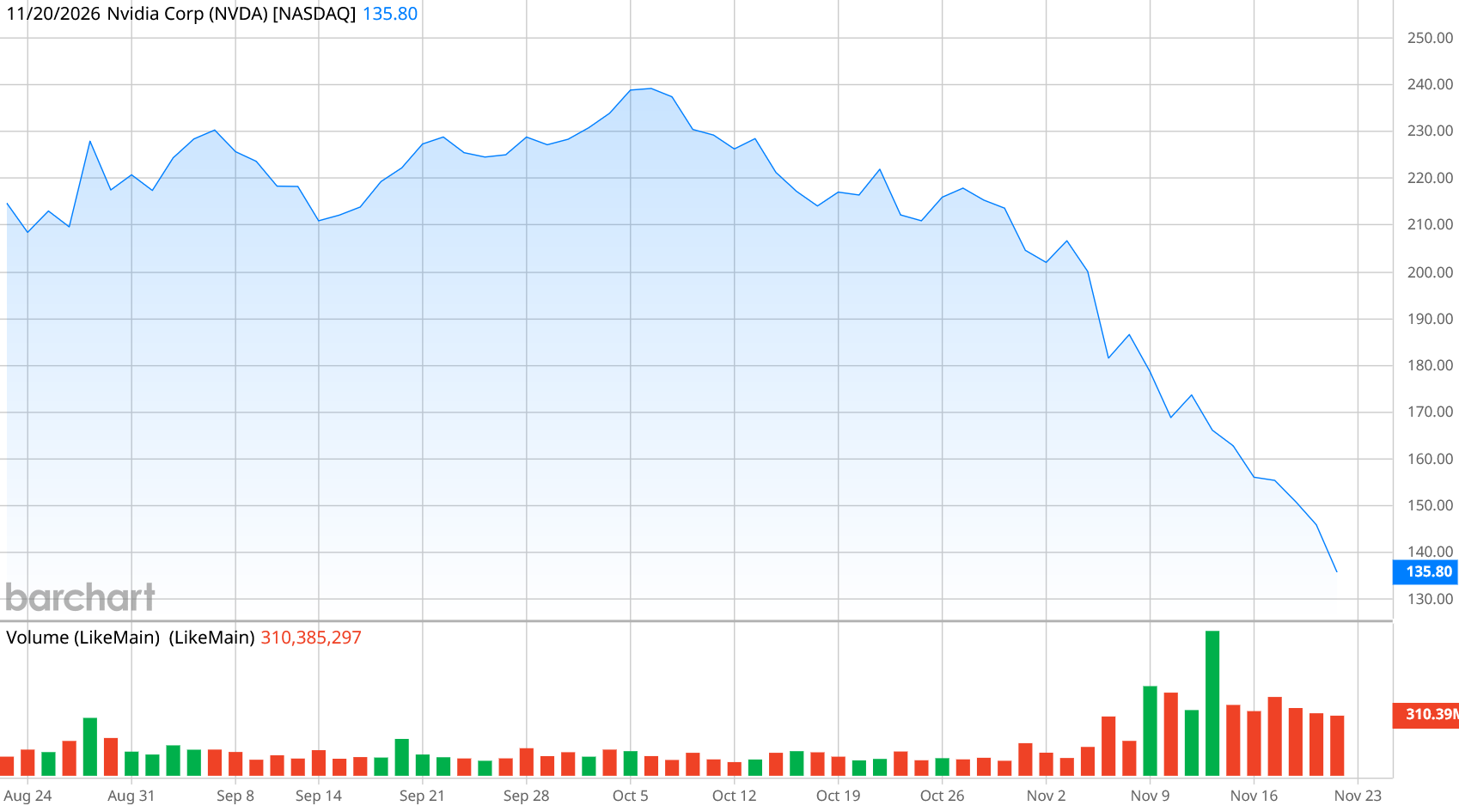
What Happened to the $500 Billion Financing Initiative?
Former Nvidia CEO Jensen Huang assembled an impressive group of financial partners in August, including Apollo Global Management (APO), Blackstone (BX), BlackRock (BLK), Brookfield Asset Management (BAM), Goldman Sachs (GS), and KKR (KKR) to mobilize more than $500 billion in third-party capital to aid in the AI buildout. At the time, Huang told CNBC that the effort signals that investors should consider AI computing in a new light.
“This is really the first time that technology chips have become an investable asset class,” he said. “These are revenue-generating assets now. They're productive, they're long-lived, they're fungible, they're flexible.”
It looked like a win-win—Nvidia customers would be able to expand their computing capacity without paying for everything upfront. Wall Street firms would provide the financing and make a profit, and Nvidia would sell more chips.
But the original agreements were nonbinding memorandums of understanding. And according to the WSJ, negotiations have run into a particularly important disagreement: How much financial risk should Nvidia assume?
Huang had proposed guarantees covering up to 25% of certain project costs. But lenders reportedly want stronger protections against potential losses if customers default and the chips backing their loans decline in value.
Discussions are continuing, but the first financing deal isn't expected to close until next year—months after Nvidia’s announcement.
Michael Burry Has Plenty of Questions About Nvidia
Burry has been one of the most vocal critics of not only Nvidia but of the entire AI sector recently. On Nov. 12, he doubled his put options position against the Nasdaq-100 Index ($IUXX), demonstrating his willingness to profit from weakness in the broader technology sector.
He also questioned Nvidia's financial reporting after the company released its third-quarter earnings results on Nov. 17 without simultaneously providing its complete Form 10-Q regulatory filing.
When another X user suggested investors should question what might be contained in the delayed document, Burry responded with a single word: “Exactly.”
Meanwhile, Huang isn’t around any longer to shepherd his agreement through Wall Street. He resigned after having an affair with a Chinese businesswoman whom U.S. intelligence officials believe was spying for Beijing, and he also had relationships with at least two Nvidia employees. CFO Colette Kress is serving as interim CEO.
Even after highlighting the WSJ story on X, Burry continued to question Nvidia and the rest of the semiconductor industry. “Coreweave (CRWV), Nebius (NBIS), NVIDIA, semis, I tried to warn you all,” he wrote Thursday. “I didn’t say short. But I provided the information one would need to sell.”
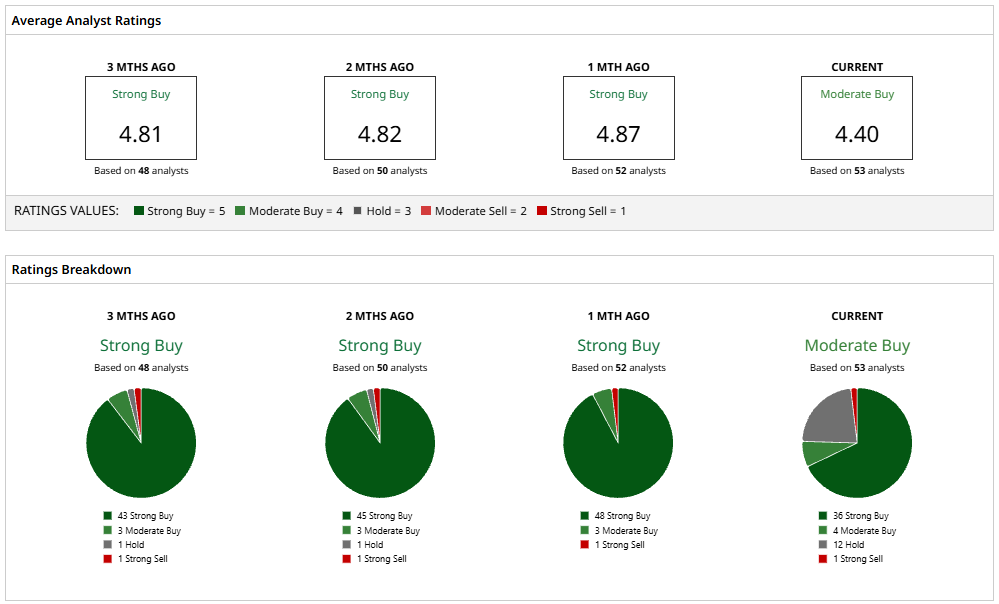
Does This Change the Investment Case for Nvidia?
Not really. Nvidia is bringing in money hand over fist, even without the Wall Street financing deal. Revenue in the fiscal third quarter of 2027 (ending Oct. 25) was $115.8 billion, up a staggering 103% from a year ago. And 93% of the company’s revenue comes from its data center business.
But the delay speaks to Huang’s original premise—that AI chips are revenue-generating, investable assets. If Nvidia and Wall Street can’t agree on the terms, then Nvidia could feel pressured to assume more risk—or walk away from sales.
Nvidia investors should be paying attention to the eventual terms of the first financing agreement. If Wall Street won't lend against Nvidia's chips without substantial guarantees from the manufacturer, that says something important about how lenders value those assets.
And if Nvidia has to assume more of the risk to keep its customers buying, shareholders deserve to know exactly how much.
On the date of publication, Patrick Sanders had a position in: NVDA , NBIS . All information and data in this article is solely for informational purposes. For more information please view the Barchart Disclosure Policy here.