


EN
North Water Trends | Beishui's net purchase of 11.812 billion yuan hit a new low in a year and a half, Beishui raised the Prosperity Fund (02,800) over HK$6 billion
The Zhitong Finance App learned that on November 20, in the Hong Kong stock market, Beishui traded a net purchase of HK$11.812 billion. Among them, Hong Kong Stock Connect (Shanghai) had a net purchase of HK$6.562 billion and Hong Kong Stock Connect (Shenzhen) had a net purchase of HK$5.249 billion.
The individual stocks that Beishui Net bought the most were Yingfu Fund (02800), Hang Seng China (02828), and Southern Hang Seng Technology (03033). The individual stocks sold the most by Beishui Net were CNOOC (00883) and SMIC (00981).
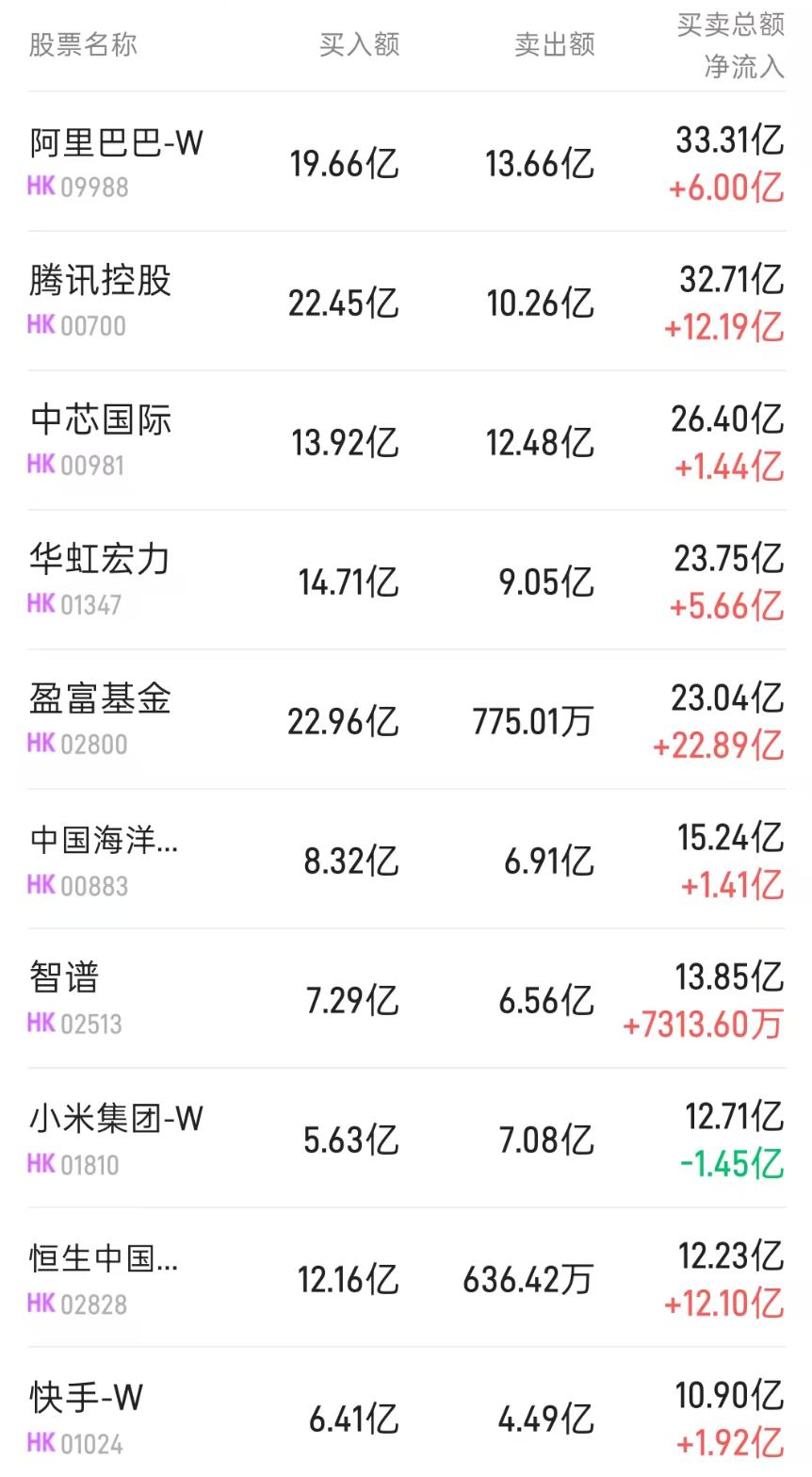

Hong Kong Stock Connect (Shanghai) active trading stocks
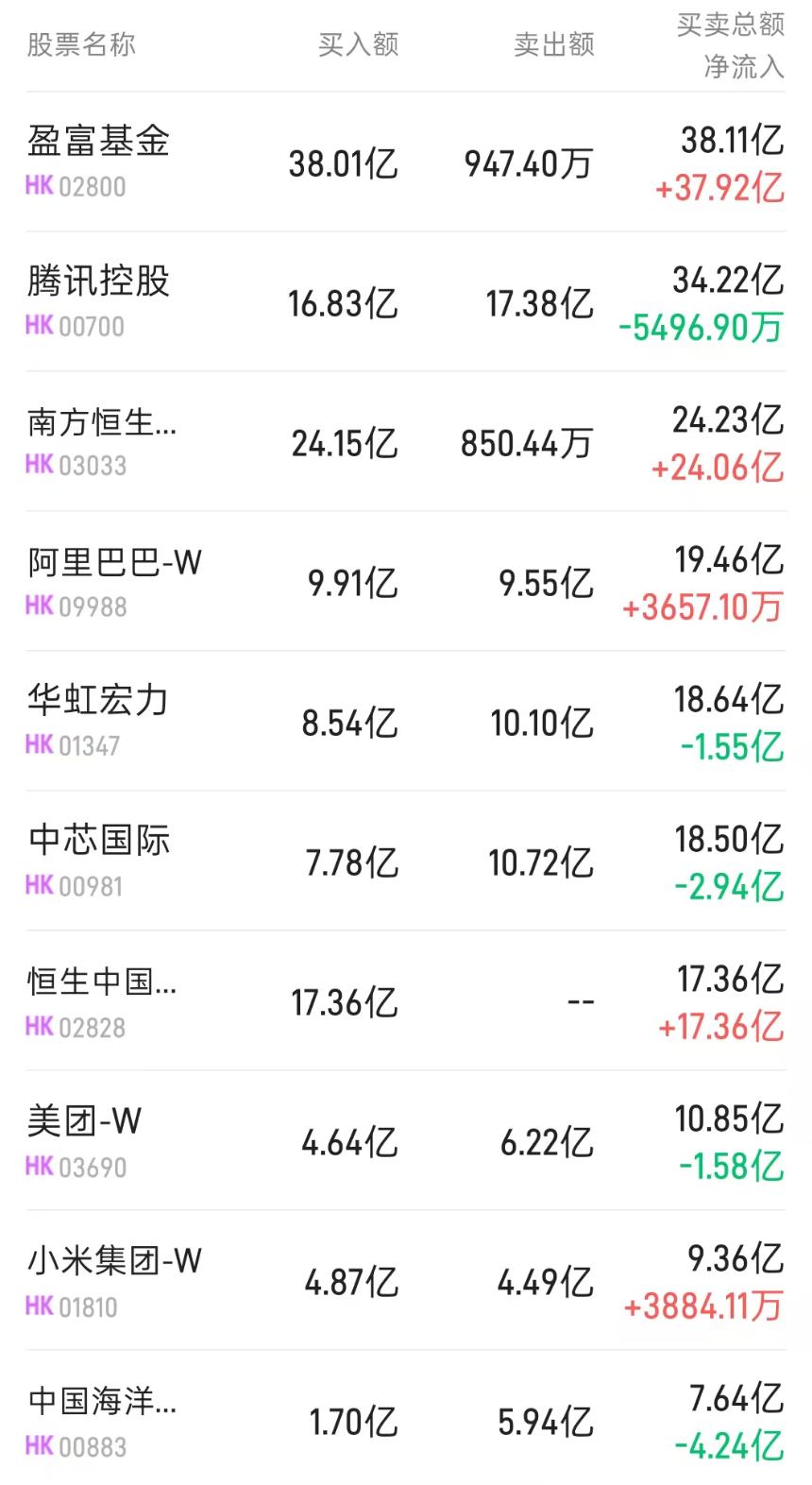
The Hang Seng Index hit an intraday low of 22,307.42 points, a new low since May 2025. Beishui Capital rushed to raise Hong Kong stock ETFs. Yingfu Fund (02800), Hang Seng China Enterprise (02828), and Southern Hang Seng Technology (03033) received net purchases of HK$6.08 billion, $2,945 billion, and HK$2,406 billion respectively. Dongwu Securities said that the sharp decline in Hong Kong stocks was mainly impacted by US inflation exceeding expectations, rising expectations of interest rate hikes by the Federal Reserve, and sudden changes in Nvidia's management. Overseas interest rate pressure and AI industry chain valuation adjustments combined to suppress risk appetite in Hong Kong stocks. In the short term, we are still cautious about Hong Kong stocks. The odds are fair, the relative win rate is still low, and the defensive approach is the main focus.
Tencent (00700) and Alibaba-W (09988) received net purchases of HK$1,164 million and HK$636 million respectively. According to Wall Street news, Ali and Tencent will send a signal that the peak of AI capital expenditure will be concentrated from 2027 to the first half of 2028. After 2028, the capital expenditure of both companies is expected to decline with the large-scale expansion of domestic computing power. Ali also clearly expects a positive free cash flow in the second half of 2028. Both companies emphasized that inference loads can already run efficiently on domestic chips, and domestic computing power is replacing overseas computing power as the core engine for cloud revenue growth.
Huahong Hongli (01347) received a net purchase of HK$410 million, while SMIC (00981) received a net sale of HK$150 million. On the evening of November 18, there were rumors that Samsung began to thoroughly investigate OEM; on November 19, a “small essay” affecting related concept stocks began circulating. The Shanghai Securities News reporter sought evidence from various sources such as foundry foundry and chip design companies and learned that the market rumor that “Samsung has begun to thoroughly investigate foundry” is inaccurate, and that currently Samsung has no relevant documents or regulations to strictly investigate foundry.
CNOOC (00883) had a net sale of HK$282 million. Goldman Sachs said earlier that the oil market will develop in the direction of “significant oversupply” in the coming year. Although supply risks remain, the situation is likely to put downward pressure on oil prices. Goldman Sachs expects the average price of Brent crude oil futures to be 88 US dollars per barrel next year, falling to 78 US dollars by the end of the year “because the risk premium will gradually return to normal.”
In addition, Kuaishou-W (01024) and Smart Spectrum (02513) received net purchases of HK$192 million and HK$73.13 million respectively.