


EN
Tech stock sell-off boosted safe-haven demand, yen led the rise of G10 currencies
The Zhitong Finance App learned that on Friday, as the sell-off wave of technology stocks intensified further and spread to the Asian trading session, investors sought safe haven assets one after another, and the yen led the rise of the Group of Ten (G10) currencies. The data showed that yen rose 0.4% against the US dollar to 159.11 yen per dollar, reversing Thursday's decline. Previously, the yen exchange rate weakened for a while, approaching the 160 mark, which attracted much attention from the market. The yen outperformed the Swiss franc, another traditional safe-haven currency, and is also the best performing G10 currency this week.
Commonwealth Bank of Australia strategist Carol Kong said, “While the yen is leading the rise, the Nikkei Index is also leading the decline in the Asian market.” She pointed out that the stronger performance of the yen against the Swiss franc reflects the fact that during periods of heightened risk aversion in the market, the yen is a more important safe-haven currency. At the same time, compared to the Swiss franc, Japan's monetary policy background is also more favorable to the yen.
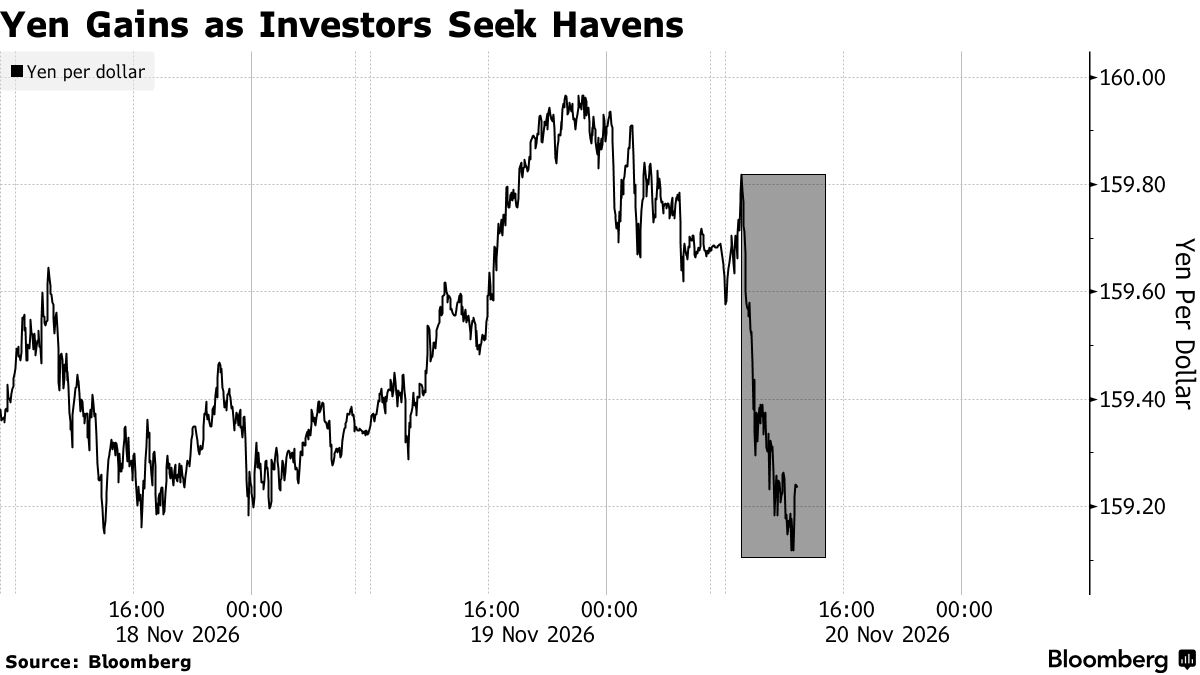
The USD/JPY exchange rate continues to be difficult to break through the 160 mark, thanks to the trend of the yen cross exchange rate, the decline in US Treasury yields, and the completion of the Anthropic IPO issuance process. The Australian dollar continued to fall under pressure against the yen, helping the yen to maintain strength against other major currencies. EURJPY and GBP/JPY showed similar trends as investors cut their risk exposure.
The Anthropic IPO's bookkeeping and filing process also supported the US dollar, but this capital flow has now ended, and its impact is largely reflected in the foreign exchange market. If Anthropic shares continue to fall in the next few days, this factor may even drag down the dollar.
Strategist Mark Cranfield said that when taken together, cross-currency position closing and safe-haven requirements may cause the dollar to continue to fluctuate between 156 and 160 against the yen for some time to come.