


EN
This ASX Mining Stock Is Exploring A Critical Defence Mineral
Modern defence systems don’t just run on technology. They depend on a range of critical minerals. Fighter jets, radar systems, precision weapons and ammunition all require specialised materials sourced from mines around the world. With global defence spending up 41% over the past decade, according to the Stockholm International Peace Research Institute (SIPRI), securing reliable supplies of these materials is becoming increasingly important.
Two of these minerals are antimony and tungsten, two metals with important defence and industrial applications.
ASX small-cap mining stock, Red Mountain Mining (ASX:RMX), is looking to capitalise on this opportunity, with exploration projects targeting both minerals across Australia and the United States.
Why antimony and tungsten are critical minerals
Antimony and tungsten might not attract the same attention as gold, copper or rare earths, but both are important to modern defence and industrial manufacturing.
Antimony is used in lead alloys for ammunition, military batteries and explosives, as well as flame retardants and semiconductor components. Tungsten, meanwhile, is valued for its exceptional hardness, density and ability to withstand extremely high temperatures. These properties make it useful in armour-piercing ammunition, military equipment, jet engines and industrial cutting tools.
Both metals are recognised on Australia's Critical Minerals List, reflecting their importance to national security, advanced manufacturing and reliable global supply chains. They are also recognised as strategically important by key partners, including the US, UK, Japan, South Korea and the European Union.
However, securing reliable supplies is becoming increasingly important.
China dominates the supply of both metals, accounting for just over half of global antimony mine production, while Russia contributes around 29%. Its position is even stronger in tungsten, where China accounts for approximately 79% of global production.
This concentration leaves Western supply chains exposed to disruptions. China's past restrictions on critical mineral exports have reinforced the importance of developing alternative sources of supply, both domestically and among allied countries.
Antimony and tungsten’s growing demand
The growing demand for antimony and tungsten outside of China and Russia is starting to translate into real investment.
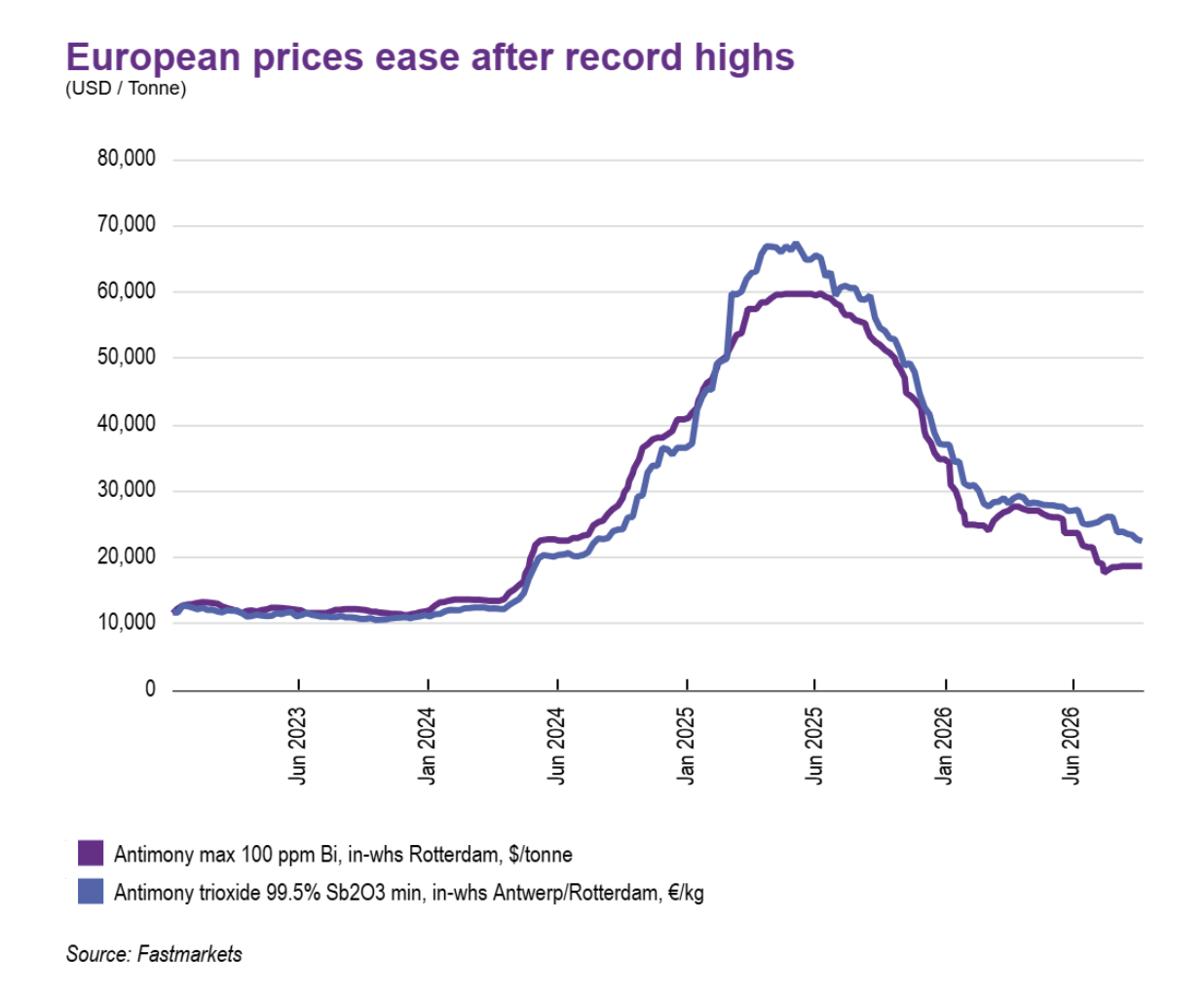
Antimony prices surged during 2024 and 2025, reaching around US$60,000 before retreating to approximately US$18,500. Despite the correction, prices remain above the levels seen before the supply squeeze.
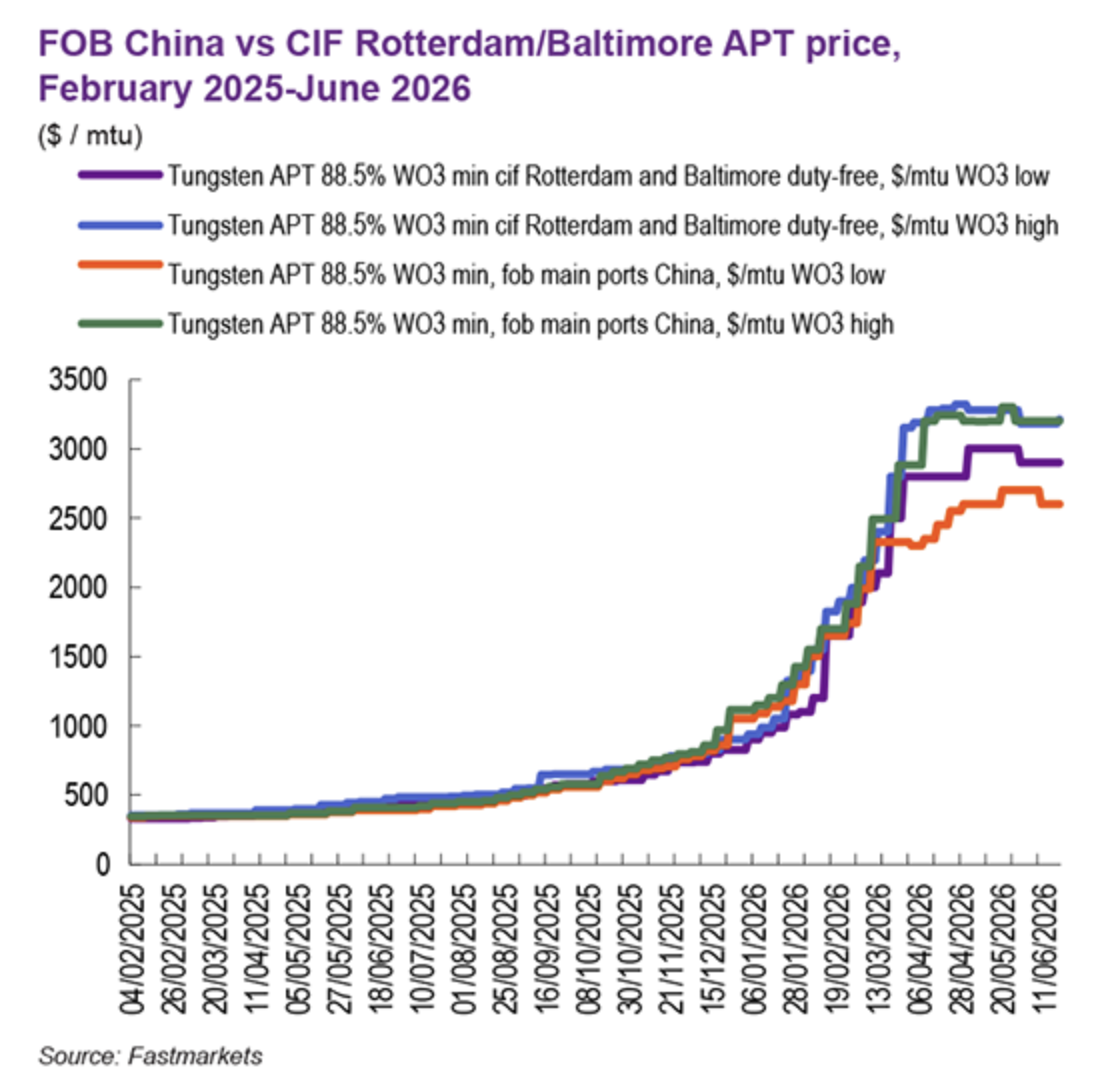
Tungsten has experienced an even sharper rally. The price of ammonium paratungstate (APT), a processed intermediate product used in the tungsten supply chain, has risen by around 750% since January 2025.
As of January 2026, Australia has a pipeline of around 26 antimony projects at various stages of exploration, development and production. Several tungsten mines outside of China are also in various stages of development.
In Australia, Larvotto Resources (ASX: LRV) brought its Hillgrove antimony-gold project into production in 2026, targeting annual output of around 4,900 tonnes of antimony concentrate.
Meanwhile, the military demand for these minerals can be seen by Perpetua Resources (PPTA) securing up to US$40 million in funding from the US army to investigate tungsten production at its Stibnite project which also contains antimony. Also, United States Antimony (UAMY) has received US$12.8 million in US defence funding to expand its processing capacity.
Red Mountain delivering on antimony potential
Red Mountain’s Antimony-Gold Project in Armidale has seen encouraging signs from its maiden drilling program which included a 5 metre section containing an average of 5.2% antimony, which included a 3 metre section averaging 8.4%.
The results confirm that antimony-bearing rock extends beneath the surface, providing the first meaningful evidence of what may lie underground. However, further drilling will be needed to establish how extensive and consistent the mineralisation is.
The company plans to complete a drone-based magnetic survey by ;ate November which should help better understand the underground structures and identify where to drill next. Further drilling activities are planned in 2027.
Meanwhile, at Red Mountain’s Pioneer project in America, rock-chip samples have confirmed tungsten-bearing rock across several parts of the project.
What do investors think of this ASX mining stock?
The most-followed Red Mountain narrative on the Simply Wall St community sees the company as a speculative way to gain exposure to two strategically important metals. It points to the location of Armidale near Larvotto Resources’ Hillgrove project, as well as the company’s US antimony assets and its Pioneer Tungsten Project in Montana, which sits beside Almonty Industries’ project.
The narrative argues that these locations could give Red Mountain exposure to established mining districts and potential future demand for Western supply. However, it also acknowledges the company’s early exploration stage, lack of a resource estimate and ongoing funding requirements.
Red Mountain has exposure to two strategically important metals and some encouraging early exploration results. The challenge now is turning those early signs into defined resources. For investors, the next round of drilling will be far more important than the broader defence minerals story.
Disclaimer
This article was written independently by the author, without issuer input or approval. Red Mountain Mining (the "Issuer") has a marketing services agreement with Simply Wall St. Details on compensation and other important information can be found in the disclosure and disclaimer at the end of this narrative.
Have feedback on this article? Concerned about the content? Get in touch with us directly. Alternatively, email editorial-team@simplywallst.com