


EN
Office Development Hits 10-Year Low as Demand for Top Space Climbs

Not so long ago, there was too much office supply and not enough vacancy.
Then, there’s now.
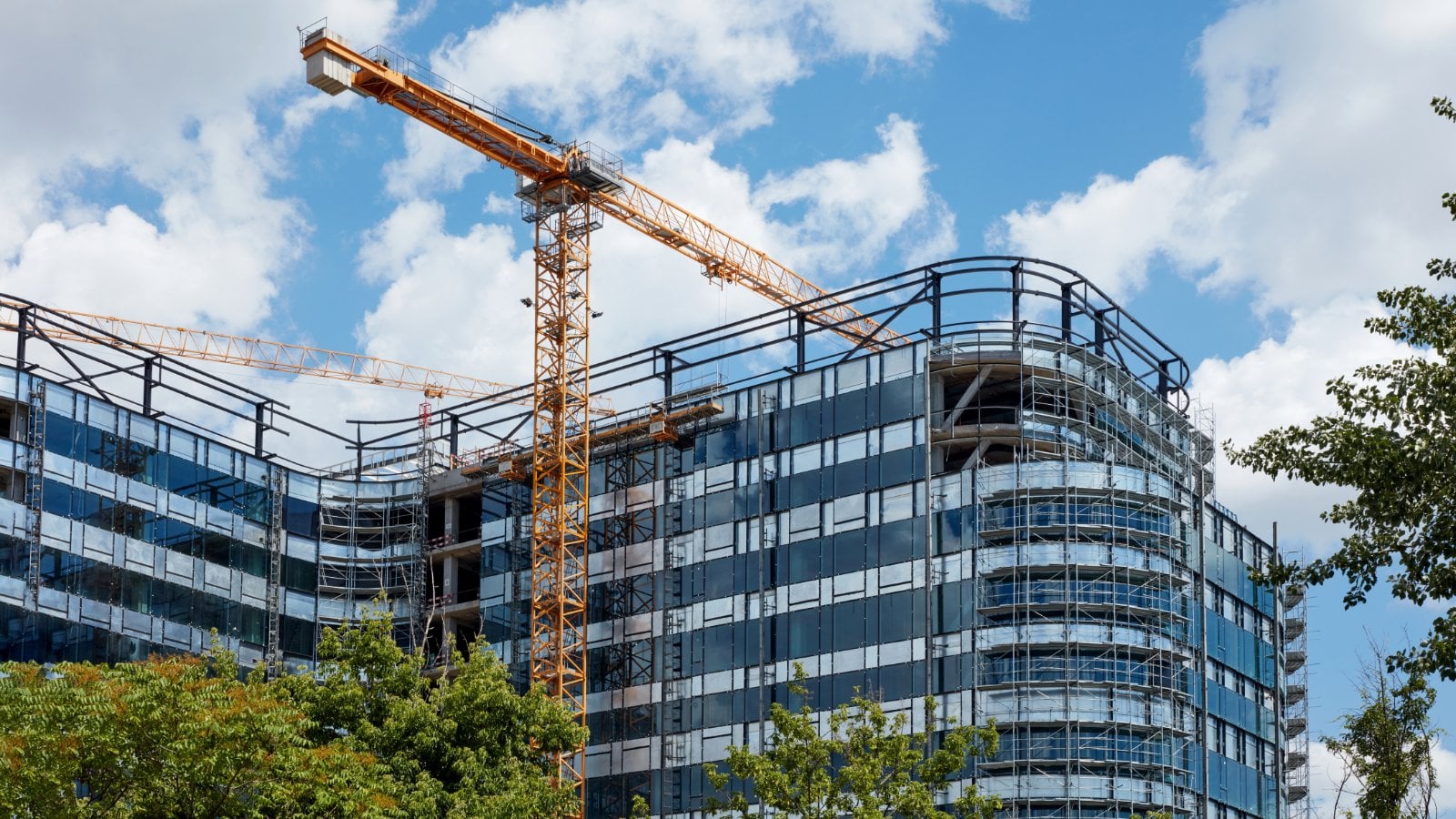
Cushman & Wakefield’s Global Office Supply report said that global office development is at its lowest level in a decade. With 580 million square feet under construction during Q3 2026, “the under-construction pipeline is 45% below its Q3 2017 peak of 1.04 billion square feet,” the report said. Meanwhile, in the United States, space under construction is at 23 million square feet, down 83% from its 2020 high.
At the same time, “occupiers keep gravitating to high-quality, amenitized buildings, and that space is being absorbed faster than it can be replaced. That is pushing Class A vacancy down and supporting rent growth,” Sandy Romero, head of office & alternatives, global research at Cushman & Wakefield, told Connect CRE.
It’s All About the Money
Quite simply, the slowdown in construction and deliveries is because “building costs have risen faster than consumer prices,” the report explained.
Supply chain disruptions, energy and shipping cost shocks, and labor shortages are among the reasons. Additionally, U.S. base rates stood at 3.75% in the third quarter, with further increases expected into early 2027.
To assess whether new projects make financial sense, Cushman & Wakefield relied on economic rent, the minimum rent a new office building must earn to be profitable. Economic rent combines land acquisition costs, construction, operational expenses, leasing, developer margins and borrowing costs incurred during the development.
On average, North American market rents were about 6% below economic rents. But those rents vary by city.
- New York, NY: Market rents of $156.64 per square foot are nearly 60% above economic rent of $98.69. About 6.4 million square feet were under construction as of the third quarter, nearly double the level of a year earlier. More than 2.5 million square feet is also under renovation as owners respond to tenants’ push for better space.
- Miami, FL: Class A starting rents are up 39% over three years, and Class A vacancy is 16%, down 180 basis points from a year ago. The pipeline of 1.8 million square feet is nearly three times last year’s level. “Among the metros, Miami is already there,” Romero said.
- Dallas, TX: Romero said that class A vacancy fell nearly 230 basis points (bps) over the past year to 26.3%, while starting rents are up 36% over three years. She expects build-to-suit and renovation projects to lead in the near term. “If vacancy keeps tightening, speculative projects could start to be planned in the next couple of years,” she added.
- Boston, MA: Market rents averaged $78.59 per square foot in 2026, 8% below economic rent of $85.38. No projects are under construction or renovation. Market rents are projected to rise above economic rent in 2029, driven by strong demand for newer Class A space.
- San Francisco, CA: Market rents of $98.43 per square foot are just 4% below economic rent of $102.94, the narrowest gap among markets still below the break-even point. Class A vacancy remains high at 31.1%, while the pipeline has been empty for almost four years.
- Chicago, IL: Chicago has the widest gap. Market rents of $84.56 per square foot are 10% below, meaning new construction isn’t likely to make financial sense until 2032.
- Los Angeles, CA: Romero said Los Angeles is furthest from the break-even point. Class A vacancy averaged 25.8% in the third quarter. “Class A starting rents are up 16% over three years, but that hasn’t kept pace with construction costs and other pressures,” Romero observed.
Another potential quandary is federal fund rate hikes. However, Romero pointed out that such increases count but aren’t a deciding factor in development.
“The economic rent needed to justify a project does include the cost of capital, and an additional hike could push out viability timelines modestly,” she explained.
“But rent growth is the bigger lever, since demand for top-tier space is already lifting rents.”
Class B and—Oversupply?
The word “oversupply” can send jitters throughout the commercial real estate sector. It’s also an interesting term for office construction. Romero said that despite issues such as the doubling of construction in places like New York City, overbuilding won’t be an issue in the current cycle.
“New York’s inventory shrunk by 1.6% over the past three years,” she explained.
“Annual completions have averaged 1.8 million square feet, about 45% below the 10-year average of 3.2 million.”
Additionally, rents and demand are high enough to support new development.
There is also plenty of Class B space, but that’s not a cure-all for demand. Romero said that value-seeking tenants could take on the older, less fancy space.
“However, tenants looking for highly amenitized space for their workforce won’t see Class B as a substitute,” she commented.
Owners wishing to compete would need to upgrade to Class A standards, where the building allows. “Where it doesn’t, they may face prolonged vacancy or benefit from conversion to another use,” Romero said.
The Recommendations
Building an office is more capital intensive than ever. How can all parties determine when such a project actually pencils?
- For investors: The report suggested that investors target markets with strong fundamentals, including locations with emerging or severe supply shortages where demand far outweighs new deliveries.
- For developers: Look for any edge in capital or development costs, secure skilled labor before the project starts to avoid delays and consider distressed sales that generate a redevelopment strategy.
- For tenants and owners: If leases end between 2028 and 2030, Romero suggests starting early on renewals and renovations. Demand for high-quality space is outpacing supply, so tenants with Class A needs must plan ahead of their expiration. At the same time, “owners should invest in renovations and amenities now, so tenants see staying put as the better option,” she said.
Photo: goir/Shutterstock
The post Office Development Hits 10-Year Low as Demand for Top Space Climbs appeared first on Connect CRE.