


EN
Williams-Sonoma reports Q3 2026 in line with expectations but stock drops

Kitchenware and home goods retailer Williams-Sonoma (NYSE:WSM) met Wall Street’s revenue expectations in Q3 2026, with revenue up 5.8% year on year to $1.99 billion. Its non-GAAP profit of $2.19 per share was in line with analysts’ consensus estimates.
For more on Williams-Sonoma, read the full research report for free.
Williams-Sonoma Q3 2026 highlights:
- Revenue $1.99 billion vs. the S&P consensus estimate of $2.00 billion (5.8% year-on-year growth, in line)
- Adjusted EPS $2.19 vs. the S&P consensus estimate of $2.19 (in line)
- Operating margin 18.9%, up from 17% in the same quarter last year
- Free cash flow margin 10.8%, down from 13.2% in the same quarter last year
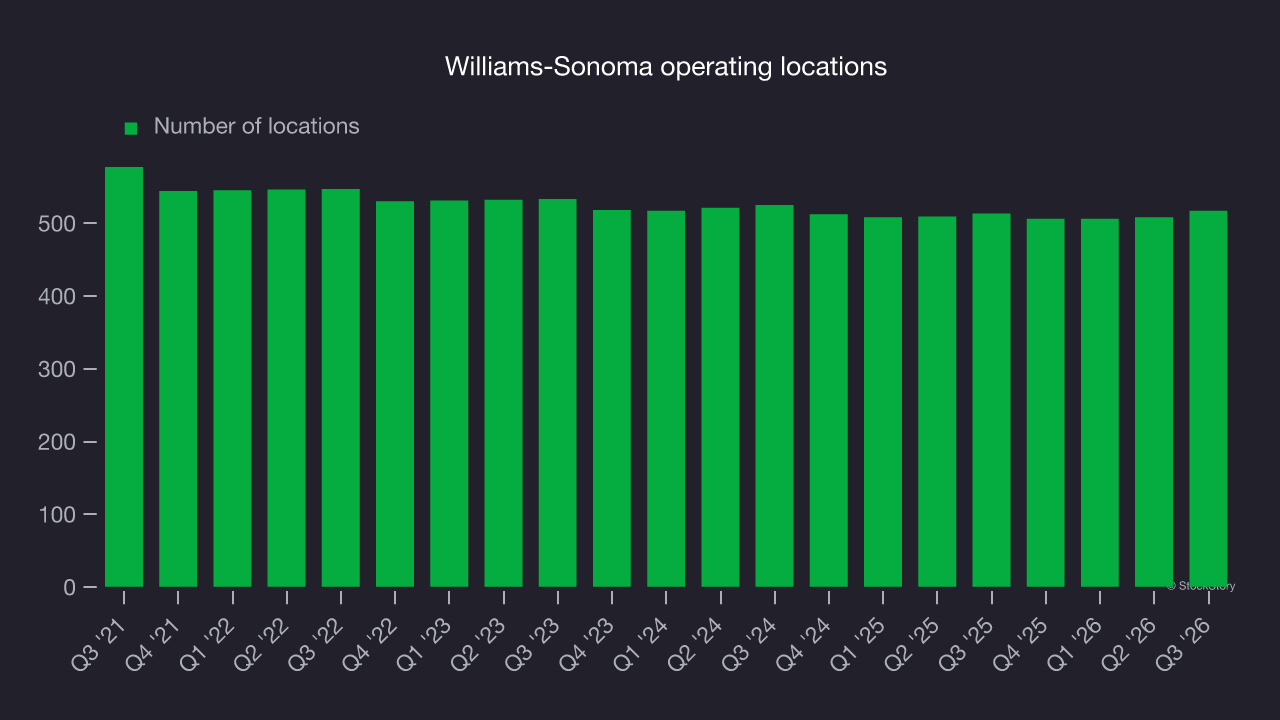
- Locations 517 at quarter end, up from 513 in the same quarter last year
- Same-store sales rose 5.1% year on year (4% in the same quarter last year)
- Market capitalization $30.63 billion
“We delivered another strong quarter in Q3, with a 5.1% comp, 5.8% total revenue growth, an operating margin of 17.4%, and earnings per share growth of 11.7% to $2.19. Every brand and channel delivered a positive comp. Our design advantages and direct sourcing model translate into superior economics, allowing us to increase full-price selling while continuing to give our customers great quality and value. We are making choices that strengthen our brands over time while delivering significant value on a consistent basis. Our 10 great brands and compelling product drive demand, and our integrated operating platform converts that demand into profitable growth,” said Laura Alber, president and chief executive officer.
Revenue growth
A company’s long-term revenue performance can indicate its overall quality. Any business can report a good quarter or two, but the best consistently grow over the long term.
With $8.11 billion in revenue over the past 12 months, Williams-Sonoma is a mid-sized retailer, which sometimes brings disadvantages compared to larger competitors benefiting from better economies of scale.
Williams-Sonoma struggled to increase demand as its $8.11 billion in revenue for the trailing 12 months was close to its revenue three years ago. This was mainly because it closed stores.
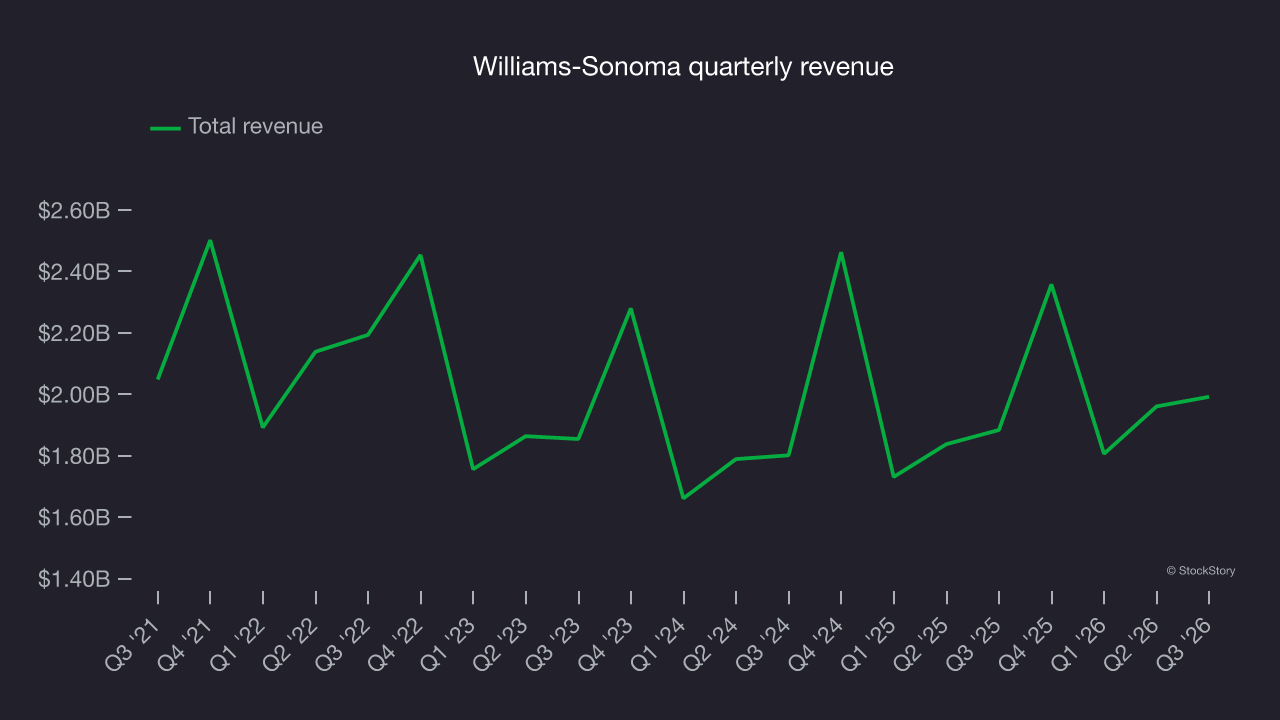
This quarter, Williams-Sonoma grew its revenue by 5.8% year on year, and its $1.99 billion in revenue was in line with Wall Street’s consensus estimates.
Looking ahead, sell-side analysts expect revenue to grow 5.8% over the next 12 months, according to S&P, an acceleration versus the last three years. This is a strong projection and indicates its newer products will drive better revenue performance.
Store performance
Number of stores
The number of stores a retailer operates is a critical driver of how quickly company-level revenue can grow.
Williams-Sonoma operated 517 locations in the latest quarter. Over the last two years, the company has generally reduced its store count, averaging 1.1% annual declines.
When a retailer shutters stores, it usually means that brick-and-mortar demand is less than supply, and it is responding by closing underperforming locations to improve profitability.
Same-store sales
A company’s store base only paints one part of the picture. When demand is high, it makes sense to open more. But when demand is low, it’s prudent to close some locations and use the money in other ways. Same-store sales offer insight into this topic by measuring organic growth for a retailer’s e-commerce platform and brick-and-mortar shops that have existed for at least a year.
Williams-Sonoma’s demand has been strong for a retailer over the last two years. On average, the company has increased its same-store sales by 4.2% per year. Given its declining store base over the same period, this performance stems from a mixture of higher e-commerce revenue and increased foot traffic at existing locations (closing stores can sometimes boost same-store sales).
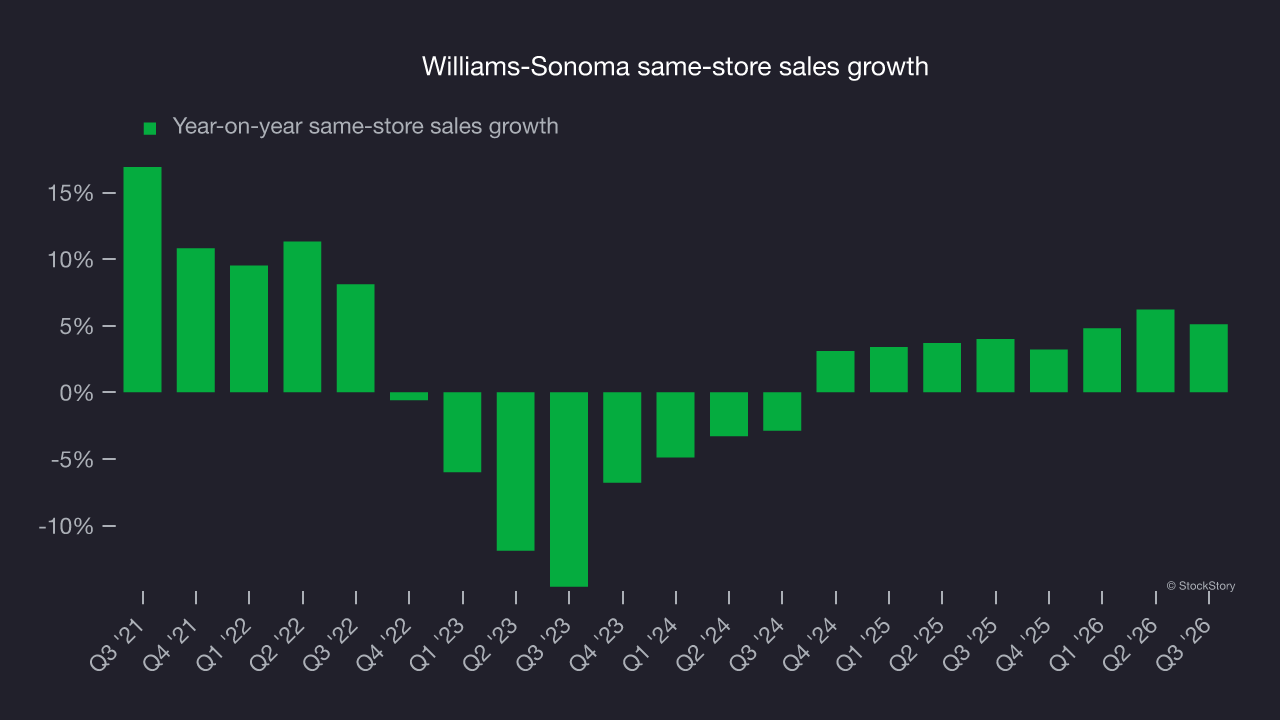
In the latest quarter, Williams-Sonoma’s same-store sales rose 5.1% year on year. This performance was more or less in line with its historical levels.
Key takeaways from Williams-Sonoma’s Q3 results
Williams-Sonoma released results that were in line for both revenue and EPS. Investors were likely hoping for more, and shares traded down 7.1% to $241 immediately following the results.
Williams-Sonoma’s latest quarter matters, but longer-term fundamentals and valuation matter far more when deciding if the stock is a buy. For more on Williams-Sonoma, read the full research report here (it’s free).