


EN
Why You Might Be Interested In Patrick Industries, Inc. (NASDAQ:PATK) For Its Upcoming Dividend
Readers hoping to buy Patrick Industries, Inc. (NASDAQ:PATK) for its dividend will need to make their move shortly, as the stock is about to trade ex-dividend. The ex-dividend date is one business day before a company's record date, which is the date on which the company determines which shareholders are entitled to receive a dividend. The ex-dividend date is an important date to be aware of as any purchase of the stock made on or after this date might mean a late settlement that doesn't show on the record date. In other words, investors can purchase Patrick Industries' shares before the 23rd of November in order to be eligible for the dividend, which will be paid on the 7th of December.
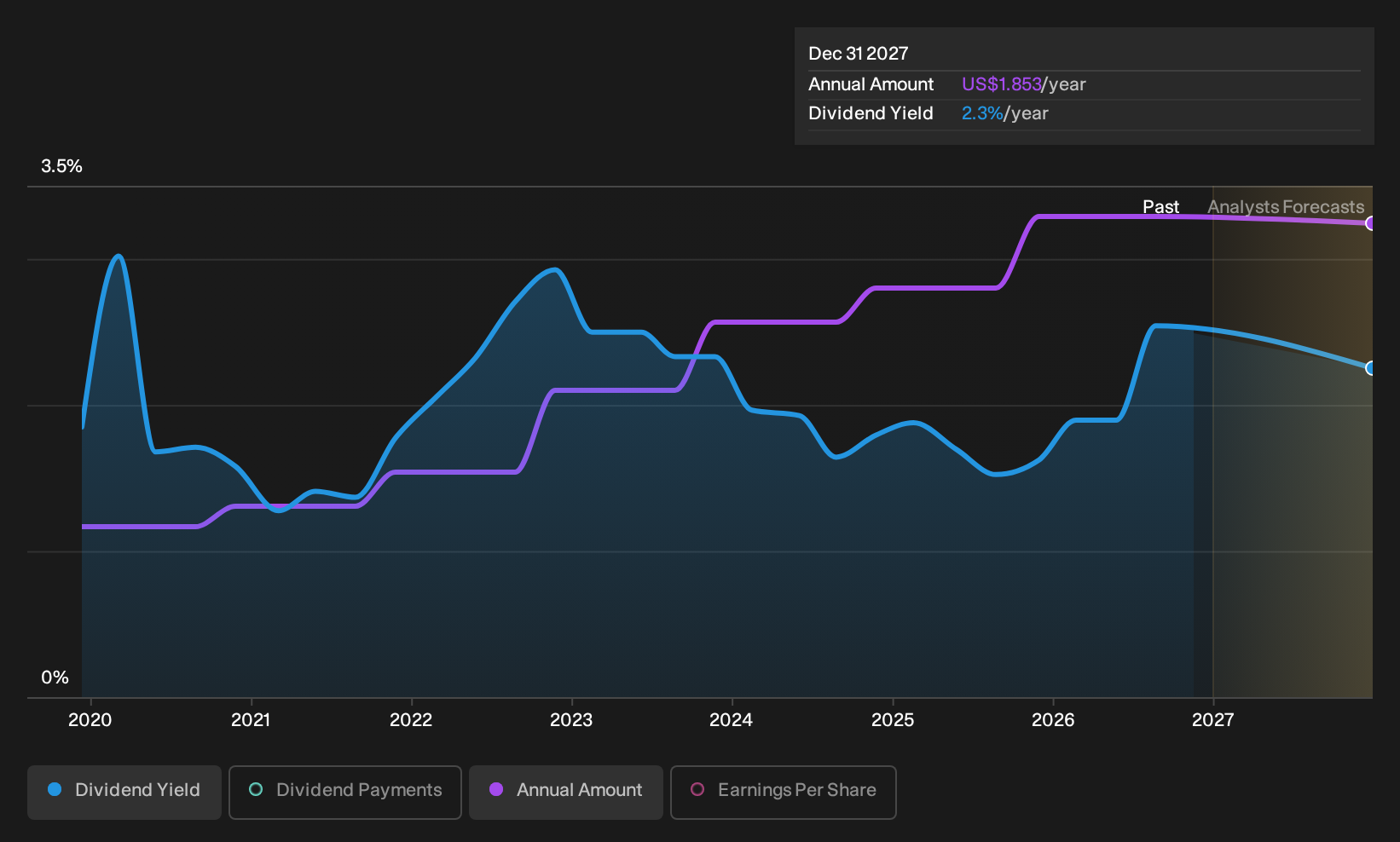
The company's next dividend payment will be US$0.52 per share, and in the last 12 months, the company paid a total of US$1.88 per share. Calculating the last year's worth of payments shows that Patrick Industries has a trailing yield of 2.3% on the current share price of US$82.31. If you buy this business for its dividend, you should have an idea of whether Patrick Industries's dividend is reliable and sustainable. So we need to check whether the dividend payments are covered, and if earnings are growing.
Dividends are typically paid from company earnings. If a company pays more in dividends than it earned in profit, then the dividend could be unsustainable. Fortunately Patrick Industries's payout ratio is modest, at just 45% of profit. Yet cash flow is typically more important than profit for assessing dividend sustainability, so we should always check if the company generated enough cash to afford its dividend. It distributed 31% of its free cash flow as dividends, a comfortable payout level for most companies.
It's encouraging to see that the dividend is covered by both profit and cash flow. This generally suggests the dividend is sustainable, as long as earnings don't drop precipitously.
Check out our latest analysis for Patrick Industries
Click here to see the company's payout ratio, plus analyst estimates of its future dividends.
Have Earnings And Dividends Been Growing?
Stocks in companies that generate sustainable earnings growth often make the best dividend prospects, as it is easier to lift the dividend when earnings are rising. If earnings decline and the company is forced to cut its dividend, investors could watch the value of their investment go up in smoke. This is why it's a relief to see Patrick Industries earnings per share are up 7.8% per annum over the last five years. The company is retaining more than half of its earnings within the business, and it has been growing earnings at a decent rate. Organisations that reinvest heavily in themselves typically get stronger over time, which can bring attractive benefits such as stronger earnings and dividends.
The main way most investors will assess a company's dividend prospects is by checking the historical rate of dividend growth. Since the start of our data, seven years ago, Patrick Industries has lifted its dividend by approximately 16% a year on average. It's encouraging to see the company lifting dividends while earnings are growing, suggesting at least some corporate interest in rewarding shareholders.
Final Takeaway
Has Patrick Industries got what it takes to maintain its dividend payments? Earnings per share growth has been growing somewhat, and Patrick Industries is paying out less than half its earnings and cash flow as dividends. This is interesting for a few reasons, as it suggests management may be reinvesting heavily in the business, but it also provides room to increase the dividend in time. It might be nice to see earnings growing faster, but Patrick Industries is being conservative with its dividend payouts and could still perform reasonably over the long run. It's a promising combination that should mark this company worthy of closer attention.
So while Patrick Industries looks good from a dividend perspective, it's always worthwhile being up to date with the risks involved in this stock. Every company has risks, and we've spotted 1 warning sign for Patrick Industries you should know about.
Generally, we wouldn't recommend just buying the first dividend stock you see. Here's a curated list of interesting stocks that are strong dividend payers.
Have feedback on this article? Concerned about the content? Get in touch with us directly. Alternatively, email editorial-team (at) simplywallst.com.