


EN
Is At Home Sleep Testing Altering The Investment Case For ResMed (RMD)?
- ResMed acquired VirtuOx to build out its virtual sleep clinic and at-home testing offer, adding more remote assessment, diagnosis and monitoring capability across its ecosystem.
- The deal connects ResMed directly to a rapidly expanding virtual sleep clinics market by tying its connected devices and software to earlier detection and coordinated diagnostic services.
- We will now look at how ResMed's VirtuOx acquisition could reshape the investment narrative around its digital sleep and respiratory ecosystem.
Scan how ResMed's move into virtual sleep care compares with other potential beneficiaries of remote diagnostics by reviewing our curated list of 37 healthcare AI stocks.
ResMed Investment Narrative Recap
To own ResMed, you have to believe its sleep and breathing health platform can keep pulling more patients into diagnosis and long term digital monitoring. The analyst consensus Narrative on Simply Wall St leans on steady mid single digit revenue growth, high quality earnings and scope for margins to stay healthy. The VirtuOx deal fits neatly into that story by deepening virtual diagnosis and data capture rather than changing it.
In the near term, the key swing factor still sits with execution on supply costs, Astral remediation and replacing MatrixCare revenue, not VirtuOx. Astral corrective actions, freight and component inflation and the hole left by MatrixCare are the main operational risks flagged. If remediation drags or the refocused software portfolio underdelivers, the margin and earnings profile that underpins the current narrative could soften.
The VirtuOx acquisition stands out as the announcement most tied to this virtual sleep clinic theme. VirtuOx adds at home sleep testing and monitoring capacity that plugs straight into ResMed’s existing connected devices and platforms like AirView and myAir. That combination is intended to pull diagnosis earlier, then keep more patients inside ResMed’s ecosystem over time.
For you as an investor, the interesting angle is how this deepens the diagnosis funnel that analysts already view as a core catalyst. More virtual testing can support device and mask demand, while the digital tools are designed to sustain adherence and resupply, which matters for recurring revenue. The opportunity sits beside risks such as Astral and inflation, so the focus now is on how cleanly ResMed executes the integration and maintains margin discipline while virtual volumes scale.
ResMed's current analyst narrative focuses on revenues of US$6.7b and earnings of US$2.0b by 2029, based on 5.4% yearly revenue growth and an earnings increase of about US$400m from the US$1.6b reported today.
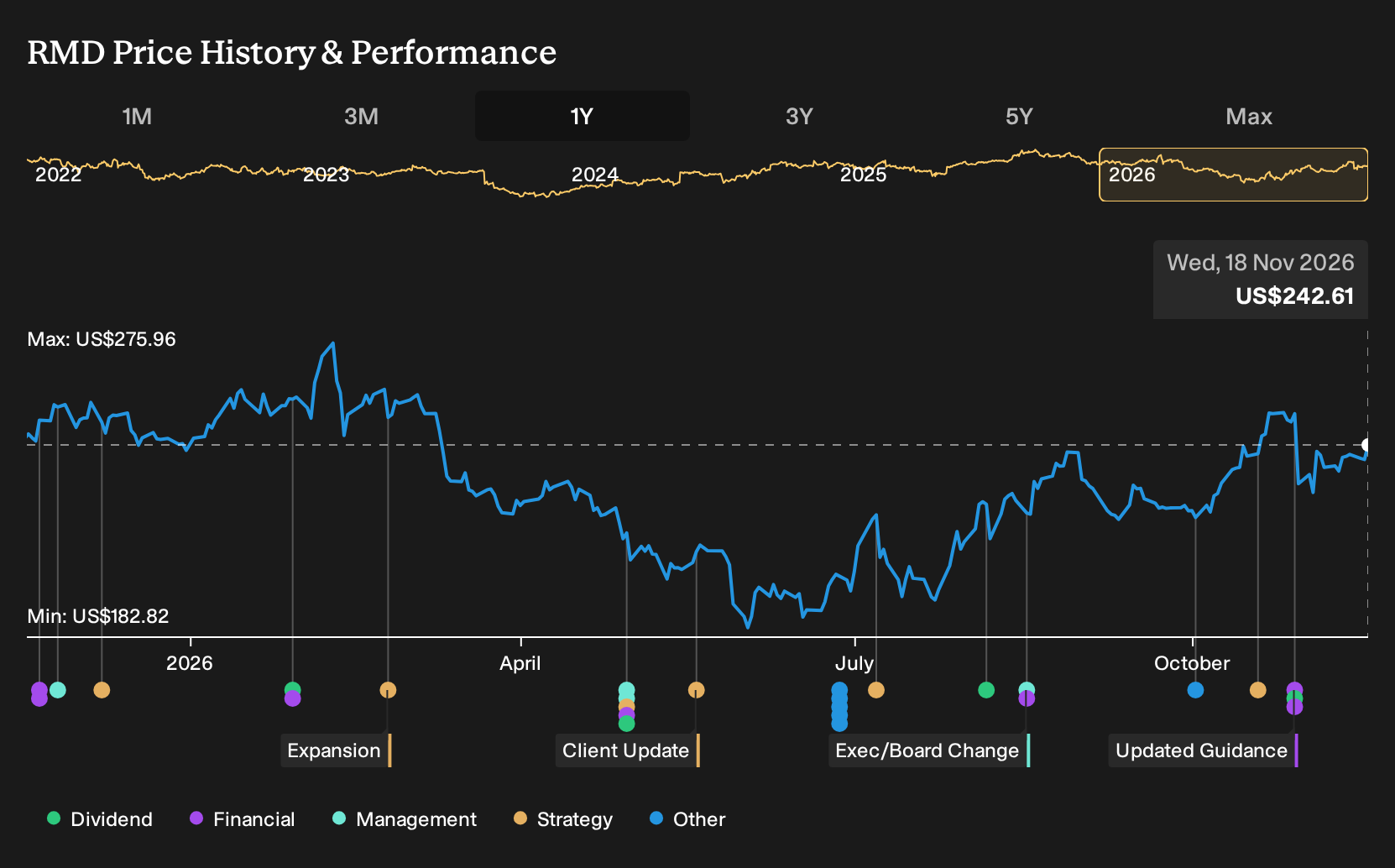
Uncover why ResMed's fair value indicates a 9% potential upside to its current price, which could narrow quickly.
Exploring Other Perspectives
You might see ResMed very differently if you lean into the bullish catalyst around higher digital adherence. The most optimistic analysts were already pencilling in revenue of about US$7.2b and earnings of US$2.2b by 2029 before this VirtuOx news, so a bigger virtual sleep clinics market could push those narratives to evolve further.
Explore 4 other ResMed fair value estimates, including one that suggests potential upside of up to 50% from the current price.
Form Your Own Verdict
Disagree with existing narratives? Extraordinary investment returns rarely come from following the herd, so go with your instincts.
- A great starting point for your ResMed research is our analysis highlighting 4 key rewards that could impact your investment decision.
- See our latest analysis for ResMed. The report includes a comprehensive fundamental analysis summarized in a single visual, the Snowflake, making it easy to evaluate ResMed's overall financial health at a glance.
Looking For More Ideas Beyond ResMed?
If the VirtuOx deal has you rethinking how ResMed fits into your portfolio, it can be useful to line it up against other opportunities that share traits you care about, whether that is quality, income or resilience.
The Simply Wall St Screener makes it straightforward to sift through hundreds of alternatives using the same data driven approach behind this analysis. A few quick angles to consider are:
- If you want potential mispricing to work in your favor, start with a curated pool of companies screened for quality and valuation through our 35 high quality undervalued stocks.
- If income is a priority and you care about consistency as much as yield, narrow your search to a focused set of higher yielding payers using the 8 dividend fortresses.
- If capital preservation sits high on your checklist, filter for sturdier balance sheets and steadier fundamentals with the 30 resilient stocks with low risk scores.
Have feedback on this article? Concerned about the content? Get in touch with us directly. Alternatively, email editorial-team@simplywallst.com