


EN
Target’s Q3 2026 sales beat estimates
General merchandise retailer Target (NYSE:TGT) reported Q3 2026 results topping the market’s revenue expectations, with revenue up 7.1% year on year to $27.07 billion. Its non-GAAP profit of $2.65 per share was 27.2% above analysts’ consensus estimates.
For more on Target, read our free full research report.
Target Q3 2026 highlights:
- Revenue $27.07 billion vs. S&P consensus estimates of $26.52 billion (7.1% year-on-year growth, 2% beat)
- Adjusted EPS $2.65 vs. S&P consensus estimates of $2.08 (27.2% beat)
- Adjusted EPS guidance Management raised its full-year adjusted EPS guidance to $11.03 at the midpoint, a 6% increase
- Operating margin 6.2%, up from 3.8% in the same quarter last year
- Free cash flow -$150 million, down from $149 million in the same quarter last year
- Locations 2,026 at quarter end, up from 1,995 in the same quarter last year
- Same-store sales rose 5.6% year on year (-2.7% in the same quarter last year)
- Market capitalization $72.47 billion
"Our third-quarter results reflect continued progress against our strategic priorities, centered on serving busy families with our signature blend of style, design and value," said Michael Fiddelke, Chief Executive Officer of Target. "Our investments are building on one another—creating momentum in our business and further defining our unique lane in retail. As we head into the all-important holiday season, we're focused on offering the best of Target to our guests—from finding just the right gifts for all the people they love to bringing their holiday traditions and celebrations to life—with value they can feel great about."
Revenue growth
Examining a company’s long-term performance can provide clues about its quality. Any business can experience short-term success, but top-performing ones enjoy sustained growth for years.
With $109.5 billion in revenue over the past 12 months, Target is a large company in the consumer retail sector and benefits from economies of scale, giving it an edge in distribution. This also gives it more leverage on its fixed costs than smaller competitors and the flexibility to offer lower prices. However, its scale is a double-edged sword because there are only a finite number of places to build new stores, making it harder to find incremental growth. For Target to boost its revenue, it likely needs to adjust its prices or expand into foreign markets.
Target struggled to increase demand as its $109.5 billion in revenue for the trailing 12 months was close to its revenue three years ago. This was surprising given it opened new stores to expand its reach.
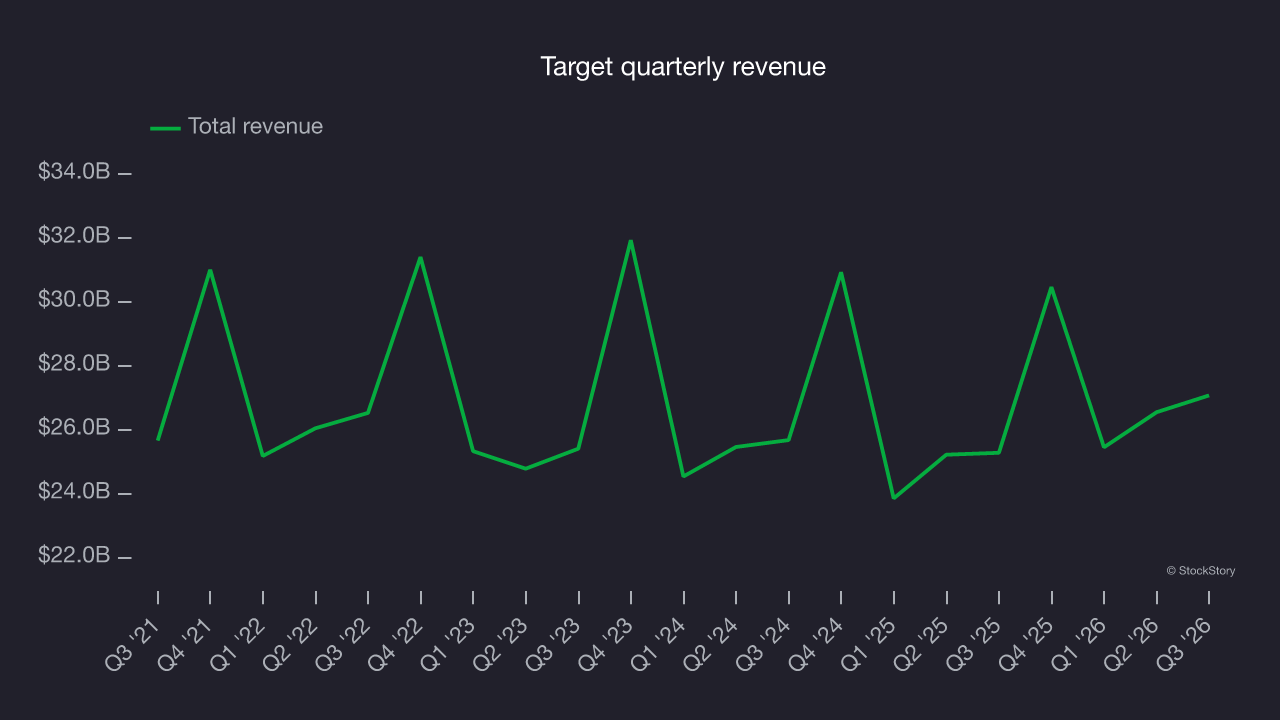
This quarter, Target reported year-on-year revenue growth of 7.1%, and its $27.07 billion in revenue exceeded Wall Street’s consensus estimates by 2%.
Looking ahead, sell-side analysts expect revenue to grow 3.2% over the next 12 months, according to S&P, an acceleration versus the last three years. This projection is above the sector average and suggests its newer products will spur better top-line performance.
Store performance
Number of stores
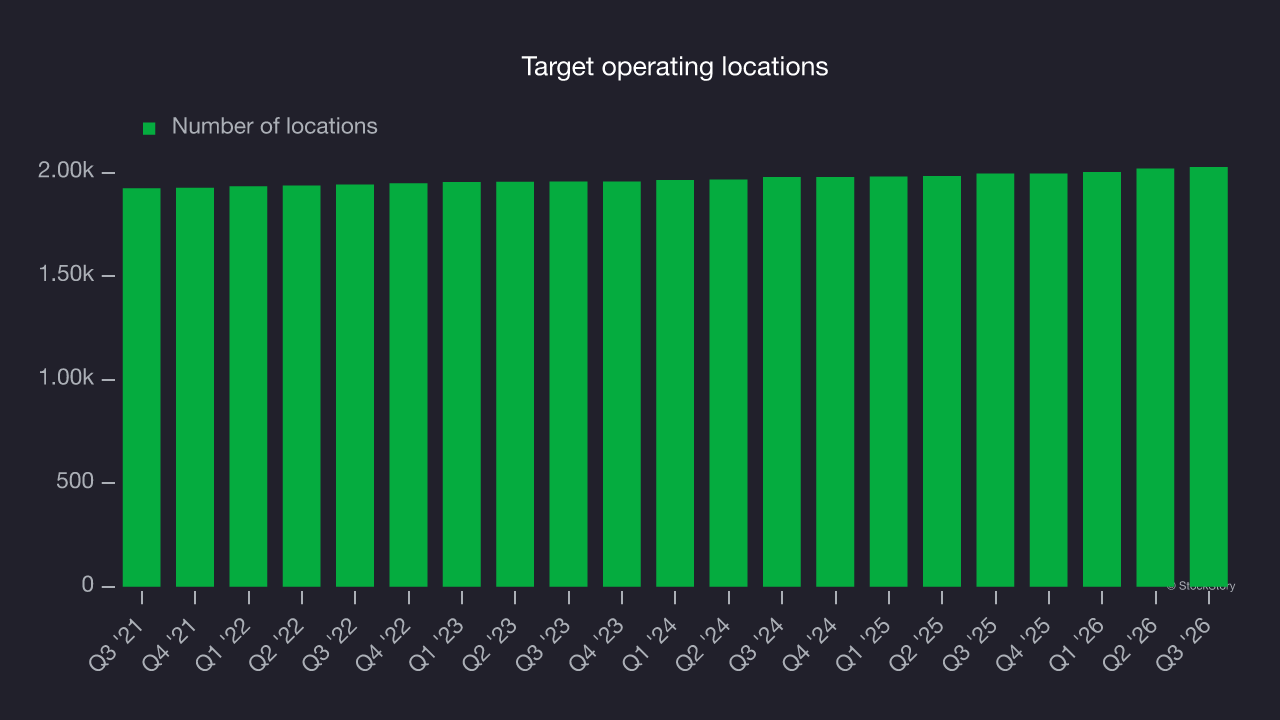
Target operated 2,026 locations in the latest quarter. Over the last two years, it has generally opened new stores, averaging 1.1% annual growth. This was faster than the broader consumer retail sector.
When a retailer opens new stores, it usually means it’s investing for growth because demand is greater than supply, especially in areas where consumers may not have a store within reasonable driving distance.
Same-store sales
A company’s store base only paints one part of the picture. When demand is high, it makes sense to open more. But when demand is low, it’s prudent to close some locations and use the money in other ways. Same-store sales is an industry measure of whether revenue is growing at those existing stores and is driven by customer visits (often called traffic) and the average spending per customer (ticket).
Target’s demand within its existing locations has barely increased over the last two years as its same-store sales were flat. Target should consider improving its foot traffic and efficiency before expanding its store base.
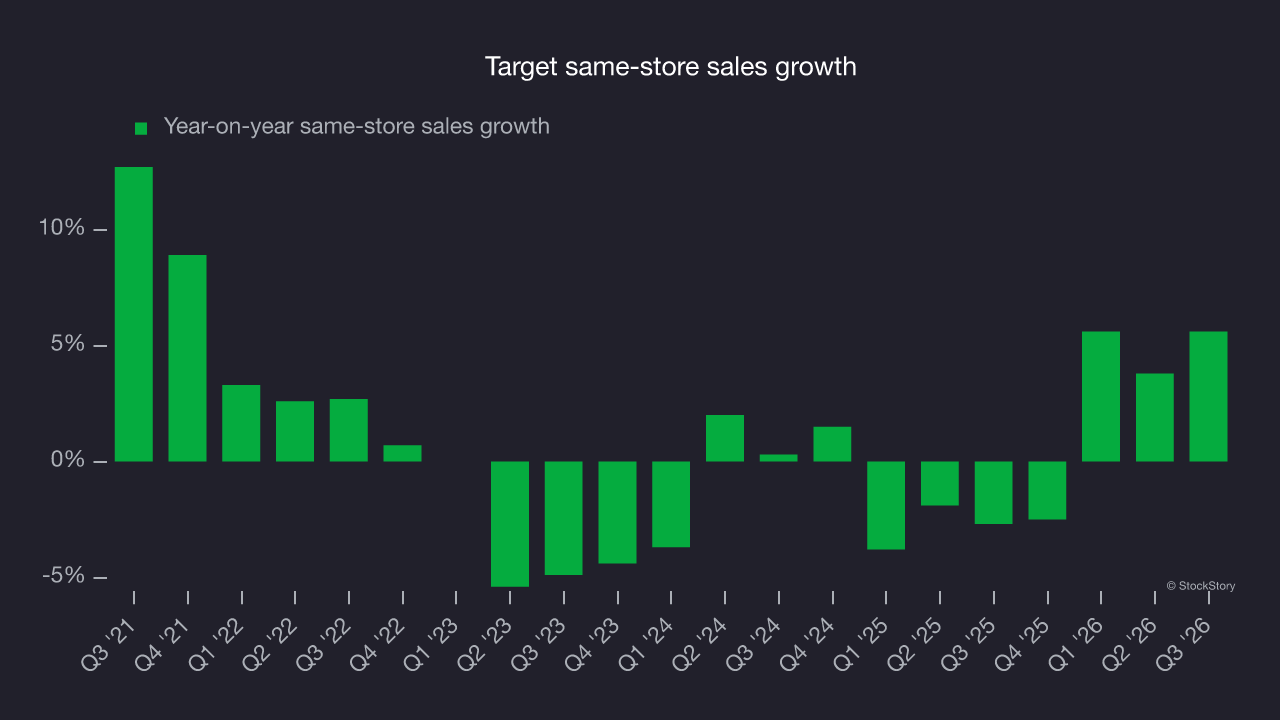
In the latest quarter, Target’s same-store sales rose 5.6% year on year. The acceleration from its historical growth levels was a positive sign.
Key takeaways from Target’s Q3 results
Gross margin well above analysts’ consensus estimates and an EPS beat made this a solid quarter for Target, with some clear positives. Investors nevertheless appeared to be hoping for more, as shares fell 2% to $156.31 immediately after the results.
When considering an investment in Target, look at the bigger picture of its valuation, business qualities and latest earnings. Read the full research report here (it’s free).