


EN
Dear Nvidia Stock Fans, Mark Your Calendars for December 10
Picture the past week from the seat of an Nvidia (NVDA) shareholder. A weekend report raised uncomfortable questions about the man who built the company. By Thursday, he had resigned.
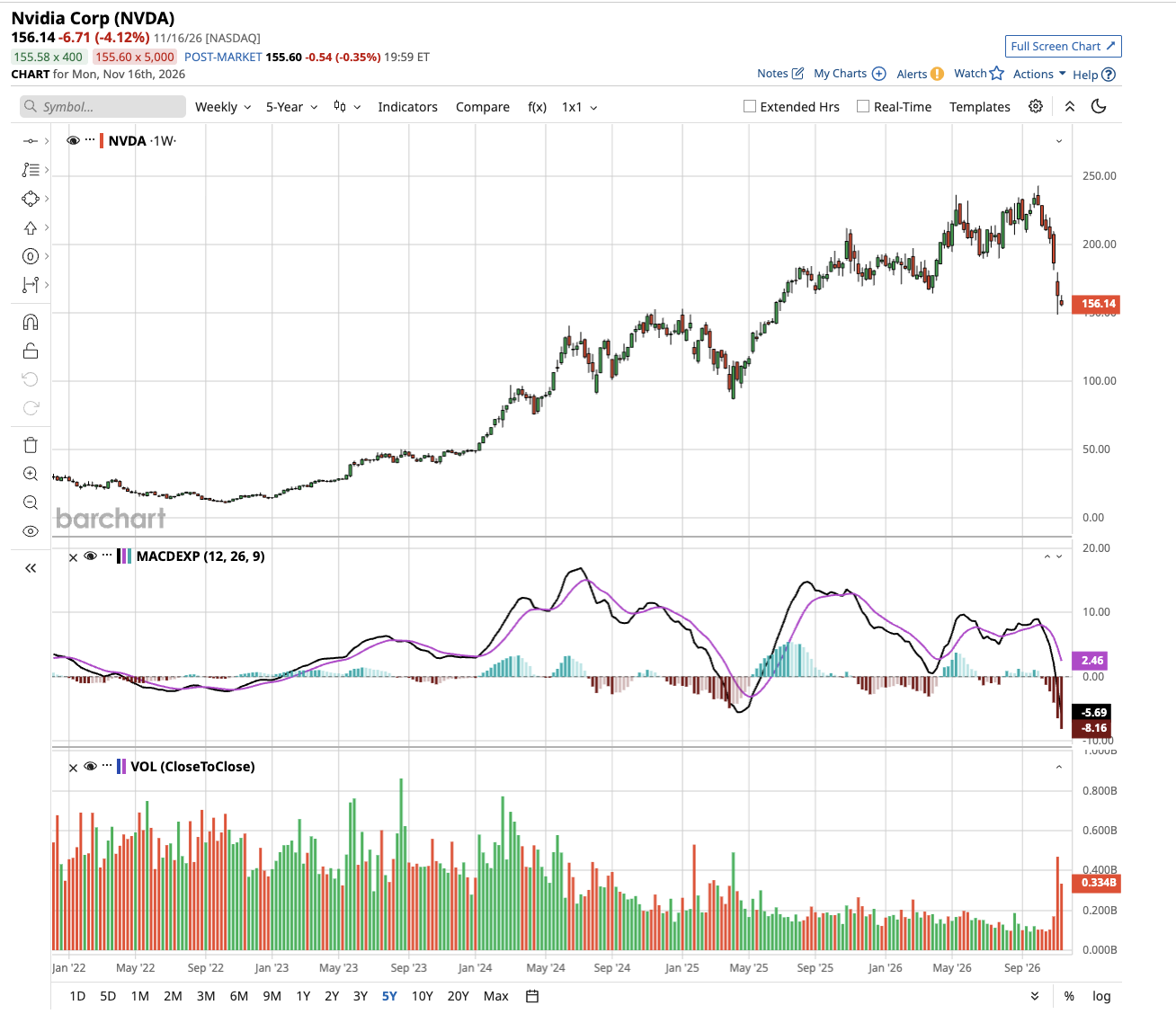
Over six trading sessions, the shares slid about 20% and roughly $1 trillion in value disappeared along the way. Now investors are watching the calendar. One date will test the business, while others will test Washington's answers. And Dec. 10 could prove the most important of all.
Why One Chipmaker Sways the AI Trade
Gaming graphics were Nvidia's original business, and artificial intelligence (AI) turned it into something much bigger. ChatGPT arrived in late 2022. And a wave of chatbots, large language models, and AI agents followed, all of which run on hardware built to handle enormous workloads. Nvidia’s processors became the default choice for many of those builders.
The results show up in its revenue growth numbers.
- Nvidia’s annual sales rose from $27 billion in fiscal 2023 (ended in January) to $130.5 billion in fiscal 2026.
- Analysts forecast revenue to surpass $216 billion in fiscal 2027, while the chip giant could surpass $1 trillion in sales within the next three fiscal years.
- Valued at a market cap of $3.75 trillion, Nvidia stock has returned more than 400% in the last five years.
- Since ChatGPT launched in December 2022, the tech stock is up a whopping 800%.
However, it also trades 35% below record highs for one key reason. Jensen Huang has represented Nvidia publicly since co-founding it in 1993 and was forced to resign from the helm last week.
How the Nvidia Stock Selloff Unfolded
Over the last weekend, The New York Times said Huang had a close relationship with Alice Huang, a former executive at Megaspeed, which is a Singapore-based data center company. U.S. officials believed she was a spy for Beijing, while China has rejected the claim as groundless.
Nvidia's board hired a law firm to investigate. Then came a second report, this time about an alleged relationship with a company executive, as Huang admitted to his employees that he had been unfaithful to his wife.
On Nov. 12, Huang resigned as CEO, president, and board member. Investors rushed for the exits, and over six trading sessions, NVDA stock slid 20%, erasing about $1 trillion from Nvidia’s market value. Colette Kress, the chief financial officer, now serves as interim CEO.
Why Dec. 10 Could Matter Most
Here is what's on the schedule:
• Dec. 1: Rep. Brian Mast, a Florida Republican, asked Huang for a private, transcribed interview with the House Foreign Affairs Committee, NBC News reported.
• Dec. 3: Sen. Tim Scott, a South Carolina Republican, invited Huang to appear before the Senate Banking Committee.
• Dec. 10: Scott asked Commerce Secretary Howard Lutnick to testify at a public hearing.
Why call on Lutnick? His agency writes and enforces the rules on exporting advanced chips. Scott told him his testimony was vital to Congress's oversight, NBC News reported. A Lutnick spokesperson said he agreed to come voluntarily.
Lawmakers from both parties want answers. Treasury Secretary Scott Bessent told CNBC that State, Treasury, and the U.S. Trade Representative had urged adding Megaspeed to the Commerce Department's Entity List for months, a list owned by the Department of Commerce.
Sen. Jim Banks, an Indiana Republican, said on Fox News that Megaspeed still was not on the list. Megaspeed denies any wrongdoing, while CNBC reported the firm bought more than $4.8 billion of advanced Nvidia chips over two years.
Bloomberg, citing Reuters, reported the White House is discussing whether to dismiss Lutnick. Huang pushed for easier rules, and Nvidia's China market share fell from about 95% to nearly zero, the BBC said. Nvidia says it follows U.S. export laws, and Lutnick's answers could hint at where the rules go next.
What Next for Nvidia Stock?
The board picked Kress as interim CEO and named Harvey Jones its first chair. A company statement said it will consider internal and outside candidates. The BBC listed cofounder Chris Malachowsky, computing chief Ian Buck, and Arm Holdings (ARM) CEO Rene Haas as possibilities, and President Donald Trump floated Apple's (AAPL) Tim Cook.
Huang still has supporters. A petition urging his return passed 176,000 signatures, Forbes reported.
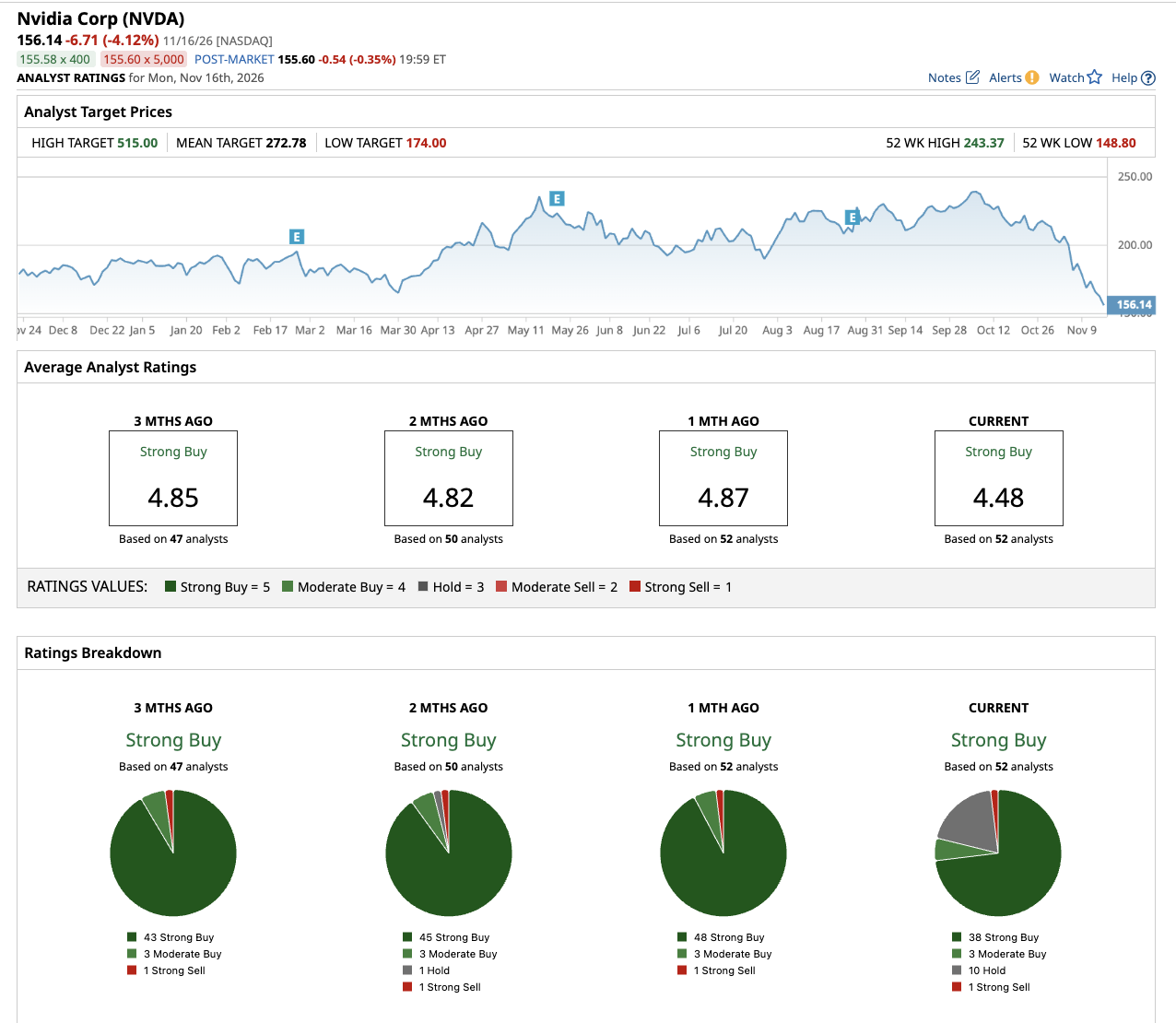
Analysts covering Nvidia stock remain bullish. Out of 52 analysts tracking NVDA stock, 38 recommend “Strong Buy,” three recommend “Moderate Buy,” 10 recommend “Hold,” and one recommends “Strong Sell.” The average NVDA stock price target is $273, above the current price target of $156.
On the date of publication, Aditya Raghunath did not directly have a position in any of the securities mentioned in this article. All information and data in this article is solely for informational purposes. For more information please view the Barchart Disclosure Policy here.