


EN
Self-definition creates a new paradigm for battery safety: From Aurora Battery, BAIC Motor (01958) handed over a new “answer” for family cross-country
The penetration rate of new energy passenger cars is approaching 70%. According to data from the China Federation Branch, the domestic NEV retail penetration rate reached 67.5% in October 2026. However, the higher the penetration rate, the more the persistent problem of battery safety needs to be addressed systematically. This not only affects individual users' car purchase decisions, but also relates to the long-term sustainable development of the entire NEV industry.
A series of positive changes are already being made at an accelerated pace. At the policy level, the mandatory national standard “Safety Requirements for Electric Vehicle Power Batteries” (GB 38031-2025) was officially implemented. The requirements for thermal diffusion tests were upgraded from “not igniting and not exploding within 5 minutes after the heat gets out of control, and providing a thermal incident alarm” to no fire, no explosion, and the smoke must not harm passengers. This means that safety is already a “must-answer question” for all newly declared models.
After the threshold was raised, a deeper question also surfaced: when safety standards rise further, how do the car companies involved need to deal with it? Also, through national standards, a set of standard solutions and a set of solutions defined according to user scenarios, the degree of redundancy in the face of real risk may be completely different. However, the difference between these is probably not in the general parameters of the battery, but in the right to define it.
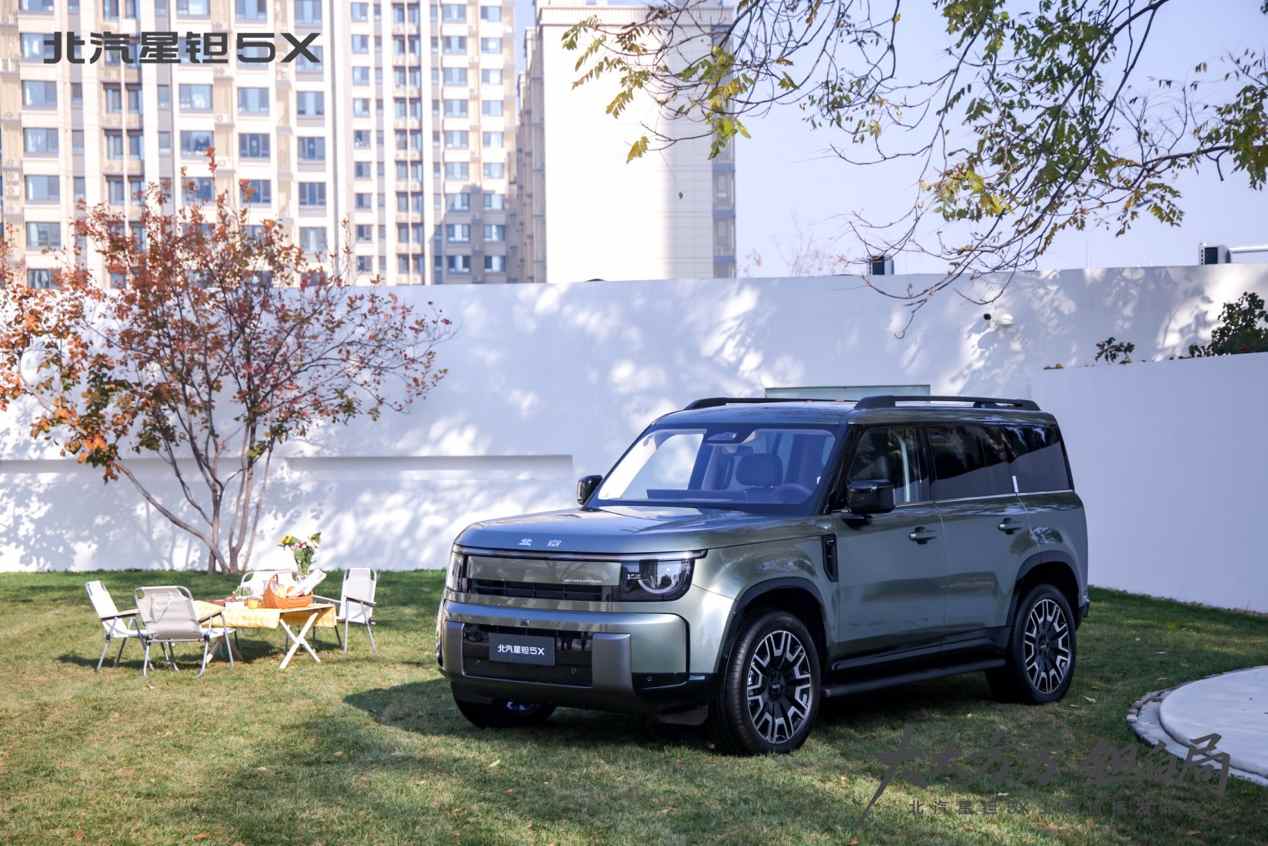
In the past, car companies purchased standardized turnkey solutions from battery manufacturers. Batteries were similar to a “black box”, and car companies did not grasp the intermediate material formulations, manufacturing processes, and safety logic. While standardized solutions can meet general safety requirements, it is difficult to target specific risk scenarios. However, car companies face up to users and have a natural advantage in understanding vehicle usage scenarios and improving safety and redundancy. The Aurora battery on the BAIC Xingtantalum 5X is a demonstration of the systematic results of BAIC Motor (01958), based on BAIC's 17 years of battery research and accumulation at the current watershed in NEV development.
From standard solutions to independent definitions, dig deep into the safety logic of Aurora batteries
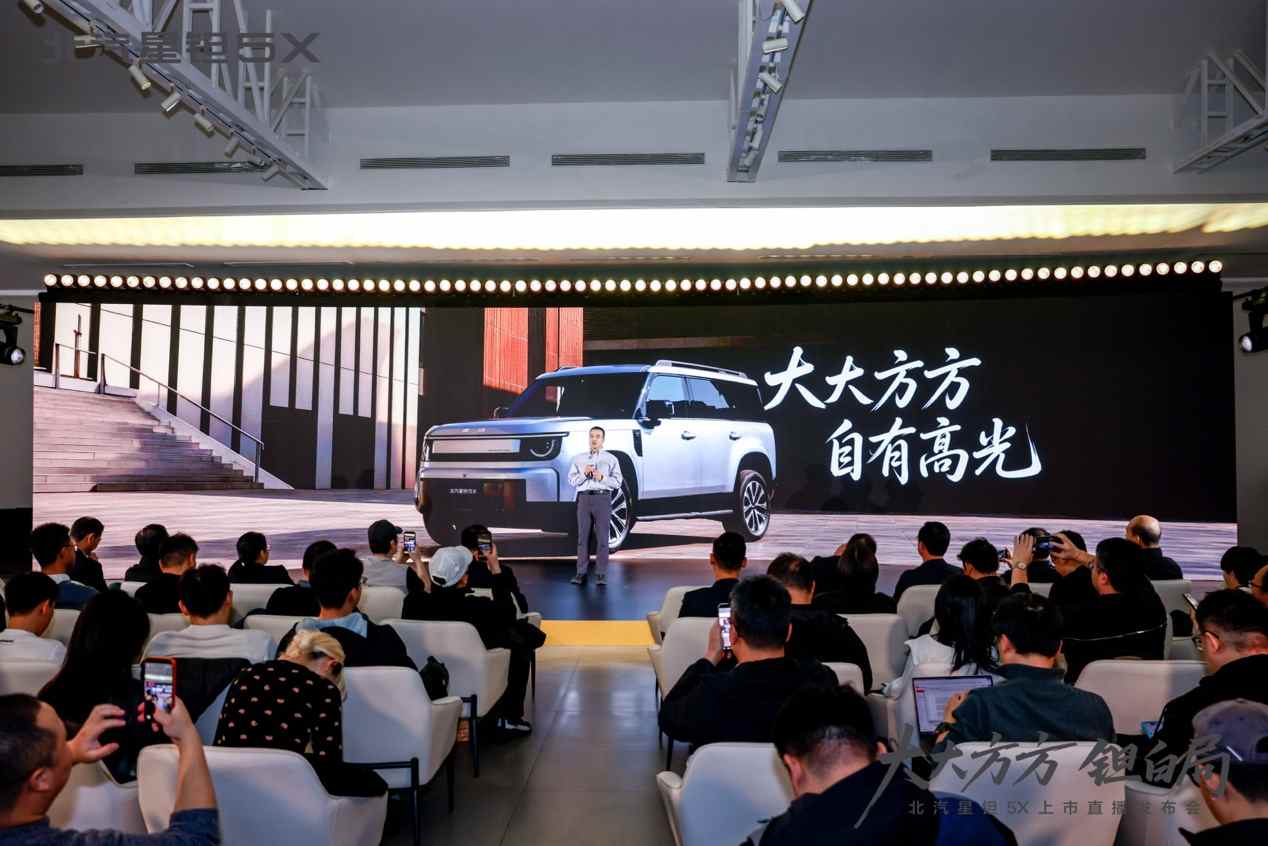
The BAIC Star Tantalum 5X, which was launched on November 12, not only was it delivered immediately after launch, but in terms of battery technology, it also created an exclusive battery plan tailored for users in the home off-road scenario. In everyday car use, off-road can be considered the type of scene that tests battery safety the most. The concerns of urban users are generally “will the battery spontaneously ignite”. Off-road users also need to ask a few more questions: Will the battery pack deform after the bottom is supported? Isn't the insulation normal after wading in the water? If I park it at minus 20 degrees for one night, can it still start up normally the next day? If the high temperature climbs the slope, will the power suddenly be discounted?
This set of problems points to the same fact: general safety standards cannot be covered one by one, because standardized battery packs satisfy “safety under average operating conditions”, but safety requirements in off-road scenarios are uneven and non-standard. Whether battery packs that have passed the national standard test in the laboratory are safe and redundant enough in extreme environments in the wild, this should be marked with a question mark.
In this case, a standardized scheme alone is clearly not enough. Structural protection, thermal management strategies, and BMS monitoring logic, these system-level designs all need to be re-deduced around specific user scenarios. And this requires the party that knows the scene the most to take the lead in the definition — Aurora Battery is the result of BAIC applying its understanding of this kind of scenario to the product. It is independently defined by BAIC and is leading the design, development, and quality control. The safety logic is derived from actual vehicle usage scenarios one by one.
At the passive safety level, the 8-layer protective structure of the Aurora battery pack is gradually fortified from the bottom to the top. When walking on a rough road or through gravel, the bottom resin protective material blocks gravel, and a high-strength steel bottom guard resists support; in the event of a collision, the foam absorbs energy, the cold plate controls the temperature, and the “keel” frame resists pressure; when heat gets out of control, the ceramic composite strip on the top of the battery blocks heat spread; when wading, the box cover is sealed and waterproof. The IP68 waterproof rating can be soaked at a depth of 1.5 meters for 2 hours without entering water.
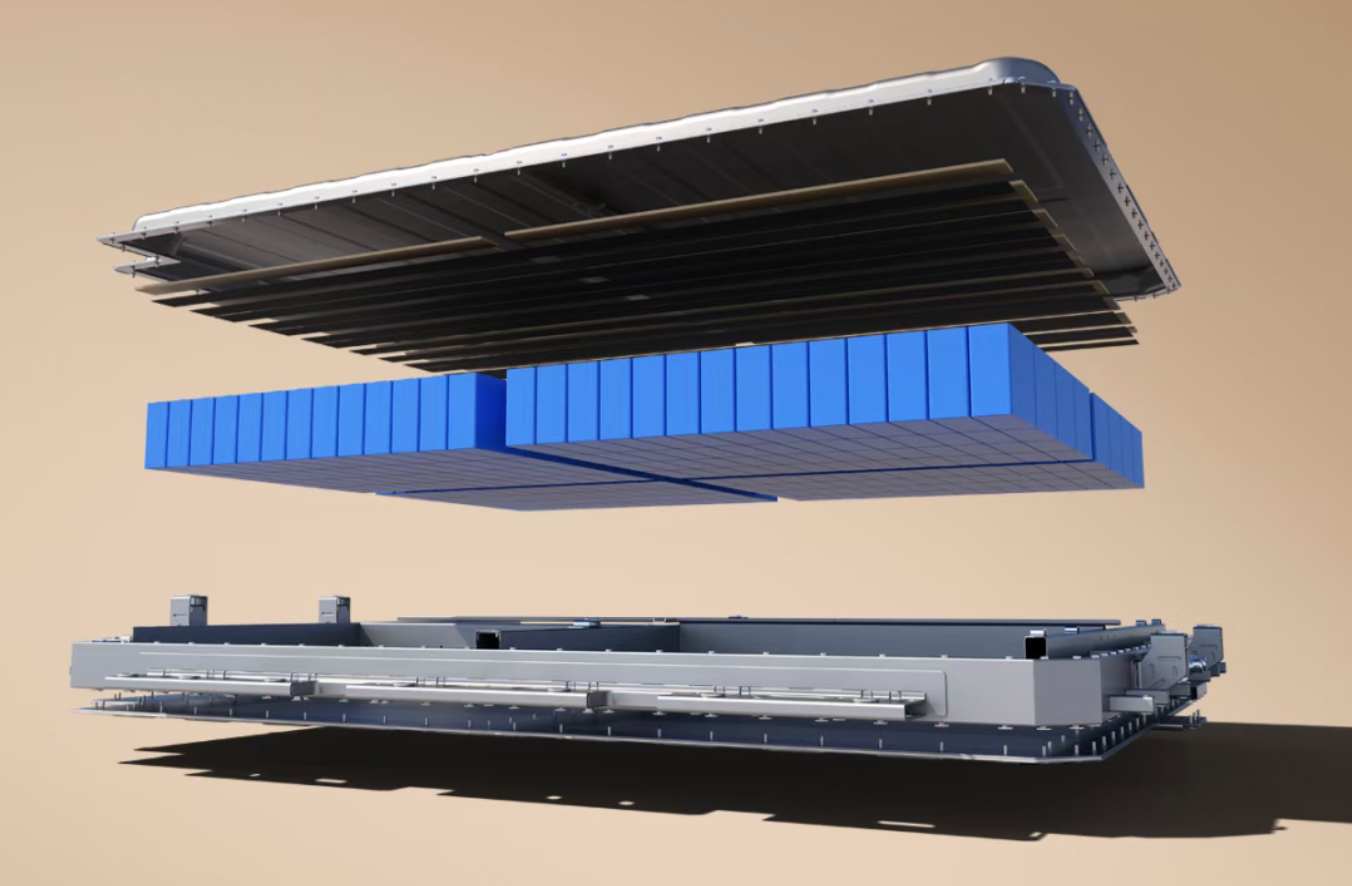
What is more prominent is that the battery pack is positioned higher than the subframe. When the bottom is scraped, the subframe first bears the first blow. Under official test conditions, the extended-range battery pack can achieve 100kN (equivalent to a weight of 10 tons) after squeezing the weakest area of the battery on the front and sides, the battery does not ignite and explode, the entire package does not cause insulation failure, and after a frontal collision at a relative speed of 50 km/h between the two cars, there is no ignition or explosion, and there is no coolant leakage.
At the active safety level, traditional BMS mainly monitors voltage, temperature, and current thresholds, more like an alarm after the fact; the national standard requires monitoring for 1 hour after the power is off, and the battery is essentially unattended after the vehicle is dormant. Aurora Battery provides 24-hour full time BMS monitoring. The single-point fault diagnosis coverage rate is SPFM ≥ 99%, and the latent fault coverage rate LFM is ≥ 90% — generally speaking, even if a sensor fails, or the fault is still in the incubation period and has not yet been revealed, the system can recognize it.
Based on this, BAIC's first mass-produced AI battery warning model is based on the Transformer network and covers six major fault modes, including abnormal self-discharge, sudden heat loss of control, abnormal connection, insulation failure, and capacity attenuation, to achieve early warning 7 days in advance with an accuracy rate of ≥ 95%. From “only knowing when something happens” to early intervention, this is thanks to BAIC's independent definition of a complete logical architecture, from BMS monitoring strategies to cloud-based AI alerts.
Low temperature and charge/discharge capacity are also falling points independently defined by BAIC. The wide temperature range material system and intelligent thermal management of the Aurora Battery enable extremely cold starting at minus 35℃, introducing engine waste heat into the battery for 8 minutes at minus 20℃, and no power attenuation at a high temperature of 50℃. What's more worth mentioning is that Aurora batteries have optimized the material mix of positive and negative electrodes along with the coating method to make charging and discharging faster and smoother without sacrificing safety boundaries on the premise that battery capacity does not shrink.
How to understand the “evolution” of BAIC Motor (01958) after 17 years of intensive testing of results?
Car companies define batteries independently, and there is certainly an opportunity to push safety and redundancy to a higher level, but implementation is a multi-disciplinary engineering problem. Cell electrochemistry lays the underlying performance. Thermal management requires stable working ranges within huge temperature differences. BMS must determine and isolate faults in a millisecond state, and structural safety must also cover all kinds of unconventional impacts. What's more difficult is that each subsystem does not exist in isolation: the battery pack is deeply coupled to the vehicle chassis, and the BMS strategy is strongly tied to thermal management, making it almost difficult to develop a universal solution that is applicable everywhere in isolation from a specific model. This is probably also the reason why it is difficult for many car companies to complete the complete system definition even though they are willing to lay out.

However, BAIC's accumulation on this subject is much longer than most people think. BAIC launched power battery research and development as early as 2009, and has gone through 5 iterations of technology so far. Zhitong Finance has noticed that behind several “first crab eating” moves in the industry are BAIC: pioneering large-scale implementation of power exchange technology, jointly launching and mass-producing the world's first CTP moduleless battery pack, and independently developing permanent heat blocking technology.
In addition, BAIC is also one of the core contributors to the first batch of mandatory national standards for electric vehicles, and is deeply involved in the preparation of more than 80 national standards, standards, and group standards, and is one of the main formulators of the new national standard for battery safety.
Of course, eligibility is not equal to results; whether the definition is correct still depends on market verification.
Here, I have to mention the origin of Aurora batteries. Before the BAIC Star Tantalum 5X was “launched,” Aurora batteries were already being used on a large scale in various new energy models owned by BAIC. Moving the timeline forward, in order to verify whether this system definition is safe enough, BAIC also invested 2 billion yuan back and forth to build its own battery test laboratory, setting up 121 major tests and more than 150 minor tests. Delivery of Aurora batteries only commenced after customs clearance. Furthermore, it achieved the high standard of “meeting the new national standard one year ahead of schedule, and exceeding the new national standard by up to 96 times”.
Looking back at the question at the beginning of the article, when the safety threshold of the industry was raised, the differentiated answers for car companies were probably hidden in BAIC's practice: based on a deep understanding of user scenarios and long-term self-research and accumulation, safety is taken to the extreme through independent definition. According to Zhitong Finance, behind the launch of the BAIC Xingtantalum 5X, BAIC Motor (01958) completed the leap from “meeting standards” to “adapting to the scenario,” and the foundation that supports this leap forward is the accumulation and accumulation of its own technological research.