


EN
Should You Buy Anthropic Stock at Its IPO? Here's What History Says.
Key Points
Anthropic is expected to price its IPO between $70 and $78 per share.
At the upper end of its range, Anthropic could raise $64 billion at a $1.4 trillion market capitalization.
After going public, Anthropic will be one of the largest companies in the world as measured by market value.
Anthropic is preparing for one of the largest initial public offerings (IPOs) in stock market history. The company behind the Claude chatbot is expected to begin trading on the Nasdaq under the ticker symbol ANT on Nov. 19. The offering price is reported to land between $70 and $78. At the upper end of that range, Anthropic could raise $64 billion.
IPOs can attract meaningful attention from institutional investors, momentum traders, and retail investors hoping to capitalize on the next multibagger. Historical evidence suggests that buying stock immediately after a highly anticipated public debut can be a risky strategy.
Missed AI’s "Act 1"? Act 2 Could Be 15x Bigger. Most investors think they missed the AI boat because they didn't buy Nvidia in 2005. But according to our analysts, we’re only at the end of "Act 1"—the R&D phase. "Act 2" is the global rollout. Continue »

Image source: Getty Images.
History suggests you should approach IPO stocks with caution
IPO stocks often experience outsize volatility because the offering price and the price retail investors actually pay when trading begins can differ by a wide margin. When demand exceeds the available supply of shares, prices can surge during the opening session as investors scramble to build a position. However, initial enthusiasm tends to fade as day traders take profits.
Research published by LPL Financial illustrates how the prices of new public companies can fluctuate. The firm studied IPOs that raised at least $50 million between April 1995 and April 2025. The data showed that average first-year returns were positive even though median returns were negative. This disparity suggests that a relatively small cohort of winners helped offset otherwise disappointing performances across a larger portion of newly public companies.
The research documented severe drawdowns during the first year following several high-profile technology IPOs. Meta Platforms experienced a maximum decline of approximately 54%, while Uber and electric vehicle manufacturer Rivian witnessed drawdowns of 68% and 88%, respectively.
This volatility underscores why investors should not confuse an exciting opportunity with an attractive entry point.
Expect volatility in the Anthropic IPO
On the surface, Anthropic's IPO looks tempting. The company is at the forefront of an enormous addressable market, is experiencing unprecedented revenue growth, and is directly benefiting from euphoria around AI.
At the upper end of its proposed offering price, Anthropic's valuation could reach $1.4 trillion. This would immediately propel Anthropic among the world's most valuable companies.
With that said, this valuation inherently reflects extraordinary expectations around future growth, even as the company invests heavily in model development, computing infrastructure, and customer acquisition. As a result, investors need to determine whether Anthropic can eventually generate enough earnings and free cash flow to justify its market capitalization.
The distinction between growth and profitability is important because AI development is extremely capital-intensive. Anthropic faces intense competition from OpenAI, Alphabet's (NASDAQ:GOOGL) (NASDAQ:GOOG) Gemini, and other well-funded developers.
Meanwhile, the cost of training generative models continues to rise. Even if the company delivers impressive revenue growth, disappointing profit margins or slower-than-expected progress toward profitability could easily pressure Anthropic's valuation.
Should you buy Anthropic stock at the IPO?
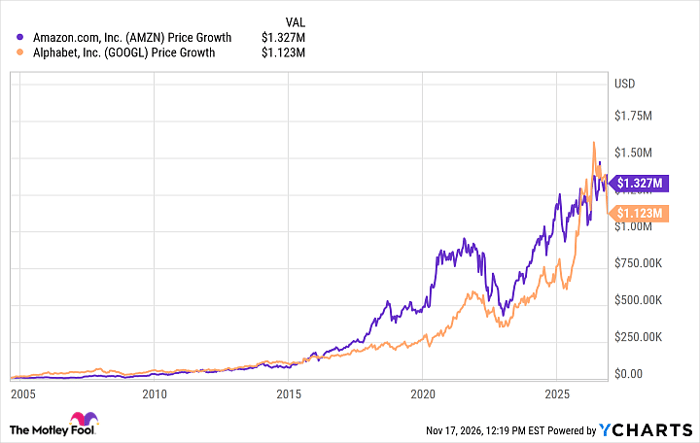
Historical IPO performance offers an important lesson, but it doesn't necessarily mean investors should always avoid new public companies. Alphabet’s and Amazon's (NASDAQ:AMZN) IPOs provide a compelling counterexample, with shares gaining 281% and 179% during their first year of trading, according to LPL's research. Investors who bought stock early and maintained a long-term perspective ultimately made generational wealth from these companies' expansion.
Nevertheless, waiting for Anthropic to settle as a public company rather than chasing the initial momentum appears to be the more prudent strategy. Investors will have ample opportunities to evaluate quarterly earnings, monitor profitability trends, and determine whether the company's growth justifies its valuation. Meanwhile, allowing the initial excitement to subside should create more attractive entry points.
The takeaway here is that Anthropic's long-term potential will not be determined by what happens during its first few trading sessions. Ultimately, the company's success will depend on competitive advantages, customer adoption, financial performance, and the economics of developing AI models. For investors focused on building wealth over a long-term time horizon, buying Anthropic stock at a reasonable valuation matters more than owning the stock on its first day.
Adam Spatacco has positions in Alphabet and Amazon. The Motley Fool has positions in and recommends Alphabet, Amazon, and Meta Platforms. The Motley Fool recommends Uber Technologies. The Motley Fool has a disclosure policy.