


EN
Walmart vs. Target Stock: 1 Is Worth 14x the Other. Here’s Which Stock to Buy Before Earnings.
Two retail rivals — Target (TGT) and Walmart (WMT) — are set to report earnings back-to-back on Nov. 18 and Nov. 19, respectively. In terms of size, the two aren't very comparable, with Walmart worth about $1.02 trillion by market capitalization and Target worth about $73 billion. That makes Walmart roughly 14 times bigger. But the comparison still makes sense, since both companies chase the same budget-conscious shoppers. Walmart has also been gaining ground in areas Target once owned, like apparel. But I think being the bigger company doesn't necessarily make Walmart stock the better buy right now.
Walmart is priced like a growth company, as it's turning into more than just a store. Its fastest-growing businesses are the high-margin ones. In the second quarter of fiscal 2027, global eCommerce rose 23% year-over-year (YOY), global advertising grew 38%, and membership income grew 17%. U.S. eCommerce has now grown by more than 20% for 10-straight quarters. As I've covered before, Walmart is also pushing into new areas like restaurant delivery, competing against DoorDash (DASH) and Uber (UBER). But last quarter's numbers were flattered by a $2.9 billion tariff refund, while management expects Q3 adjusted operating income growth of just 2% to 4% as it puts that money back into lower prices.
On the other hand, after three-straight years of falling revenue, Target is finally growing again. CEO Michael Fiddelke took over in February 2026 and launched a turnaround plan that seems to be working where it matters. Comparable sales rose 3.8% in Q2, driven by a 3.6% increase in traffic. Management raised its full-year EPS guidance to $9.90 to $10.90. Like Walmart, Target's guidance includes about $994 million in tariff refunds, which won't repeat next year. But even without the refunds, Target expects EPS of $8.25 to $9.25, which is still above the $7.50 to $8.50 it guided at the start of the year. This shows the turnaround is improving the business itself and not just riding a one-time boost.
Walmart's Premium Versus Target's Discount
Walmart's forward price-to-earnings (P/E) ratio of 44.5 times sits above its five-year average of about 30 times, while its price-to-sales (P/S) ratio of 1.4 times is also above its five-year average. That is a steep premium for expected EPS growth of just 9% in fiscal 2027 and 12% in fiscal 2028.
In contrast, Target's forward P/E multiple is 18 times, while its P/S ratio is 0.7 times. Meanwhile, EPS is expected to jump 18% this fiscal year and about 7% next year as tariff refunds drop out. Walmart also carries a much bigger net debt of around $63 billion compared to Target's nearly $14 billion, although the former's net debt does look manageable for a company worth more than $1 trillion by market cap.
Overall, I think Walmart is priced for almost everything to go right. Target is priced as if its turnaround might not last, and that gap is where I see the better opportunity.
About Walmart Stock and Target Stock
Walmart is one of the world's largest retailers, with supercenters, grocery stores, and Sam's Club warehouses. Its fast-growing online, advertising, and membership businesses have helped the company earn a tech-like valuation. Founded in 1962, Walmart is based in Bentonville, Arkansas.
Target sells groceries, home goods, apparel, and essentials through more than 2,000 U.S. stores. The company is now in a turnaround under CEO Michael Fiddelke, who took over in February 2026. Based in Minneapolis, Minnesota, Target also opened its first store in 1962.
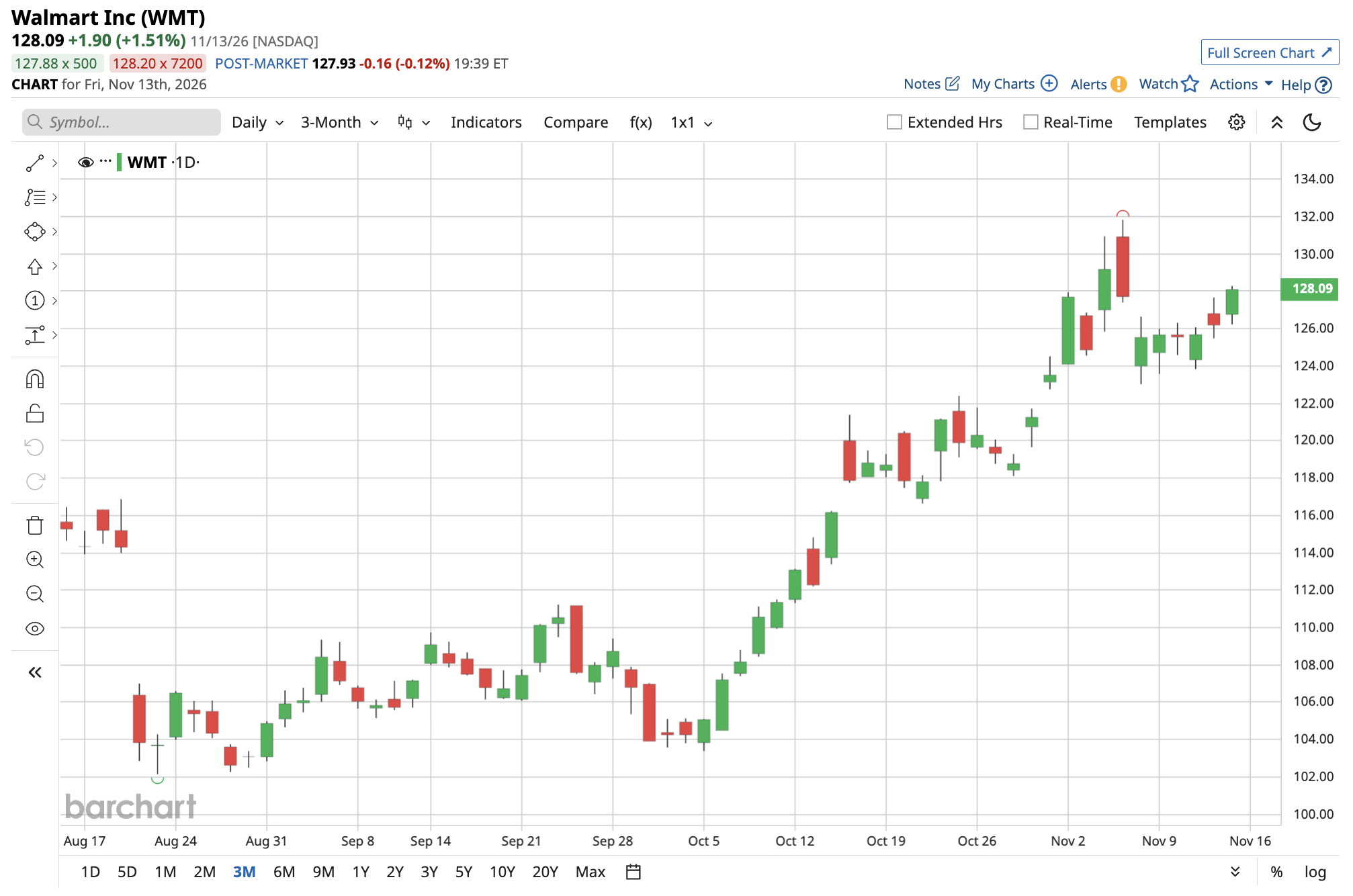
WMT stock is up roughly 15% so far this year, slightly behind the Consumer Staples Select Sector SPDR ETF’s (XLP) 18% gain over the same period. In the past month alone, the stock has jumped 8% and is not too far below its 52-week high of $135.15. The recent surge was helped by investors moving into defensive stocks amid the tech selloff.
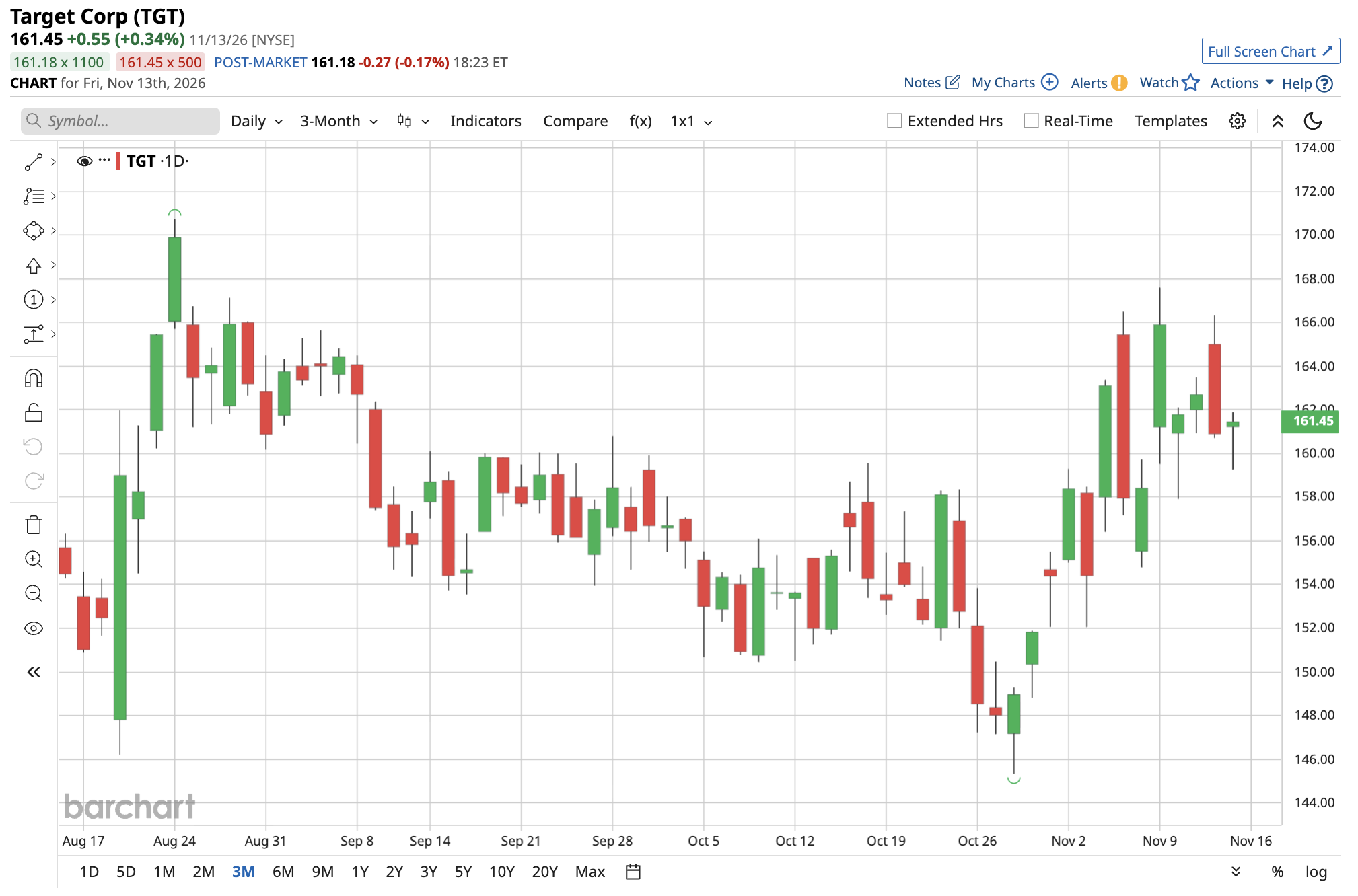
Target has had a much better year, with TGT stock rising about 61% year-to-date (YTD). Its turnaround has brought sales growth back, with more shoppers returning and guidance raised more than once.
What Do Analysts Expect for Walmart and Target Stocks?
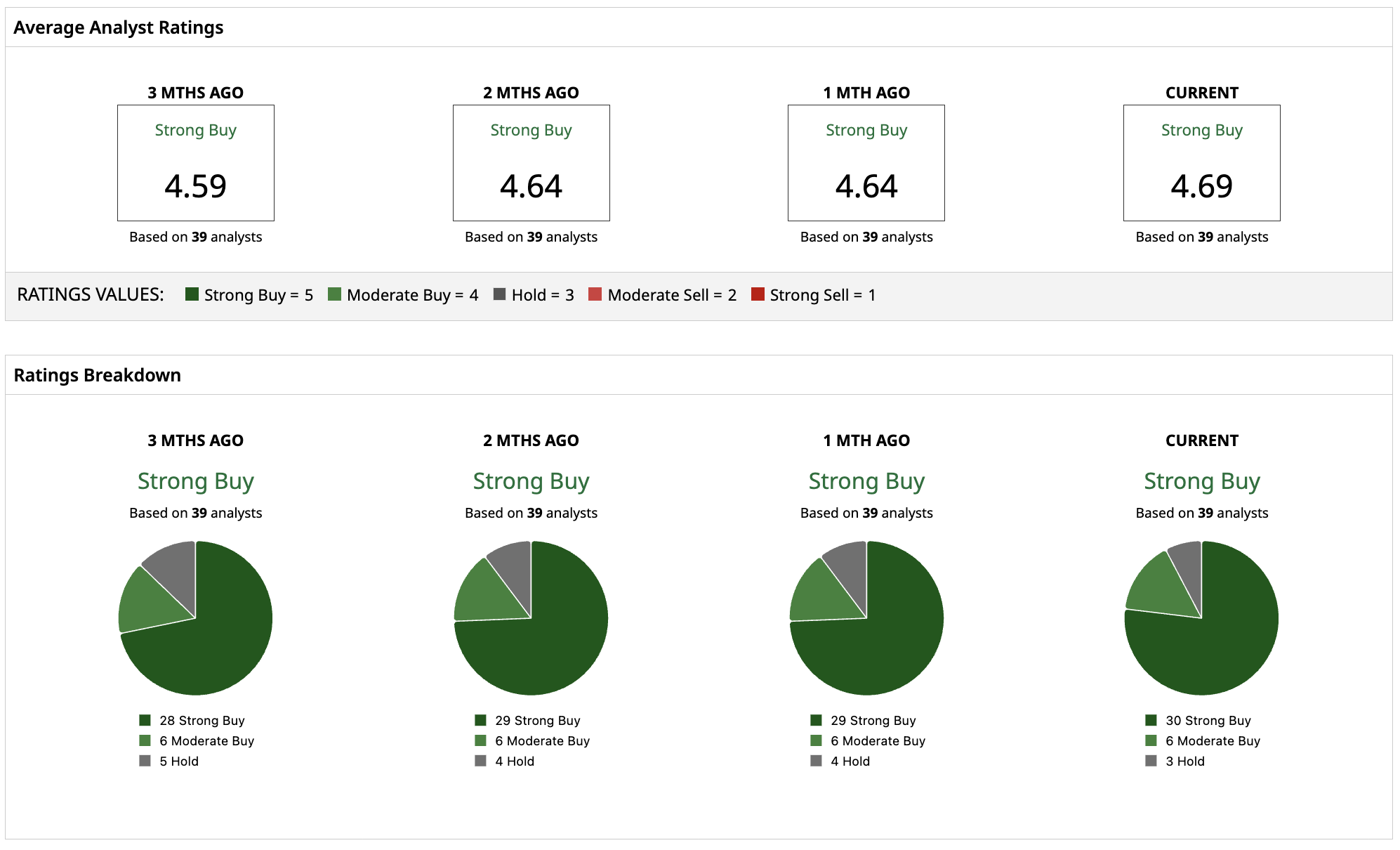
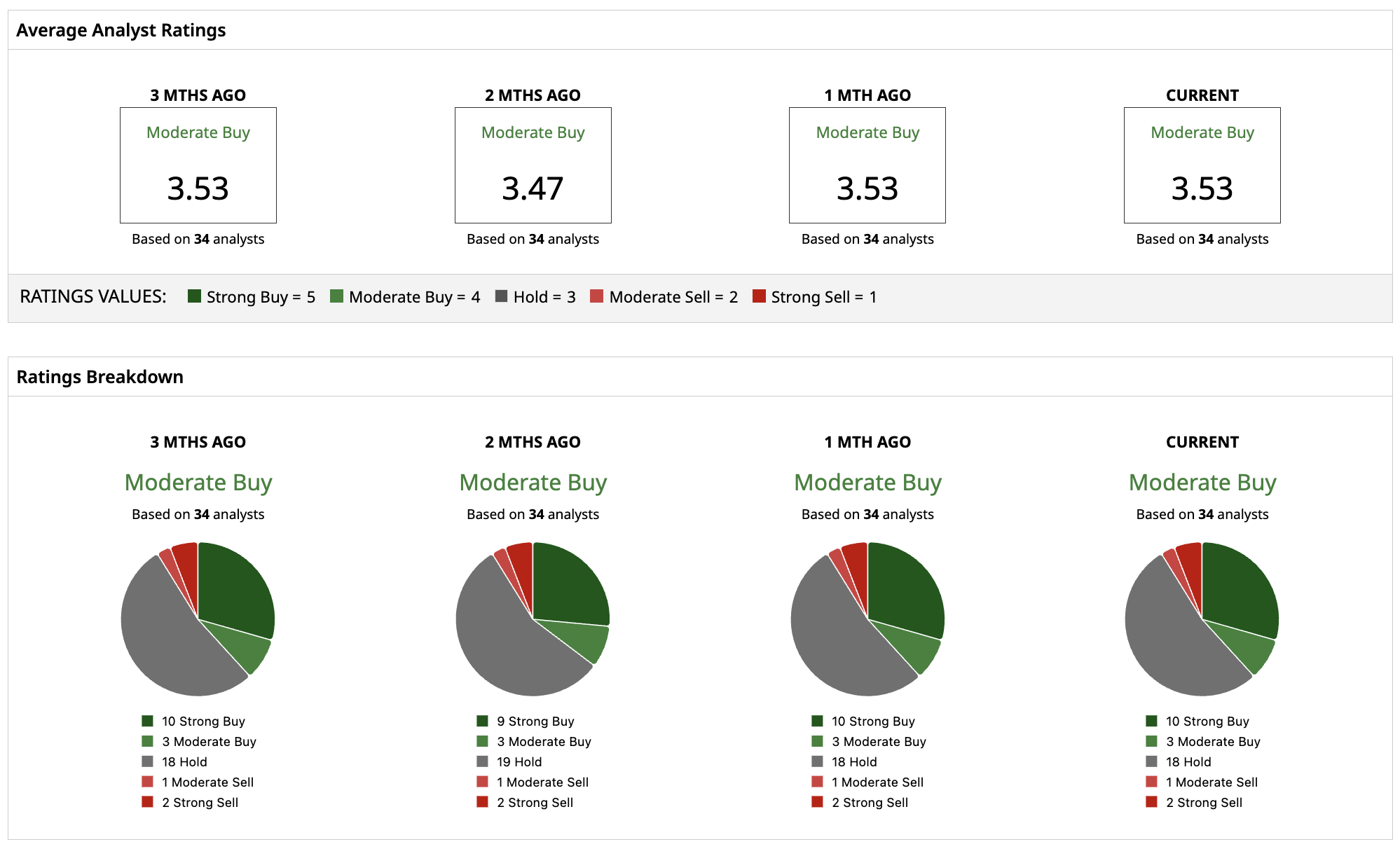
Based on 39 Wall Street analysts with coverage, Walmart stock holds a consensus “Strong Buy” rating. The mean price target of $132.87 indicates potential upside of 4% from current levels. In comparison, Target stock holds a consensus “Moderate Buy” rating on Wall Street based on 34 analysts with coverage. The mean price target of $166.39 indicates potential upside of 6% from current levels. The expected upside looks modest for both Walmart and Target, as TGT stock and WMT stock currently sit near their respective 52-week highs.
On the date of publication, Jabran Kundi did not directly have a position in any of the securities mentioned in this article. All information and data in this article is solely for informational purposes. For more information please view the Barchart Disclosure Policy here.