


EN
Don’t Buy the Dip in Nvidia Without This Safety Net. How I’m Playing NVDA Stock After the Jensen Huang Fiasco
Wall Street loves preaching investing advice that goes something like this… Own a great company, hold on tight, and ignore the noise. That guidance generally works well until something happens that bursts the bubble.
To fans of Nvidia's (NVDA) ex-CEO Jensen Huang, I'd say it's time to call your office. Just don’t call Nvidia's office — they’re busy.
I think the real question following news of the Chinese spy affair scandal is: How bad can this get for Nvidia stock?
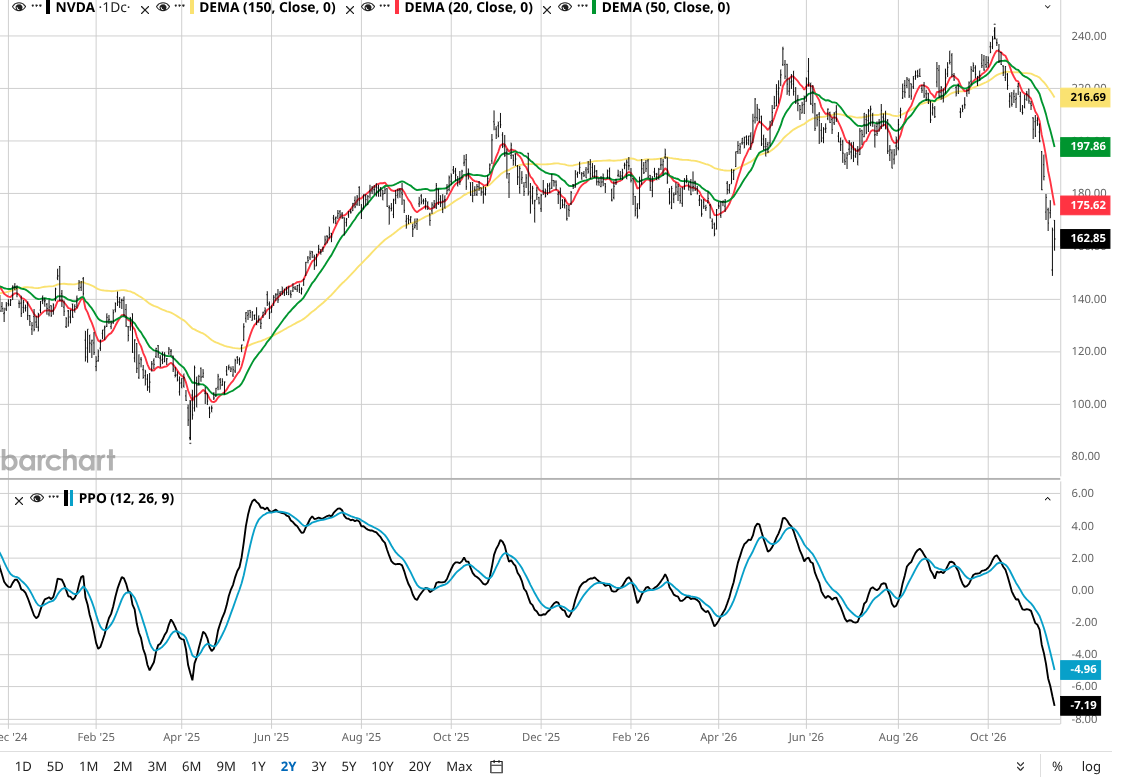
Nvidia shareholders got a brutal reminder of what single-stock gap risk actually feels like on Thursday, Nov. 12.
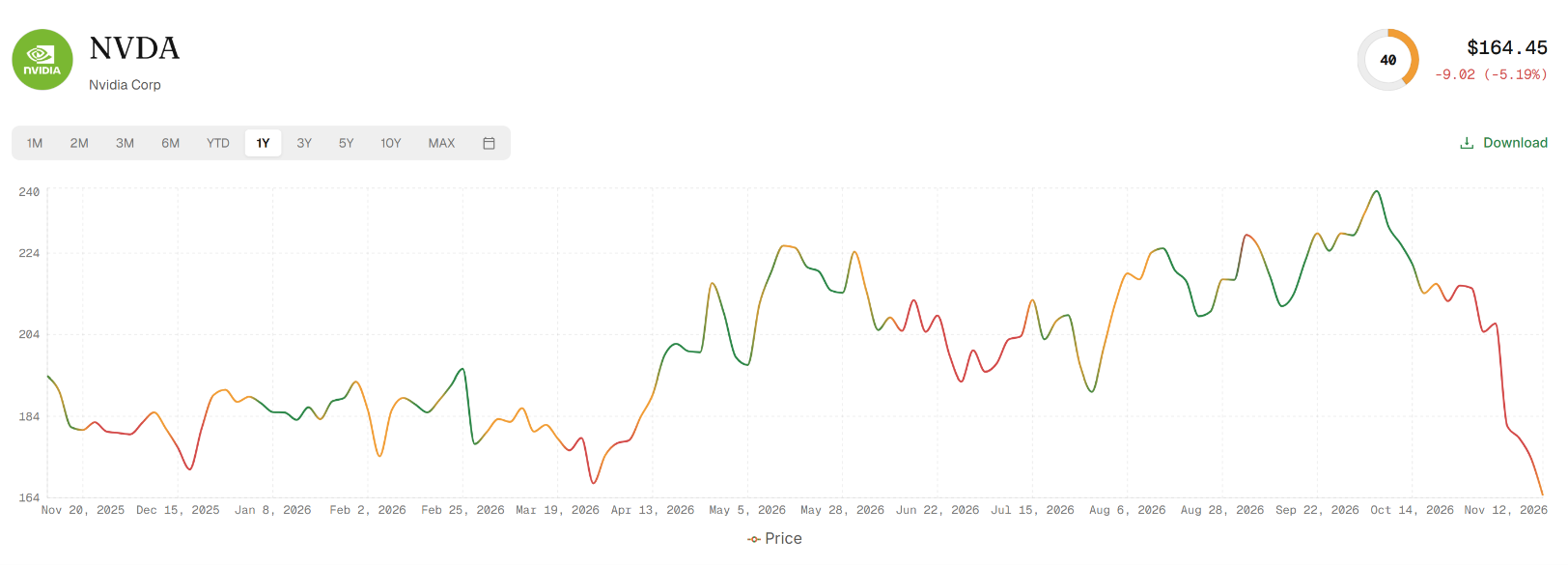
Following reports of personal misconduct, an internal board probe, and the abrupt resignation of Huang (CFO Colette Kress was named interim CEO), NVDA plunged more than 11% in intraday trading. The stock has lost about a third of its value since the first week of October.
For unhedged retail investors who treated Nvidia like an untouchable religion, it was a gut punch. For me, it was just another opportunity to play offense and defense at the same time.
Oh, I’m no genius. The stock looked like a dog to me, but I decided to buy 100 shares. Because I’ve seen this market be too resilient not to try to “buy the dip” yet again. But there was no way I would go in on the so-called “king of the AI trade” without a safety net.
Options Collar Strategy for Nvidia
Instead of owning naked shares and praying nothing goes wrong, my 100-share NVDA position is wrapped in an options collar expiring Feb. 19, 2027.
A collar pairs three simple components:
- Long 100 shares of NVDA: Purchased at an average cost of $176.72, for a $17,672 total.
- Long 1 Feb. 19, 2027 $165 Put: Bought for $11.11 per contract ($1,110) to establish an ironclad price floor. (My insurance, so to speak.)
- Short 1 Feb. 19, 2027 $205 Call: Sold for $7.67 per contract to help pay for the put protection, capping upside at $205 through expiration.
The net cost to insure 100 shares of the most volatile mega-cap stock on the planet for months was just $3.43 per share ($343 total), bringing my net entry cost to around $180 per share. The stock closed at $163 on Friday.
What does that mean? First, Nvidia's share price could keep dropping to $100, $50, or lower, but I can still sell it for $165. The puts are now “in the money,” meaning my mission to limit the worst-case scenario is in effect.
However, I don’t have to do anything for a while if I choose not to, since the options do not expire for more than three months. That’s a lot of time for the stock to potentially rally. But if it doesn’t, I cannot only get $165 for the stock, but I’ll also be able to buy back the call options for next to nothing during that time.
This is what I call “taking the risk out of taking risk.” And it's why collaring stocks — or at least buying put options with the stock — is a near-certainty for me these days whenever I plan to take a sizable position. To me, trading starts and ends with defining my worst-case dollar loss up front, as specifically as possible.
Charts Spotted Trouble in Nvidia Weeks Before the Headline Hit
People often ask how you know when to put a collar on. You don't need a crystal ball or inside information about a CEO's personal life. You just need to respect price action. Especially amid this era of algorithmic trading.
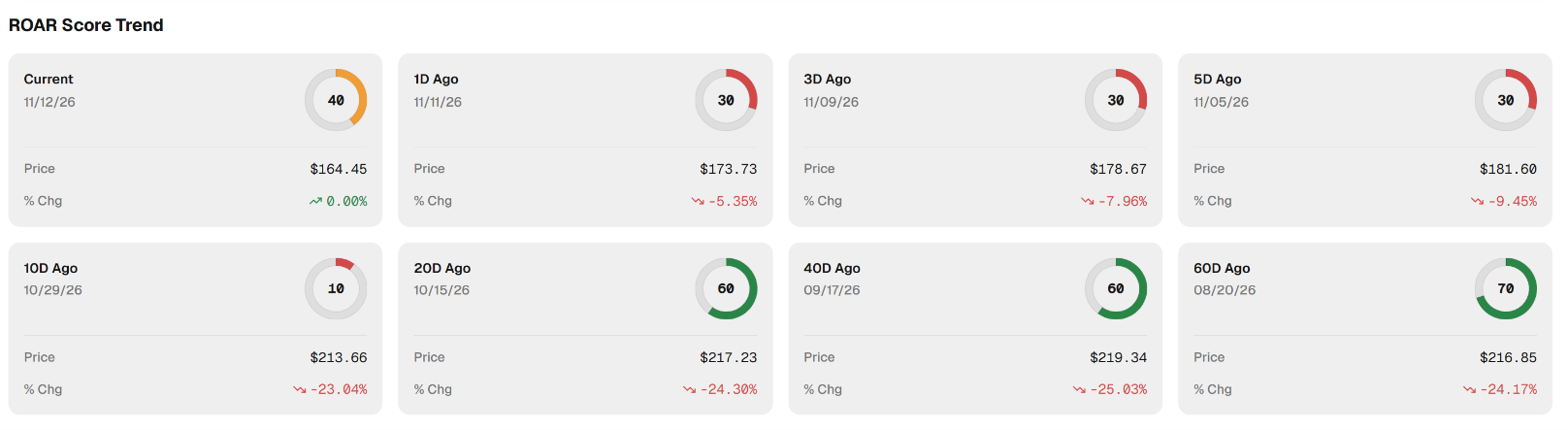
My proprietary ROAR Score is certainly not the only stock risk gauge out there, but it served its purpose well in flagging a potential dip in NVDA as it went from bad to worse. Shown here, its signal turned red for the first time on Oct. 20, when NVDA closed at $222. That was 25% ago.
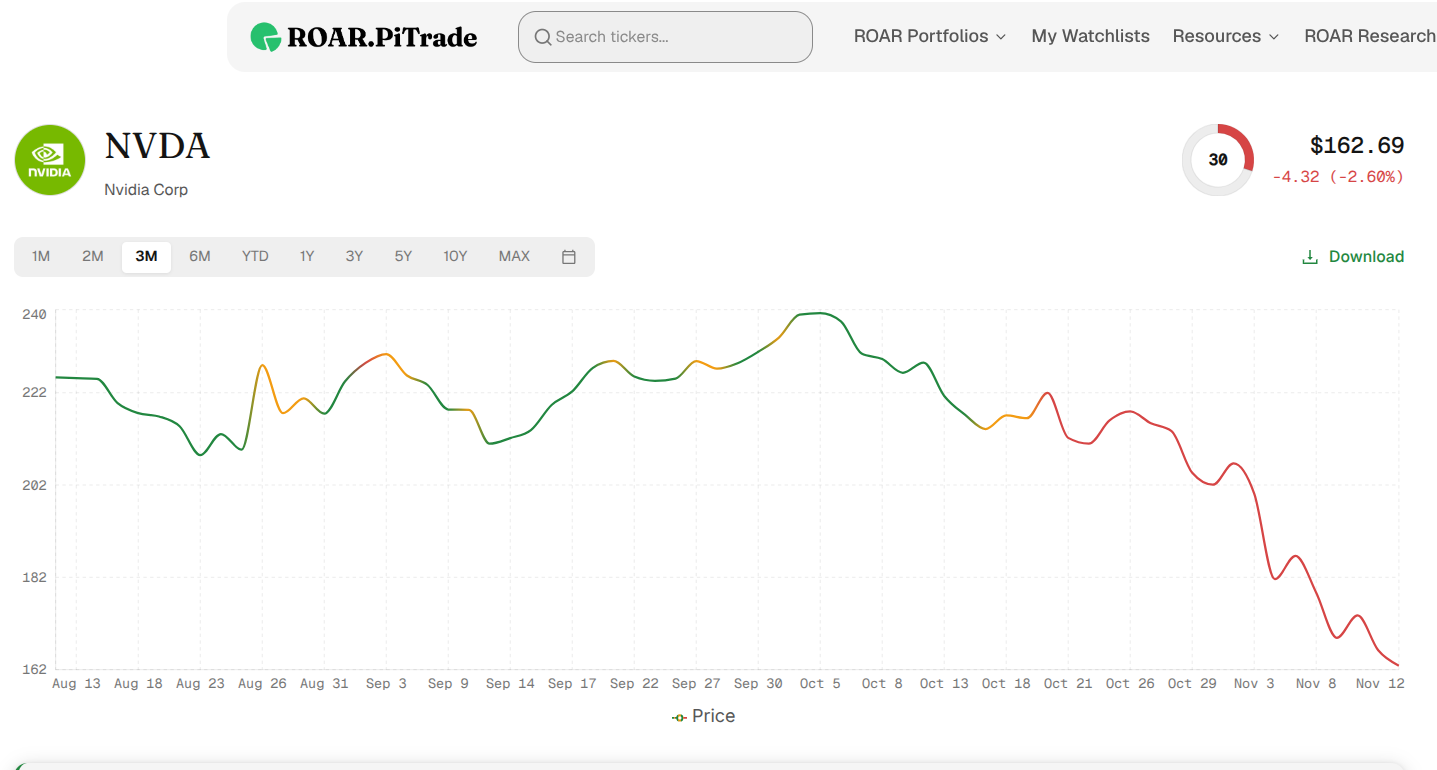
Neither the chart nor the ROAR Score predicted why Jensen Huang would resign. They simply measured that reward-to-risk had deteriorated badly long before the news hit the tape. And when I took the plunge and bought the stock, I did so knowing full well it could get a lot worse.
But I was willing to take a shot, since I had a strong cushion in the form of that put option. In a more complex version of this type of collar, I have often paired one covered call option with more than one protective put option.
That’s another strategy for another article. It really all depends on where you want to set your guardrails in your trading.
Why I Won’t Gamble With Unhedged Single Stocks
Stop-loss orders do not save you from overnight headlines. When a stock gaps down 10% at the opening bell, a stop order simply fills you at the bottom.
If you are going to own individual stocks in a volatile, machine-driven market, stop treating them like permanent buy-and-hold trophies. Define your worst-case dollar loss before trouble strikes, and consider how to use option collars. I consider this a major facet of my approach to playing “offense and defense at the same time.” It also lets me take risks to pursue profits that my usual “chicken” investor profile would not.
Rob Isbitts is a semi-retired CIO, former fiduciary investment advisor, Barchart columnist, and straight-talker. Download his new free e-book on hedged bond investing for retirement at ETFYourself.com. His research and model portfolios are at ROAR.PiTrade.com.
On the date of publication, Rob Isbitts did not directly have a position in any of the securities mentioned in this article. All information and data in this article is solely for informational purposes. For more information please view the Barchart Disclosure Policy here.