


EN
Heavy transportation equipment stocks Q3 teardown: Wabtec vs the rest

Looking back on heavy transportation equipment stocks’ Q3 earnings, we examine this quarter’s best and worst performers, including Wabtec NYSE:WAB and its peers.
Heavy transportation equipment companies are investing in automated vehicles that increase efficiencies and connected machinery that collects actionable data. Some are also developing electric vehicles and mobility solutions to address customers’ concerns about carbon emissions, creating new sales opportunities. On the other hand, heavy transportation equipment companies are at the whim of economic cycles. Interest rates, for example, can greatly impact the construction and transport volumes that drive demand for these companies’ offerings.
The 11 heavy transportation equipment stocks we track reported a mixed Q3. As a group, revenues beat analysts’ consensus estimates by 0.7% while next quarter’s revenue guidance was in line.
In light of this news, share prices of the companies have held steady as they are up 2.9% on average since the latest earnings results.
Wabtec NYSE:WAB
Also known as Wabtec, Westinghouse Air Brake Technologies (NYSE:WAB) provides equipment, systems, and related software for the railway industry.
Wabtec reported revenues of $3.12 billion, up 8.1% year on year. This print fell short of analysts’ expectations by 2.6%. Overall, it was a softer quarter for the company with full-year revenue guidance slightly missing analysts’ expectations.
“Wabtec delivered another strong quarter, evidenced by sales growth, margin expansion and a 22% increase in adjusted EPS,” said Rafael Santana, Wabtec’s Chairman and CEO.
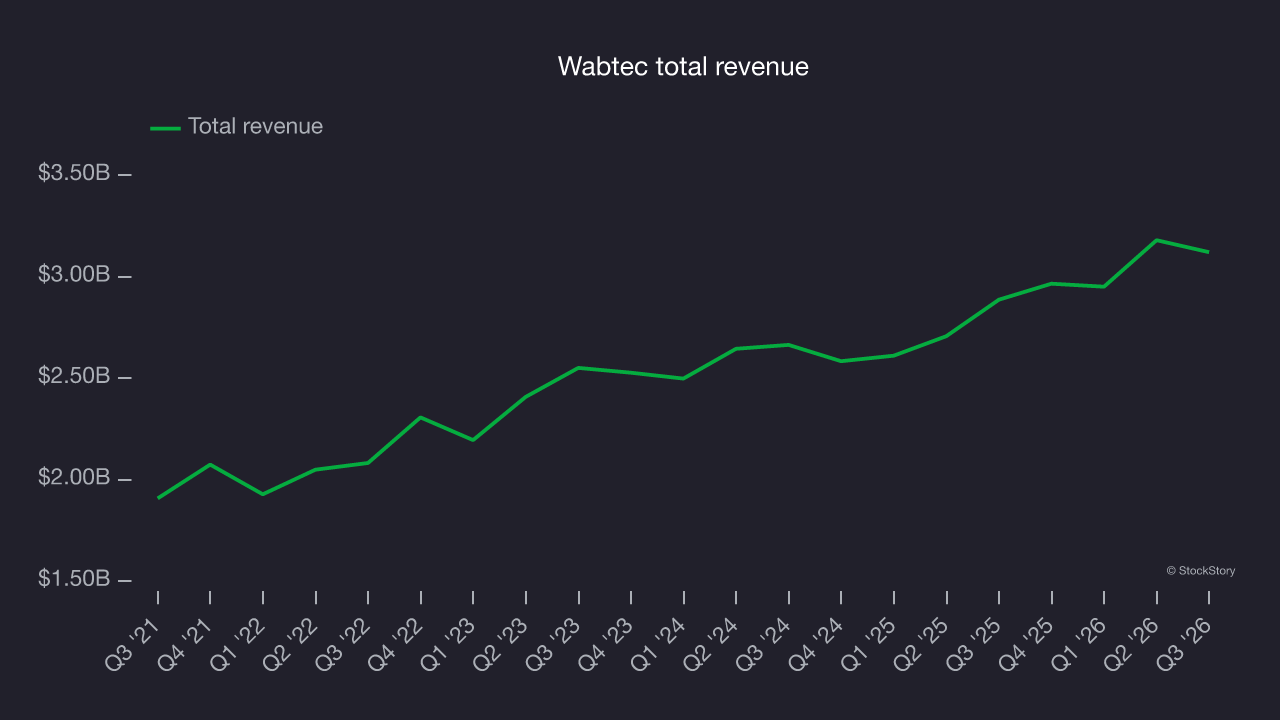
Interestingly, the stock is up 5.1% since reporting and currently trades at $297.96.
Is now the time to buy Wabtec? Access our full analysis of the earnings results here, it’s free.
Best Q3: Allison Transmission (NYSE:ALSN)
Helping build race cars at one point, Allison Transmission (NYSE:ALSN) offers transmissions to original equipment manufacturers and fleet operators.
Allison Transmission reported revenues of $1.53 billion, up 121% year on year, outperforming analysts’ expectations by 4.2%. The business had a very strong quarter with a beat of analysts’ EPS estimates and full-year EBITDA guidance beating analysts’ expectations.
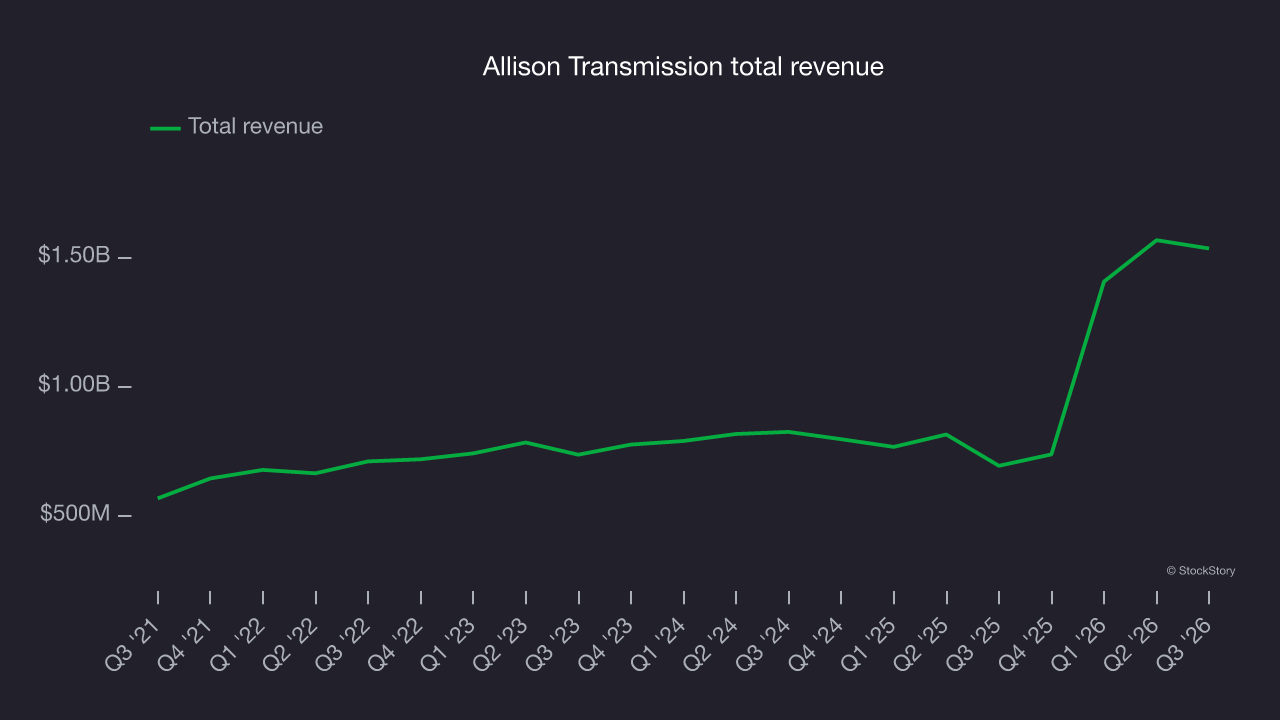
Allison Transmission delivered the fastest revenue growth among its peers. The market seems happy with the results as the stock is up 12% since reporting. It currently trades at $126.69.
Is now the time to buy Allison Transmission? Access our full analysis of the earnings results here, it’s free.
Weakest Q3: Oshkosh (NYSE:OSK)
Oshkosh (NYSE:OSK) manufactures specialty vehicles for the defense, fire, emergency, and commercial industry, operating various brand subsidiaries within each industry.
Oshkosh reported revenues of $2.84 billion, up 5.7% year on year, falling short of analysts’ expectations by 3.3%. It was an underwhelming quarter as it posted full-year EPS guidance missing analysts’ expectations significantly and a significant miss of analysts’ EPS estimates.
Oshkosh delivered the weakest full-year guidance update of the whole group. Interestingly, the stock is up 2.8% since the results and currently trades at $141.78.
Read our full analysis of Oshkosh’s results here.
PACCAR (NASDAQ:PCAR)
Founded more than a century ago, PACCAR (NASDAQ:PCAR) designs and manufactures commercial trucks of various weights and sizes for the commercial trucking industry.
PACCAR reported revenues of $7.94 billion, up 19% year on year. This result came in 3.3% below analysts’ expectations. All in all, it was a softer quarter for the company.
The stock is up 2% since reporting and currently trades at $106.50.
Read our full, actionable report on PACCAR here, it’s free.
Trinity (NYSE:TRN)
Operating under the trade name TrinityRail, Trinity (NYSE:TRN) is a provider of railcar products and services in North America.
Trinity reported revenues of $535.1 million, up 17.8% year on year. This print topped analysts’ expectations by 7.4%. Overall, it was a solid quarter as it also produced full-year EPS guidance exceeding analysts’ expectations.
The stock is up 19.5% since reporting and currently trades at $30.54.
Read our full, actionable report on Trinity here, it’s free.
Market update
Over the past year, investors have been forced to repeatedly answer the same question: What is the market’s biggest risk? The answer has changed several times, and each shift has reshaped market leadership.
Late in 2025 and early 2026, artificial intelligence became the market’s primary uncertainty. Investors questioned whether AI would erode software pricing power and weaken competitive moats as AI made it easier to replicate once-differentiated products.
By the spring, technology took a back seat to geopolitics. The U.S. conflict with Iran briefly became the market’s dominant narrative, raising concerns about oil prices, inflation, and global growth. But as energy markets remained orderly and fears of a prolonged supply disruption faded, investors quickly turned their focus back to fundamentals.
Want to invest in winners with rock-solid fundamentals? Check out our Top 5 Quality Compounder Stocks and add them to your watchlist. These companies are poised for growth regardless of the political or macroeconomic climate.