


EN
At a time when AI technology stocks have suffered a severe setback, Walsh and Silicon Valley bosses will discuss the impact of AI's economy tonight: Can a trillion dollar investment deliver productivity dividends?
The Zhitong Finance App learned that Federal Reserve Chairman Kevin Walsh will attend a special conference focusing on artificial intelligence and economic impact in the early morning of November 17, Beijing time. The “Productivity and Jobs Task Force Conference” (Productivity and Jobs Task Force Conference), co-hosted by the Federal Reserve Board of Governors and the San Francisco Federal Reserve, will invite technology business executives, economists, and policy makers to discuss the pace of development of AI and superintelligence, the process of enterprise application, and the impact of such emerging technologies on the US economic growth and labor market.
At the opening of the conference, Walsh will deliver a speech at 1 a.m. Beijing time and host two panel discussions. Finally, he will have a conversation with well-known Silicon Valley investor Marc Andreessen and former US Secretary of Commerce Gina Raimondo. San Francisco Federal Reserve Chairman Mary Daly will host another discussion focusing on how companies can push AI technology from pilot to actual application. Participants also included Stripe co-founder and CEO Patrick Collison, Palo Alto Networks chairman and CEO Nikesh Arora, Affirm founder and CEO Max Levchin, and academics from Stanford University and MIT.
This was not an FOMC policy meeting, nor was Walsh's personal AI keynote; it was an important event for the Federal Reserve Productivity and Employment Task Force to gather opinions from industry, academia, and the policy community. The task force is to evaluate the impact of emerging general technologies such as superintelligence on the economy and the labor market, and to provide a reference for the Federal Reserve's future policy decisions.
The conference comes at a time when the global AI investment boom is facing a new round of market tests. US AI technology stocks suffered a severe setback last Friday. The Asian market further extended its decline on Monday, and the stock prices of core AI infrastructure suppliers such as TSMC and SK Hynix fell sharply. The market is beginning to re-examine how much actual return can be generated by huge AI capital expenditure, and the panel discussion that Walsh participated in this time just touched on the most important macroeconomic issue behind this AI investment frenzy: can AI drive up short-term demand and resource costs while ultimately transforming into long-term dividends sufficient to increase economic productivity and ease inflationary pressure?
AI capital expenditure first boosts demand. When will the productivity dividend be realized?
AI technology-themed stocks in the US stock market were hit hard last Friday, and after the Asian stock market, especially the semiconductor sector closely related to AI infrastructure, plummeted on Monday, the macro-contradictions behind the AI investment frenzy became more prominent: unprecedented AI capital expenditure is driving demand in the fields of electricity, equipment, construction, and labor, but productivity dividends that can reduce corporate operating costs and improve overall economic efficiency still take time to be realized.
For Federal Reserve policymakers, the key is whether efficiency improvements can offset the price pressure brought about by expanding demand in a timely manner, and whether AI-induced job replacement can be absorbed by new employment opportunities. For investors, the same question is whether huge computing power investments can ultimately be converted into continuous revenue growth and free cash flow under the constraints of financing costs, equipment depreciation, and operating expenses.
Looking at specific industry mechanisms, large-scale purchases of core AI infrastructure hardware such as GPUs, ASICs, HBM, and enterprise-grade SSDs are only the starting point of the investment chain. Computing power can only be truly delivered after grid access, cooling systems, network deployment, and cluster debugging are completed; enterprises also need to transform data systems and business processes to transform model capabilities into actual production efficiency and unit cost reduction.
In other words, construction spending first forms actual demand, and efficiency improvements can then spread to all sectors of the economy. The time difference between the two is the key that AI investment may drive up inflationary pressure in the short term, but may not immediately bring productivity dividends.
Federal Reserve Governor Lisa Cook previously pointed out that AI-related price pressure may be transmitted to other industries through joint investment in construction labor, energy, etc., and that the easing of inflation brought about by productivity depends on the speed of technology adoption, corporate process adjustments, and revenue transmission. The discussions promoted by Walsh this time will also revolve around similar questions: will AI rapidly boost productivity in the short term, or will it take a long period of enterprise application and industrial adjustments to gradually reflect economic benefits?
This means that the market cannot simply equate the increase in the scale of AI investment with an increase in economic productivity, let alone directly deduce from this that the Fed can release room for interest rate cuts early.
The Taiwanese stock market fell sharply by 6%, storage leaders retreated deeply, and the market recalculated the costs of “waiting and delay”
By the close of the Asia-Pacific stock market on November 16, China's Taiwan weighted index fell 6.03%, the biggest one-day percentage decline since July 17; TSMC, the world's largest chip manufacturer, and MediaTek, a leader in high-performance chip design, fell 5.74% and 7.89% respectively. Korea's benchmark index KOSPI fell 3.59%, while SK Hynix and Samsung Electronics fell 7.89% and 4.47%, respectively.
The phased “bear market adjustment” in the Asian stock market can be described as more prominent than the Nasdaq 100 Index, which has the title of a “global technology stock weather vane” in the US stock market: based on the closing price of the day, the Chinese Taiwan Stock Market Benchmark Index retreated about 17.6% from the closing high on October 6; SK Hynix and Samsung Electronics retreated their intraday highs on June 25 and June 19, respectively, by about 62.5% and 47.4%, respectively. These declines over various time spans show that hardware deals related to AI infrastructure have experienced significant valuation contractions brought about by the “delay in the AI data center construction process” argument after the Democratic Party won the election, and Monday's sell-off further deepened the adjustments.
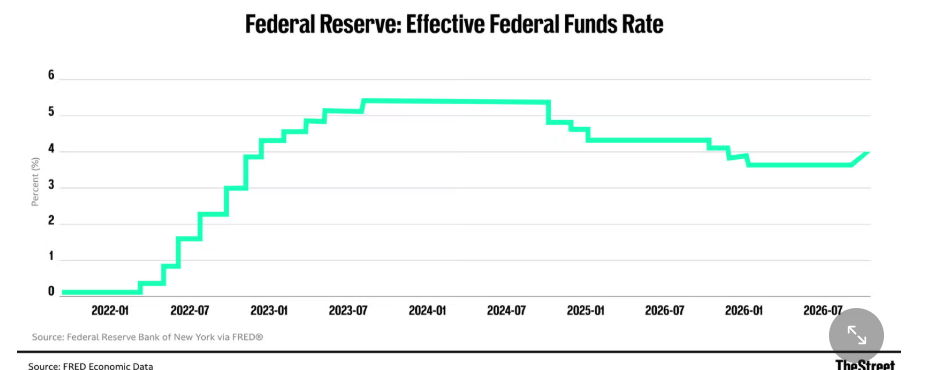
This pressure also comes from comprehensive pressure at the level of governance, interest rates, and capital allocation. Changes in Nvidia's leadership, in particular Wong In-hoon's resignation as Nvidia CEO due to a series of negative events, made global investors re-evaluate the continuity of its customer financing support and industry chain cooperation arrangements; after the release of October CPI and PPI data showing inflationary resilience, market expectations for the Fed to continue to raise interest rates in December and the beginning of next year heated up sharply, and the 10-year US Treasury yield was still around 5.14%, increasing the discount pressure on forward profits. At the same time, Anthropic plans to seek an IPO valuation of approximately $1.4 trillion to attract capital to free up positions for subscription.
Global X investment strategist Billy Leung pointed out that when liquidity needs to be raised quickly, investors often sell winners with active transactions and concentrated positions previously, and storage and semiconductors are easily pressured as a result. Furthermore, according to some senior Wall Street analysts, the strong listing demand for model companies can occur at the same time as the decline in chip stocks: capital is reallocating exposure to AI risk assets, and the technology stock sell-off alone cannot determine that the demand for computing power dominated by AI agents around the world has been reversed.
Coexisting with this short-term financial pressure, Morgan Stanley still judges that the AI capital expenditure financing base is stable as a whole. Some projects may be postponed from 2028 to 2029, and will continue to prefer Japan and South Korea. There is no doubt that the investment behind Morgan Stanley's 2027 investment strategy outlook for the Asian market is — the sharp pullback provides a starting point for re-examining valuations, but whether a continuous revaluation can be formed depends on order delivery, profit margins, and free cash flow being realized at an accelerated pace.
From huge AI computing power orders to social benefits, AI investment has entered the test of double cashing
The employment shock made the policy decisions faced by the Federal Reserve even more complicated.
Federal Reserve Governor Michael Barr warned earlier that preparations should be made for serious short-term employment disruptions that may be caused by the rapid deployment of AI; Cook emphasized that if the increase in unemployment stems from a mismatch between workers' skills and the demand for new jobs, interest rate cuts can provide limited help, and may even re-stimulate inflation.
Therefore, AI's efficiency improvement and AI replacement of employment cannot directly deduce lower interest rates. The Federal Reserve also needs to determine who is going faster with new supply, aggregate demand, and labor-market adjustments, and whether efficiency improvements brought about by technology can actually cover short-term economic costs.
Public concerns about electricity bills, land use, and employment allocation may also pay off into data center projects through approval, construction progress, and cost sharing. Richmond Federal Reserve Chairman Thomas Barkin previously compared the scale of AI investment to large-scale infrastructure construction such as railways and interstate highways, and proposed that attention should be paid to how the contraction of capital expenditure may affect US economic growth after the return on investment falls short of expectations.
As far as asset pricing is concerned, these issues mean that trillion-dollar AI investments face two interrelated fulfillment requirements.
At the enterprise level, it is necessary to transform orders into actual delivery, computing power utilization, and cash flow after deducting financing costs; at the economic level, technological efficiency needs to spread to lower production costs, wider revenue growth, and sustainable consumption and investment needs.
Based on Goldman Sachs and Morgan Stanley's investment strategy outlook for the 2027 global and Asian stock markets, AI-related investment opportunities can be selected from three main lines: infrastructure suppliers that can convert orders into revenue on schedule and maintain profit margins; cloud platforms with sound balance sheets, financing capabilities and commercialization advantages; and companies that can increase productivity, improve profits and cash flow through AI applications.
The investment criteria that run through these three main lines are whether growth can be realized and whether current valuations reasonably reflect future returns.
The conference on productivity and employment that Walsh participated in this time was a focused discussion on this macroeconomic issue. Technology business executives will introduce the progress of AI deployment from a practical application perspective, economists will analyze the impact of emerging technologies on productivity and employment, and policymakers will need to determine how technological changes may change the inflation, economic growth, and monetary policy environment.
As far as the market is concerned, what is really worth paying attention to is not only the extent to which AI technology can develop, but also how long it will take for this huge round of capital expenditure to be converted into sustainable economic benefits. Until productivity dividends are fully realized, financing costs, employment adjustments, and resource investment may all become realistic constraints AI investments must face.