


EN
UK Youth Employment Reforms Could Lift Staffline Group Stock and Small Cap Peers
Youth unemployment in the UK is climbing again, just as policymakers weigh reforms that could reshape how under‑25s move between benefits, training and work. That mix of pressure and potential support programs can create winners and laggards on the stock market, depending on how each business is exposed to these shifts. This article unpacks three stocks tied to youth employment and training, and explains how their fortunes may move differently as the story unfolds.
The three stocks below are a starting sample from this youth employment theme. The full screen surfaces 9 more UK listed training and recruitment businesses with equally interesting narratives that are not covered here. To identify and analyze the highest conviction plays in this niche, head straight to the UK Youth Training, Apprenticeship and Employment Services screener.
Staffline Group (AIM:STAF)
Overview: Staffline Group provides large scale recruitment and outsourced HR services across the UK and Ireland, supplying lower to mid skilled workers into employers that rely heavily on entry level, youth and apprenticeship talent pipelines.
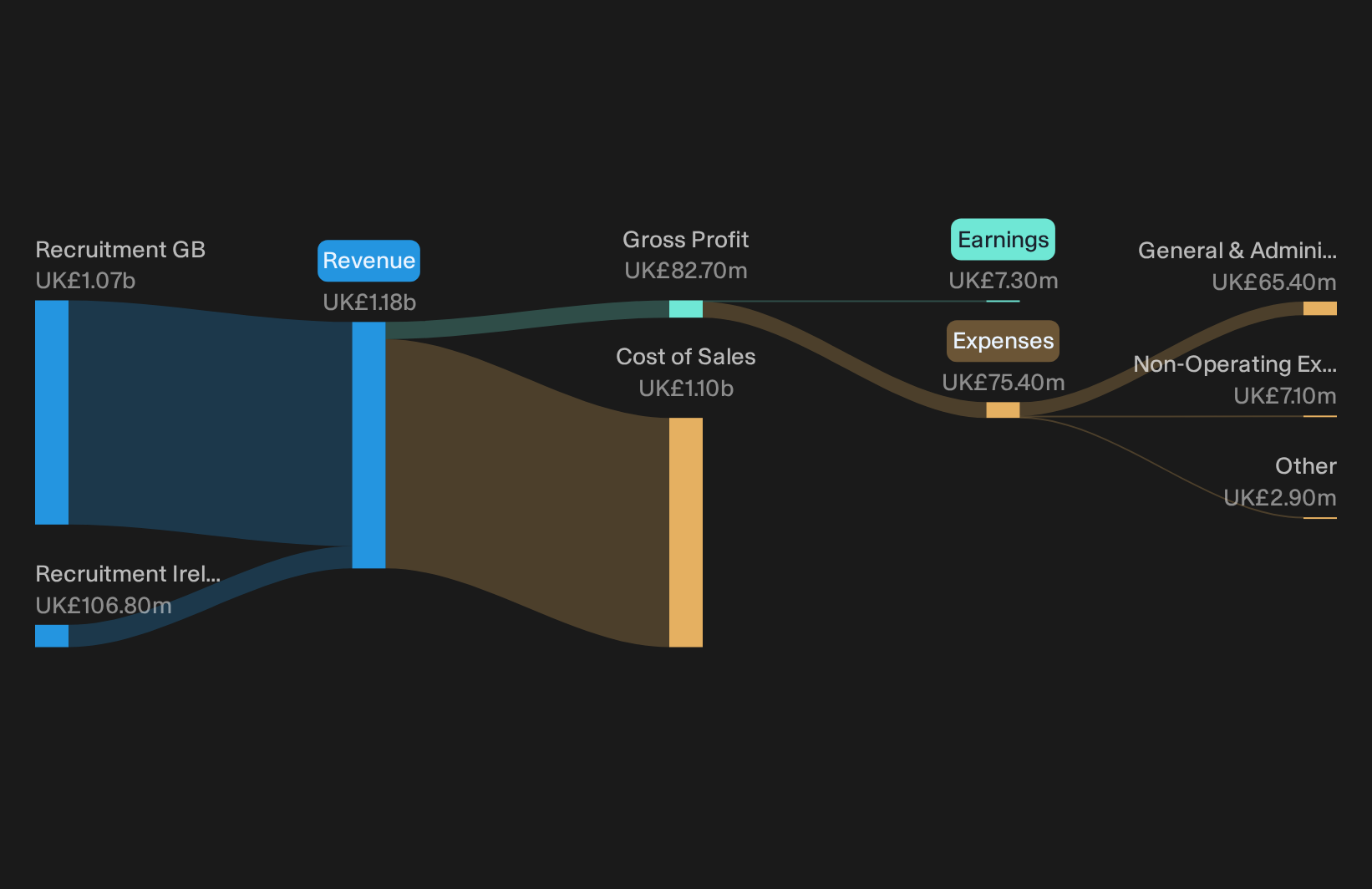
Operations: Staffline Group generates about £1.07b from Recruitment GB and £107 million from Recruitment Ireland, reflecting a predominantly UK focused operation.
Market Cap: £42 million
Staffline Group sits close to the action in youth employment because its blue collar recruitment engine plugs directly into apprenticeships and entry level roles. The analyst consensus Narrative on Simply Wall St outlines why that position could matter as policy nudges more young people toward formal work and training.
"Expansion of long term strategic outsourcing contracts in logistics and distribution, including the newly won agreement covering up to 3,000 roles, is expected to lift volumes, underpin pricing power and support revenue and operating profit growth over the next several years."
The real swing factor is how one quiet shift in who controls those entry level workforces feeds through to pricing power and margins.
That pricing power question is exactly where the story gets interesting, and the full narrative for Staffline Group maps how contract structure, mix of clients and labour trends could be quietly accelerating Staffline Group’s earnings leverage.
Gattaca (AIM:GATC)
Overview: Gattaca is a UK based recruitment and human capital resources group that connects employers with engineering, technology and technical talent across public and private sectors.
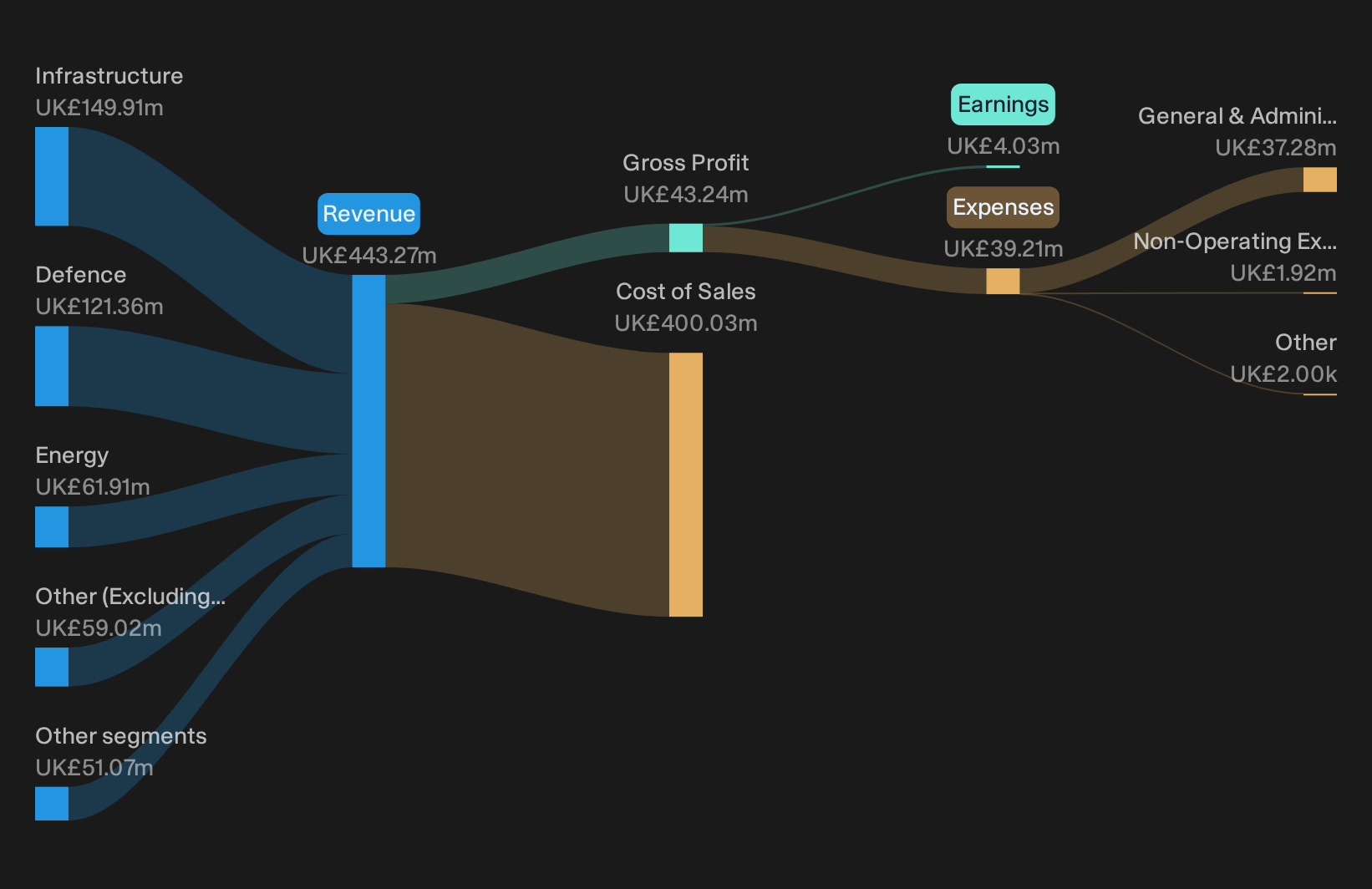
Operations: Gattaca generates about £150 million from Infrastructure, £121 million from Defence and £62 million from Energy, with almost all £443 million revenue earned in the UK.
Market Cap: £48.7 million
Gattaca provides pure play exposure to recruitment and employability at scale, working directly with UK employers that rely on steady flows of technical staff and flexible contract labour. Investors tracking youth employment themes may be interested in its role in matching funded training and hiring programs with real vacancies, particularly where changes in how governments buy those services affect pricing and volumes.
When those funding and procurement shifts really start to bite, the analysis report for Gattaca shows where Gattaca’s recruitment engine could quietly decouple from peers.
Capita (LSE:CPI)
Overview: Capita runs large scale outsourced public service and customer experience contracts, including employment, training and back to work programmes for UK clients.
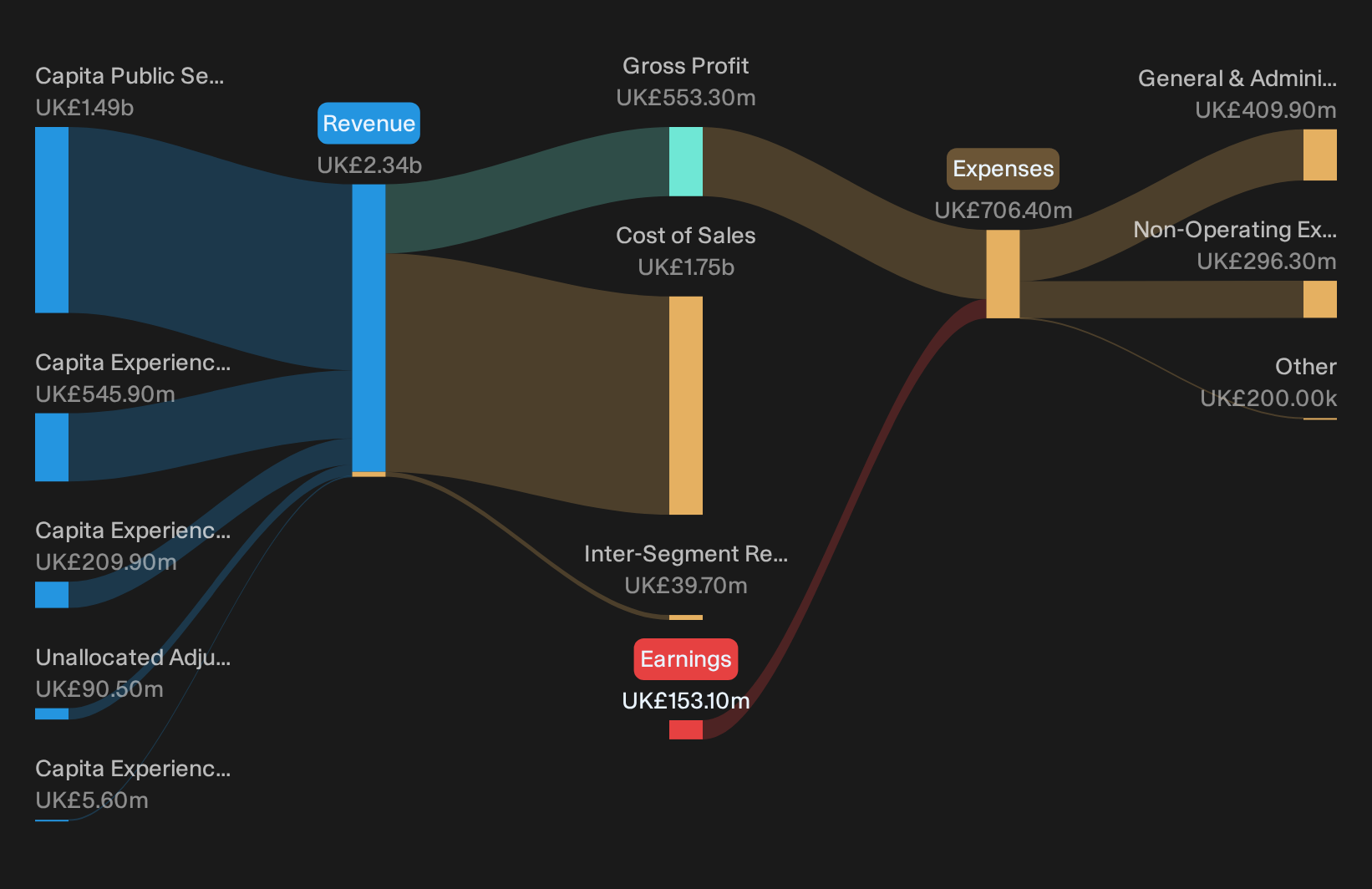
Operations: Capita generates about £1.49b from Capita Public Service and £762 million from Capita Experience contact centre and pension solutions work, after inter segment items.
Market Cap: £327.4 million
Capita matters for this youth employment theme because it already delivers government backed employability and skills services, and the analyst consensus Narrative on Simply Wall St argues that its technology heavy operating model could change how those contracts translate into long term economics.
"Expansion of Capita's AI led business process services model, with close to 500 AI agents already embedded across front, middle and back office work and around two thirds of revenue including AI enabled solutions, can deepen contract stickiness and support higher net margins as automation scales."
What happens to that margin story if one large employment or training framework swings the mix of work more toward complex, higher touch programmes?
That hinge point is exactly what the full narrative for Capita unpacks, showing where Capita’s AI engine could accelerate, stall, or quietly mask the real risk reward skew.
Seeking Alternatives Before The Crowd?
Fresh themes can move from quiet to breakout quickly. Before momentum really flies and prices get caught higher, scan under the radar for now and act now.
- Target dependable income by reviewing 4 dividend fortresses that aim to keep payouts coming even when sentiment drops and other yields start to look thin.
- Hunt for future compounders through the curated 5 high quality undiscovered gems that many investors have not yet priced in while it still matters.
- Ride real business momentum with the focused 43 profitable AI stocks that aren't just burning cash where cash generation already supports the AI story instead of relying on hype alone.
Have feedback on this article? Concerned about the content? Get in touch with us directly. Alternatively, email editorial-team@simplywallst.com