


EN
The Bet Behind Capitec's Rally
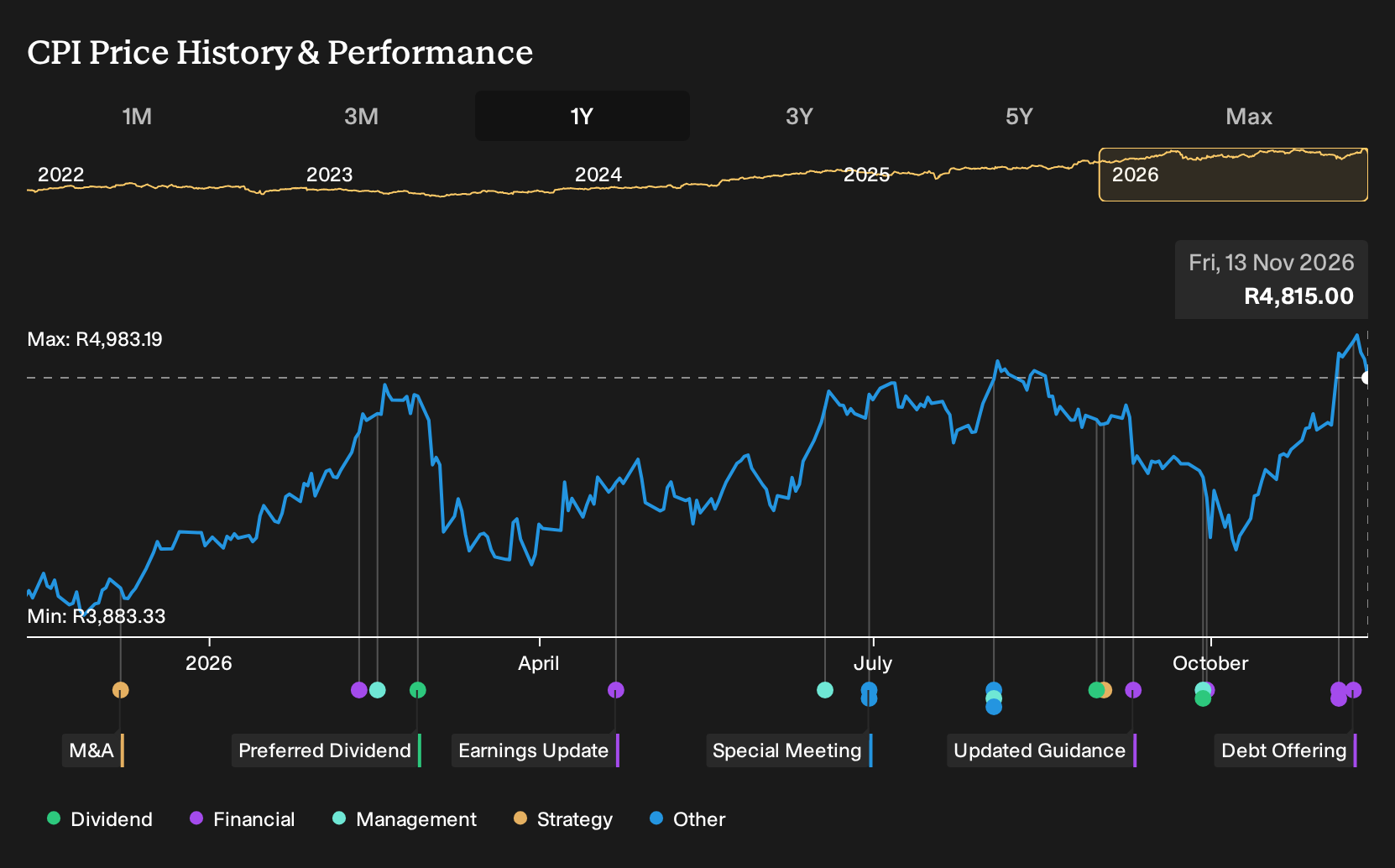
If you only glanced at Capitec’s 2026 headlines, you might focus on revenue of ZAR 23,090m and net income of ZAR 9,523m in the first half alone. For Capitec shareholders, the return over the past year was 24.2%, including dividends. If you were weighing an investment a year ago, with bulls calling for digital-led growth and bears warning about credit and regulation, what exactly could you reasonably have seen that might justify taking that risk?
The easy part of this move is behind Capitec. Zero in on 196 high quality undervalued stocks for companies trading below our estimates.
The Argument You Would Have Been Weighing On Capitec
The shares cost ZAR3,979 at the start of the period, so any Capitec decision meant choosing between two very different stories about the same bank.
On the bullish side, the digital unification story implied a Fair Value of ZAR4,330, a notional price built on expectations that tighter integration across banking, insurance, and merchant services could lift non interest revenue and support wider margins.
The bearish narrative pointed to a Fair Value of ZAR2,660, grounded in worries that fintech rivals, higher compliance spend, and pressure on unsecured lending could compress returns and weigh on long term earnings quality.
What The Results Changed For The Capitec Argument
The most concrete update for Capitec is the H1 2027 report. Revenue reached ZAR23,090m and net income ZAR9,523m, compared with ZAR20,444m and ZAR7,990m in H1 2026, and net margin moved from 39.1% to 41.2%. That pattern supported the optimistic story about higher non interest earnings power, yet left the cautious view on competition and regulation unresolved.
The takeaway is simple. When a thesis turns on digital integration and earnings quality, track the net margin alongside revenue in each filing and test whether both move in the direction the story implied.
What Capitec’s Current Price Already Bakes In
Capitec now trades at ZAR4,815 after a 24.2% gain over the past year. The bearish analyst narrative on Simply Wall St sees its fair value below that level, arguing that the current price already builds in meaningful success on digital growth and earnings resilience.
A buyer today is effectively assuming Capitec can keep scaling fee and insurance income faster than credit costs bite. The key question is how the credit loss ratio and provisioning path affect that view on steadier margins and earnings quality.
"Although Capitec is leaning more on noninterest income for 70% of income from operations after credit impairments, rising group credit impairments of ZAR 5.7b and a higher credit loss ratio of 8.4% can still absorb a large share of that fee and insurance income and limit the benefit to net margins and headline earnings."
That disagreement has a full argument behind it. → Uncover the lower Fair Value this Narrative argues for
How Could You Get There Earlier?
What if your next investment idea came before the headlines? Go straight to the companies whose prices and our estimates still disagree. Three places to start, with the names waiting behind the link.
- Company 1 - 20% below our estimate - targets surgeons shifting difficult infection cases to local antibiotic bone graft products.
- Company 2 - 30% below our estimate - builds one integrated platform advisers and self-directed investors keep using as assets consolidate.
- Company 3 - 47% below our estimate - pushes AI tools that prioritise client listings in job searches and local service queries.
That is three of the list. See all 198 companies with the balance sheet to back it up →
Have feedback on this article? Concerned about the content? Get in touch with us directly. Alternatively, email editorial-team@simplywallst.com