


EN
Learn Why The Bull Case For Eli Lilly (LLY) Could Change Following Obesity Drug Trial Results
- Eli Lilly is leaning into its obesity and cardiometabolic franchise, reporting detailed Phase 3 results for Foundayo and Zepbound across conditions like obstructive sleep apnea and psoriatic arthritis, while committing US$3.5b to new injectable manufacturing capacity in Pennsylvania.
- The same GLP-1 and triple agonist toolkit now spans pills, injectables, rheumatology and sleep disorders, which concentrates both opportunity and execution risk into Lilly's cardiometabolic engine.
- We will look at how Eli Lilly's expanding obesity manufacturing footprint feeds into the broader investment narrative around its GLP-1 franchise.
Compare Eli Lilly’s cardiometabolic push with other potential breakouts in obesity and metabolic care by reviewing our curated list of 36 healthcare AI stocks
Eli Lilly Investment Narrative Recap
To own Eli Lilly today, you need to believe in the durability of its GLP-1 cardiometabolic engine and the firm’s ability to manage capacity, safety scrutiny and pricing pressure at the same time. According to AHaron, an investor in the Simply Wall St Community, the big swing factor is how new assets like retatrutide and orforglipron convert into future earnings, while current valuation already reflects high expectations.
In the near term, the main catalyst remains clean, label-friendly readouts and regulatory progress for retatrutide and broader GLP-1 uses. The biggest risk is concentration in this obesity and diabetes cluster, especially if safety questions, legal cases or tougher pricing hurt long-term adherence. Recent data drops and manufacturing moves are material because they directly touch that core engine.
The Pennsylvania injectable facility announcement looks most relevant here. It ties directly into the cardiometabolic narrative around Zepbound, Foundayo and retatrutide, and it speaks to whether Lilly can physically support the demand implied by current guidance and valuation. A US$3.5b commitment, with operations targeted by 2031, is focused on execution capacity rather than financial engineering.
This build-out cuts both ways. It supports the view from AHaron that Lilly is scaling into a long runway for GLP-1 therapies, yet it also raises the stakes if obesity demand or pricing turn out softer than the market currently assumes. For investors watching catalysts, that plant reinforces the sense that Lilly is locking in a cardiometabolic-focused future, which magnifies both potential upside and concentration risk.
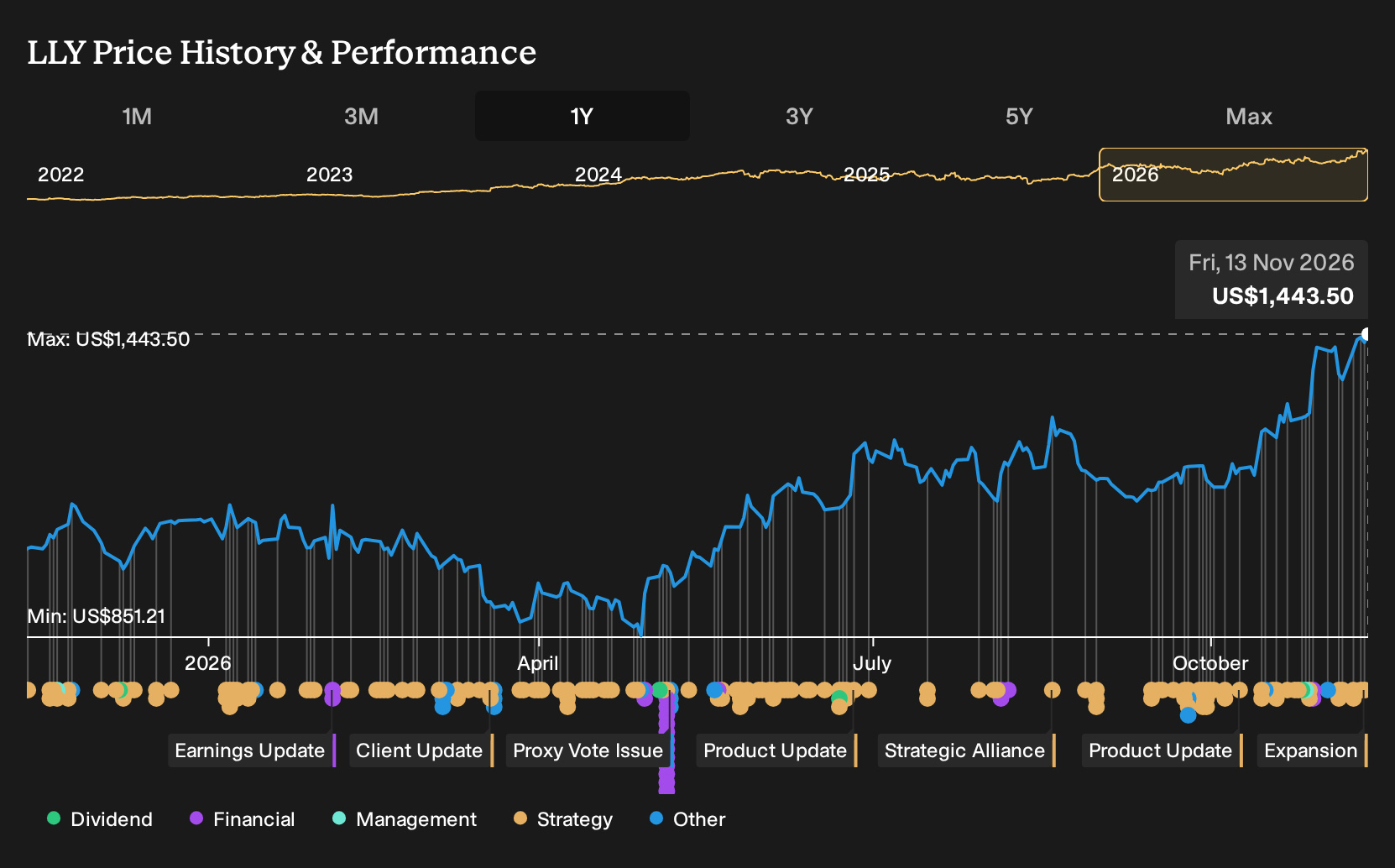
Using a 15.3% annual revenue growth rate and a future profit margin of 31.7%, AHaron’s updated model for Eli Lilly lifts the narrative’s own fair value to US$1,477 per share, reflecting higher long term earnings power from the GLP-1 and cardiometabolic portfolio.
Uncover why Eli Lilly's fair value is essentially in line with its current price.
Exploring Other Perspectives
One contrasting angle from the lowest Eli Lilly analysts is employer reimbursement risk. You might focus on the Pennsylvania build, while they worry that flat commercial coverage around 50% caps future obesity volumes. That group was pencilling in revenue of about US$113.2b and earnings of US$49.1b by 2029, yet still saw downside. Their view has not absorbed this week’s manufacturing and trial updates, so treat it as one of several narratives worth comparing before you decide how the story might evolve.
Explore 13 other Eli Lilly fair value estimates, including one that indicates as much as 18% downside from the current price.
Decide For Yourself
Disagree with existing narratives? Extraordinary investment returns rarely come from following the herd, so go with your instincts.
- A great starting point for your Eli Lilly research is our analysis highlighting 3 key rewards and 2 important warning signs that could impact your investment decision.
- See our latest analysis for Eli Lilly. The report includes a comprehensive fundamental analysis summarized in a single visual, the Snowflake, making it easy to evaluate Eli Lilly's overall financial health at a glance.
Looking For More Investment Ideas Beyond Eli Lilly?
If Eli Lilly has sharpened your interest in cardiometabolic and healthcare themes, it can help to broaden your watchlist and compare it with other opportunities that have different risk drivers and balance sheet profiles.
The Simply Wall St Screener lets you quickly filter for companies that fit the kind of portfolio you want to build, whether you care more about income resilience, balance sheet strength, or mispriced quality.
- For investors who want quality at a sensible entry point, start with a curated group of potential mispriced opportunities through the 34 high quality undervalued stocks.
- If income stability matters to you, focus on companies that combine higher yields with resilience by reviewing the 6 dividend fortresses.
- For a focus on balance sheet strength and solid fundamentals, filter for businesses with stronger financial footing using the list of solid balance sheet and fundamentals (24 results).
Have feedback on this article? Concerned about the content? Get in touch with us directly. Alternatively, email editorial-team@simplywallst.com