


EN
Elite AI Stocks To Own In November 2026
US producer price inflation running at 6.5% has put the cost of capital back in the spotlight, which matters for every project that needs heavy computing power. As borrowing costs bite, investors are hunting for businesses whose chips, tools and factories sit behind long-term AI spending plans rather than short-term hype. This article breaks down three stocks from the semiconductor value chain that fit that brief.
The stocks covered below are a small sample of the opportunities linked to AI hardware spending. The full screen surfaced 61 more semiconductor supply chain companies with equally compelling narratives that are not in this article.
If you want to quickly sort through the wider universe and identify which chip designers, foundries and equipment suppliers best fit your own thesis, head straight into the Semiconductor Supply Chain screener to filter, analyze and pick out the highest conviction ideas.
Broadcom (AVGO)
Broadcom is one of the clearest plays in this screener on the plumbing behind AI hardware, with niteco, a Simply Wall St Community investor, arguing that the real story is how its chip and software stack underpins digital infrastructure rather than just one AI cycle.
"Broadcom is generating substantial free cash flow, expanding its custom silicon business, strengthening its position in networking, and integrating software assets that further diversify earnings."
What matters next is how one unseen pressure on AI data-center spending shapes Broadcom’s ability to keep that cash engine and pricing power intact.
If that pressure on AI capex is what you care about most, read the full narrative for Broadcom to see how those risks and opportunities are really stacking up.

Applied Materials (AMAT)
Applied Materials builds the tools that chipmakers use to produce advanced wafers for AI workloads, and the analyst consensus Narrative on Simply Wall St argues that this equipment footprint gives the company meaningful leverage to long term AI related manufacturing plans.
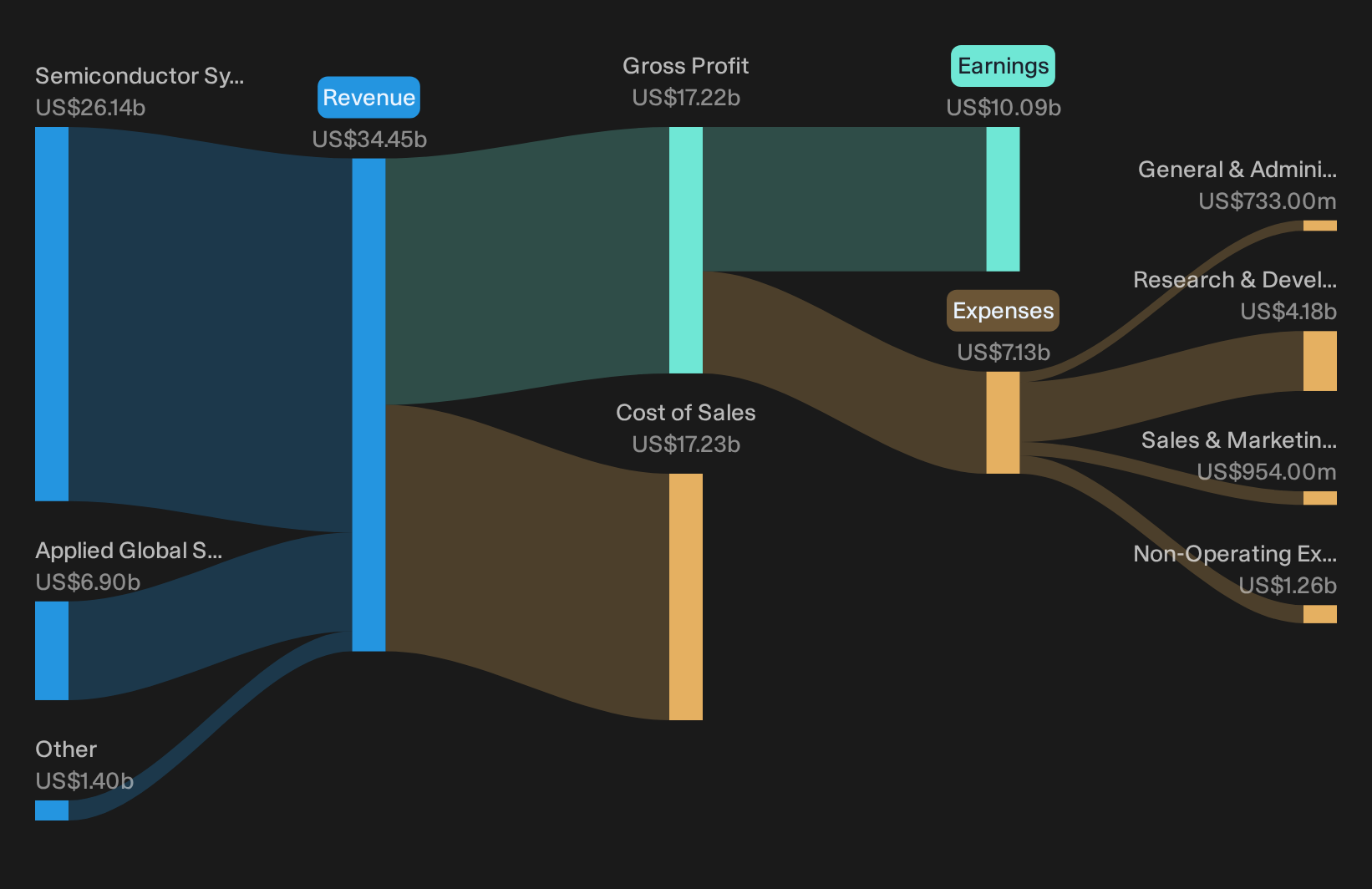
Applied Materials generates most of its revenue from Semiconductor Systems, which produced about US$26.1b, with Applied Global Services adding roughly US$6.9b and other activities around US$1.4b, and the stock carries a market value near US$294b.
"Structural growth in AI and high performance computing is reshaping semiconductor demand, and Applied Materials is guiding Semiconductor Systems revenue in calendar 2026 to a level higher than its already raised greater than 30% framework, with an expectation to outgrow wafer fab equipment, which could support higher revenue and earnings over time."
What happens if one key assumption about how that AI heavy product mix feeds through to margins and cash generation starts to shift?
If that margin story is what you are testing, go to the full narrative for Applied Materials to see how AI heavy orders, service revenue and capital intensity are really interacting.
ASML Holding (ENXTAM:ASML)
ASML Holding sits on the equipment side of the AI supply chain, supplying the lithography tools that let foundries print the tiniest chip features. According to Investingwilly, an investor in the Simply Wall St Community, the real story is how tight capacity is for those machines.
"Customers want more machines than ASML can build through at least 2028, and some already want to order for 2029 and 2030."
What happens to pricing power and earnings quality if that imbalance between demand and available systems persists longer than buyers or suppliers currently expect?
If you are tracking that supply demand squeeze, go straight to the full narrative for ASML Holding to see how ASML Holding’s pricing power and AI exposure could be decoupling.

Seeking Fresh Alternatives Before They Fly
Fresh opportunities can move fast, and potential setups may not stay under the radar for long. Scan for possible breakouts and building momentum while it matters, then consider your options early.
- Target reliable income streams by reviewing the curated 6 dividend fortresses that combine high yields with businesses focused on sustaining payouts while this window for income-focused entries is still open.
- Spot early AI momentum by tracking the hand picked 43 profitable AI stocks that aren't just burning cash that already back their stories with real earnings before the crowd fully catches on.
- Secure potential resilience by scanning the filtered 29 resilient stocks with low risk scores that pair steadier balance sheets with lower overall risk scores before those qualities get fully priced in.
Have feedback on this article? Concerned about the content? Get in touch with us directly. Alternatively, email editorial-team@simplywallst.com