


EN
3 U.S. Finance Stocks Riding The Tariff Cash Squeeze
Restructured Section 232 tariffs are quietly turning customs bills into a financing problem, as import heavy businesses front cash for duties long before customers pay and wait on slow IEEPA refunds that sit as unusable paper assets. That strain is pushing more firms toward specialty receivables and factoring finance. This article highlights three U.S. stocks exposed to that shift and explains how their role in this cash squeeze may influence your portfolio decisions.
The stocks covered below are just a first pass at this theme, and the full screen surfaced 4 more U.S. specialty receivables and factoring finance providers with equally compelling narratives that are not included in the article sample. If you want to quickly identify, compare, and analyze the highest conviction plays in this niche, go straight to the U.S. Specialty Receivables & Factoring Finance Providers screener.
HA Sustainable Infrastructure Capital (HASI)
Overview: HA Sustainable Infrastructure Capital finances energy efficiency, renewable power, and other U.S. climate projects through equity, receivables, and debt investments.
Operations: The REIT mortgage portfolio generates about US$114 million of revenue, entirely from projects located in the United States.
Market Cap: US$5 billion
HA Sustainable Infrastructure Capital fits this specialty finance screen as a lender and investor in project-level receivables rather than classic SME factoring, yet still addresses cash flow timing issues for counterparties. For investors, the appeal is targeted exposure to sustainable infrastructure credit with a 4.38% dividend and active green funding, with outcomes influenced by how its cost of capital evolves over time.
That cost of capital question is exactly what the DCF valuation analysis for HA Sustainable Infrastructure Capital can help you frame, especially if you suspect the market is mispricing that risk.
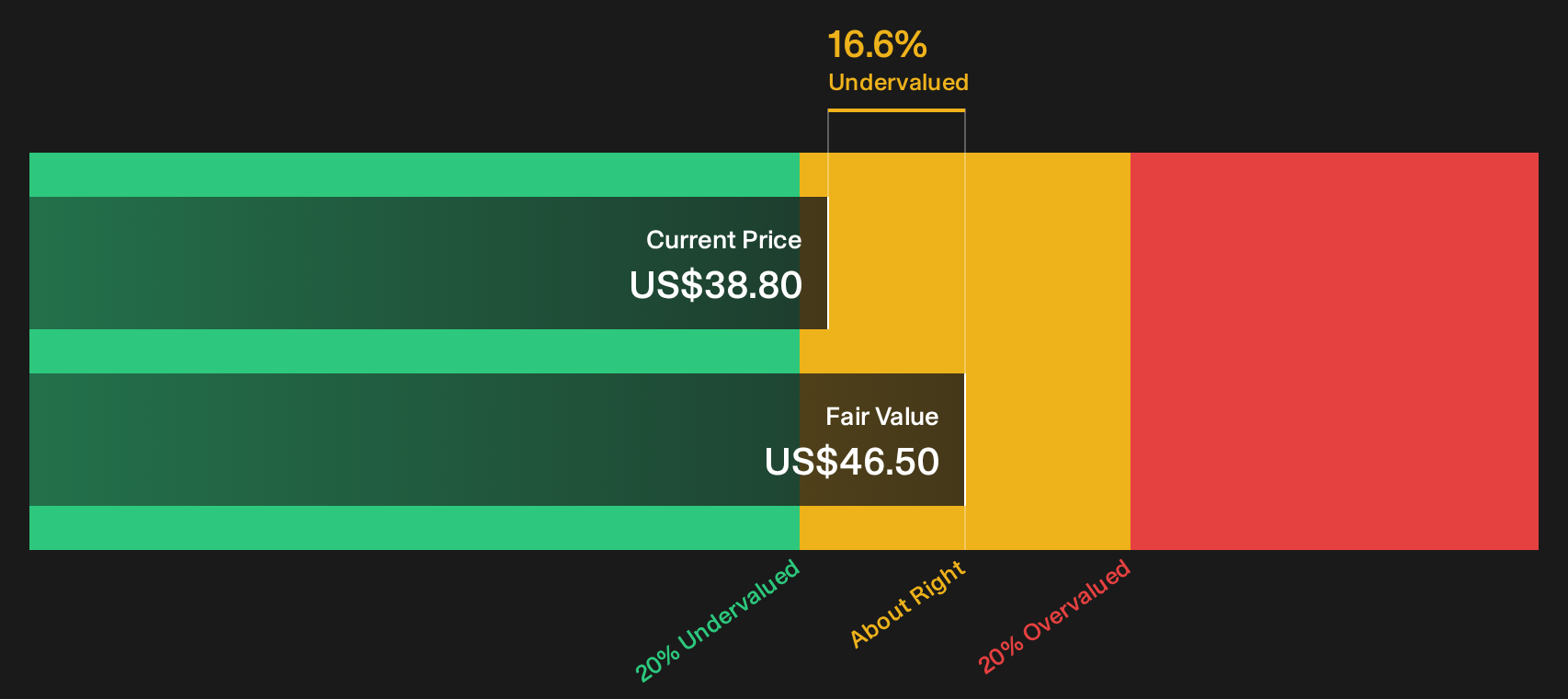
Bladex (BLX)
Overview: Bladex is a multinational bank that finances trade across Latin America and the Caribbean through short tenor loans, guarantees, and receivables based facilities.
Operations: Bladex generates about US$306 million of revenue from its Commercial segment and US$35 million from Treasury activities.
Market Cap: US$1.9 billion
Bladex matters in this specialty receivables screen because it funds real world trade flows, and the analyst consensus Narrative on Simply Wall St argues that its transaction heavy model is already reshaping how that trade finance income is earned.
"The rollout and ongoing refinement of Bladex’s digital trade and letters of credit platforms, which have already cut processing times to about 1 hour per transaction, can support higher volumes and smaller ticket sizes that feed directly into fee income growth and help offset pressure on net interest margins."
The real test for Bladex now is how one quiet shift in its funding mix and client behavior ultimately impacts margins.
That margin story is only half the picture, and the full narrative for Bladex explains how funding shifts, fee mix and risk appetite could be quietly accelerating Bladex’s trade engine.

Applied Industrial Technologies (AIT)
Overview: Applied Industrial Technologies supplies and services industrial motion, fluid power, flow control, and automation equipment for manufacturers and other technical end markets.
Operations: Applied Industrial Technologies generates about US$3.2b from Service Center activities and US$1.9b from Engineered Solutions, with most revenue in the United States.
Market Cap: US$10.9b
Applied Industrial Technologies only touches the specialty receivables theme indirectly. However, tariff driven working-capital strain at its import reliant customers feeds into demand for its automation and fluid power projects. The analyst consensus Narrative on Simply Wall St argues that these projects are reshaping where the long term earnings power sits.
"Applied Industrial Technologies is seeing strong demand for automation, robotics, and digital solutions, with automation organic sales up over 20% in Q4 FY26 and Engineered Solutions orders up double digits for several quarters, which points to a growing backlog of higher value projects that can support future revenue and earnings growth."
What investors really need to watch now is how one quiet shift in customer mix ultimately filters through to margins and cash generation.
As that mix tilts toward higher value projects, the full narrative for Applied Industrial Technologies shows how Applied Industrial Technologies’ customer shift, capital intensity and cash cycles could be quietly accelerating.

Seeking Alternatives Before The Crowd?
Fresh themes can move from quiet to breakout quickly, and by the time momentum is flying, the best entry points are already dropping. Scan these ideas now and aim to get in before they become widely followed.
- Look for resilient compounders with cleaner balance sheets before they get fully caught by the crowd through this curated list of solid balance sheet and fundamentals (24 results).
- Explore cash generative AI plays where revenue, margins and runway matter more than hype by working through a focused list of 43 profitable AI stocks that aren't just burning cash.
- Consider positioning around potential rate shifts and currency moves with a tightly filtered pack of 33 elite gold producer stocks that can reset quickly when sentiment turns.
Have feedback on this article? Concerned about the content? Get in touch with us directly. Alternatively, email editorial-team@simplywallst.com