


EN
What Bears Saw Before Star Cement Slid
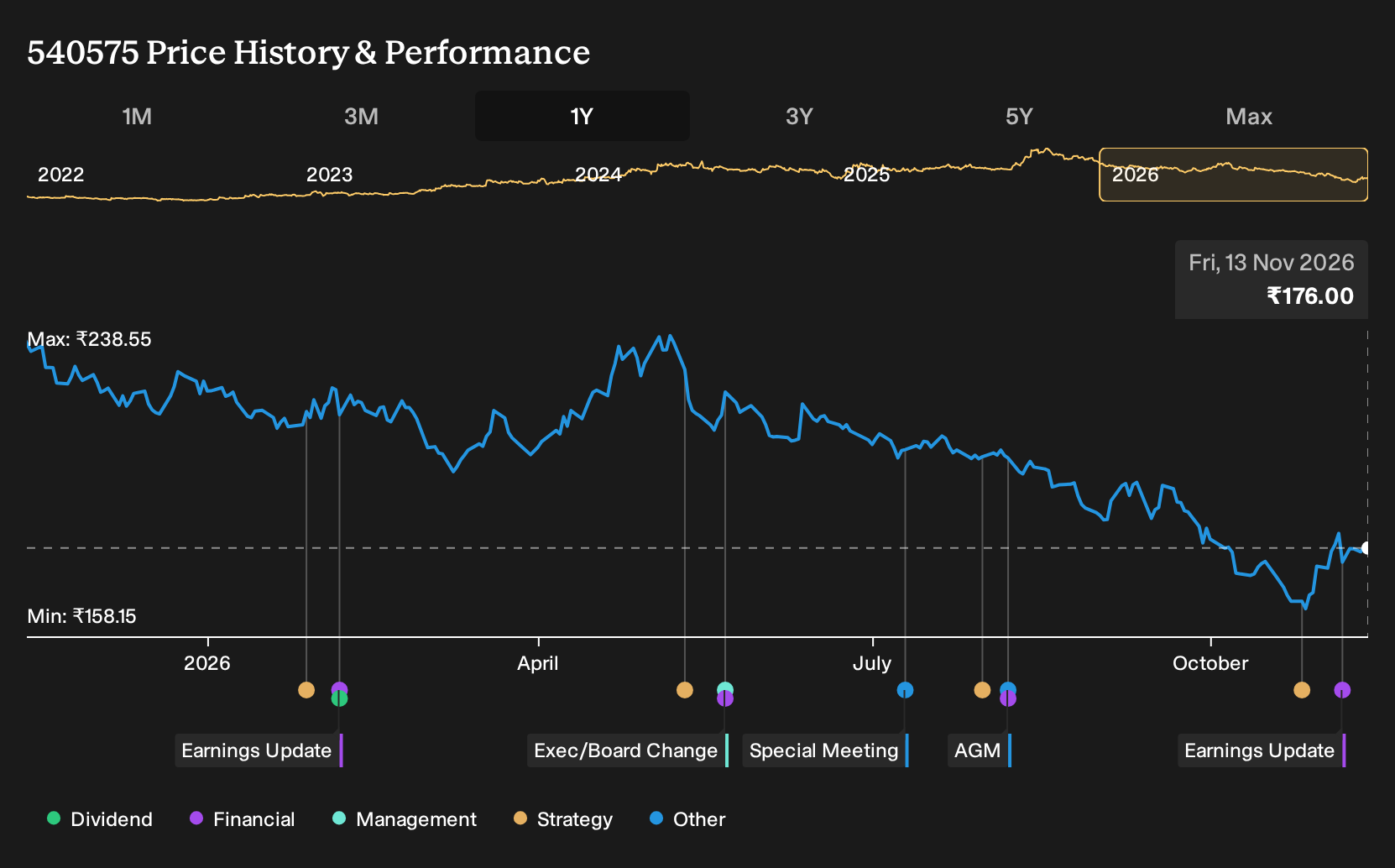
If you had looked at Star Cement on 13 November 2025 and decided to sit it out, that choice avoided a difficult stretch. For Star Cement shareholders, the loss over the past year was 24.0%, including dividends. Since then, revenue for Q2 2027 was ₹8,310.341 million while net income for that quarter was ₹404.186 million, and net margin moved to 4.9%. What early clues about margins or regional risks were already on record before that decline unfolded?
If the move has made Star Cement harder to judge, start where the gap is still open and scan 200 high quality undervalued stocks.
The Argument You Would Have Been Weighing On Star Cement
The shares cost ₹236 at the start of the period, and anyone looking at Star Cement then faced two very different stories that both sounded reasonable.
The bullish narrative saw a Fair Value of ₹275. This was a price level those assumptions pointed to, built on Northeast urbanization and infrastructure demand plus planned renewable power that was expected to lift EBITDA per tonne and net margin.
The bearish view put Fair Value at ₹125. This was a figure tied to concerns that heavy Northeast exposure and reliance on Assam incentives, including subsidies of up to ₹620 million in one quarter, could squeeze profitability if policies shifted.
What The Results Changed For The Star Cement Thesis
The clearest new fact was the profitability squeeze. Star Cement reported Q2 2027 revenue of ₹8,310.341 million versus ₹8,109.403 million in Q2 2026, while net income fell from ₹719.499 million to ₹404.186 million and net margin moved from 8.9% to 4.9%. That combination challenged the earlier bullish margin story and supported the more cautious view on earnings sensitivity.
The episode turned on whether richer margins would follow higher volumes. When you assess another company with a similar pitch, track net margin alongside sales and test whether each extra rupee of revenue is adding or diluting profit over several reporting periods.
What You Are Being Asked To Believe At ₹176
Star Cement now trades at ₹176, with the share price down 24.0% over the past year. The analyst consensus Narrative on Simply Wall St sees Fair Value above that level, based on a wider footprint and cost work rather than just Northeast pricing and subsidies.
For the fall to look like an opportunity rather than a warning, a buyer today would need to believe Star Cement can execute its capacity build out and efficiency plans well enough to offset lower subsidies and tougher Northeast competition.
"The main factor that has to go right is that Star Cement offsets structurally lower subsidy income and potential Northeast price pressure by executing its cost optimisation, green power and logistics plans while scaling higher value trade and premium cement and building solutions volumes."
Not everyone reads the same price the same way. → See the higher figure this Narrative lands on, and how it gets there
Star Cement And The Power Question
Star Cement works in the physical world. Kilns, clinker, grinding units, all demanding dependable electricity.
Your attention might jump to obvious winners from rising power demand. There is another business one step back, wiring how that electricity is generated and moved.
This firm builds and services heavy-duty equipment that keeps large power plants running. It also supplies hardware and software that help grids manage bigger, more complex loads.
As energy use grows from data centers and electrification, that role could quietly shift. Reliable cement capacity and resilient power infrastructure start to look closely linked.
The argument comes with a number attached. → Uncover the power-grid company trading 37% below one Narrative's Fair Value
Have feedback on this article? Concerned about the content? Get in touch with us directly. Alternatively, email editorial-team@simplywallst.com