


EN
Why Xero Fell Even As Sales Rose
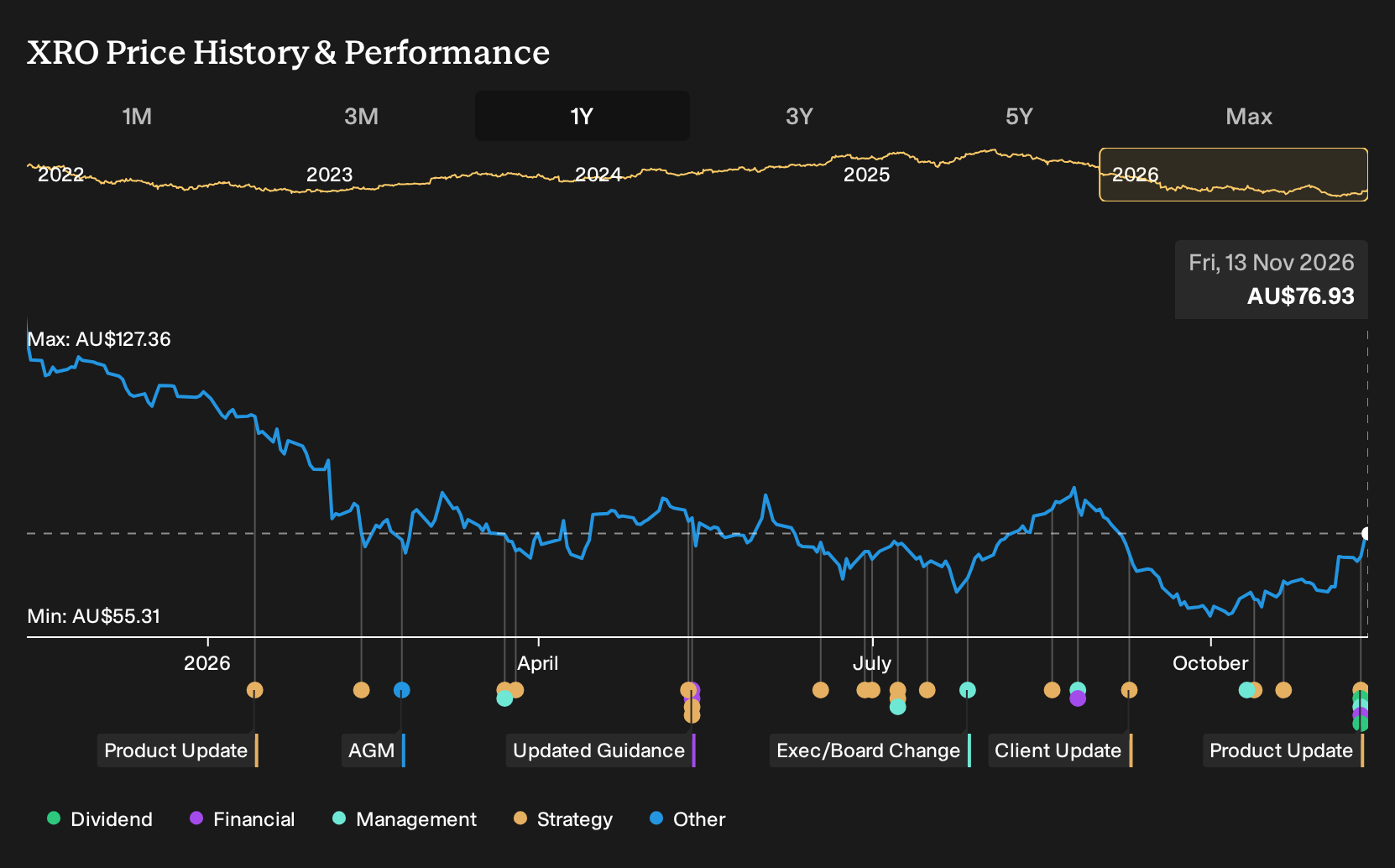
If you had looked at Xero in late 2025 and decided to wait for clearer proof that its AI push and acquisitions would pay off, the past year might feel like a bullet dodged. Investors who held Xero over the past year are down 37.1%, including dividends. The question now is which early sign you would have focused on back then: the rich P/E assumptions or the profit margin risks already on record.
The useful thing about a Narrative is that the reasoning is checkable: the assumptions sit beside the argument, and together they imply an estimated Fair Value you can disagree with.
Xero is not the only name tied to this theme. Zero in on 53 AI infrastructure stocks and compare how each one is priced.
The Two Xero Stories Investors Had To Weigh
The shares cost A$127 at the start of the period, and anyone looking at Xero then had to decide which story felt more reasonable.
On the upbeat side, one Narrative saw Fair Value at A$195, or 53% above the start price. It leaned on assumptions of 18.1% annual revenue growth and a future P/E of 61.4x, supported by AI tools like Just Ask Xero and the Syft Analytics acquisition.
A more cautious Narrative pointed to Fair Value of A$100, or 21% below the start price, and focused on cybersecurity threats and heavier regulation increasing costs and putting pressure on margins.
What The Results Changed For The Xero Story
Xero’s H1 2027 numbers put both Narratives under pressure. Revenue reached NZ$1,745.3m versus NZ$1,194.2m a year earlier, which supported the growth-heavy case. Net income fell to NZ$18.5m from NZ$134.8m and net margin slipped from 11.3% to 1.1%, so the profitability lift included in the bullish P/E assumptions remained unproven. The evidence pointed in both directions.
The lesson is straightforward. When forecasts rely on higher margins, it is important to watch net income and net margin first, and only then consider what kind of P/E you are prepared to pay for any growth story.
What Xero’s Lower Price Asks You To Believe
Xero trades at A$76.93 today, with the share price down 37.1% over the past year. The current bullish Narrative’s Fair Value sits above that level. This indicates that the writer sees more strength in the business than the market is currently pricing in.
According to KiwiInvest, an investor in the Simply Wall St Community who wrote the Narrative, the key debate now is whether Xero can keep scaling subscribers and pricing while holding its cost base relatively steady, so that higher revenue meaningfully converts into sustained net profit margin improvement.
"Xero has high scalability of its products, with current gross margin of ~88%. The higher revenue will be applied across relatively static operating expenses as Xero reaches the point where it can continue steady feature rollouts without needing to increase spending relative to revenue, resulting in higher net profit margins."
One Narrative disagrees with today's price. → See where this Narrative says Xero should trade
One Step Beyond Xero
Xero leans on AI and cloud tools to make accounting easier. Step back and a wider choice appears.
All that software still needs somewhere reliable to run, plus ways to bill customers. Another giant provider quietly builds and manages that shared infrastructure and subscription plumbing.
It powers office productivity suites, developer environments and AI assistants. Those services connect everyday work directly into cloud platforms and data stores.
If that toolkit becomes the default operating layer for more organisations, Xero decisions could fold into something larger. Your thesis may hinge on how this deeper layer evolves.
It is written up in full, assumptions and all. → Explore the Narrative that puts this company 20% above its price
Have feedback on this article? Concerned about the content? Get in touch with us directly. Alternatively, email editorial-team@simplywallst.com