


EN
Here's Why We're Wary Of Buying Tai Sin Electric's (SGX:500) For Its Upcoming Dividend
Regular readers will know that we love our dividends at Simply Wall St, which is why it's exciting to see Tai Sin Electric Limited (SGX:500) is about to trade ex-dividend in the next 3 days. The ex-dividend date generally occurs two days before the record date, which is the day on which shareholders need to be on the company's books in order to receive a dividend. The ex-dividend date is important as the process of settlement involves at least two full business days. So if you miss that date, you would not show up on the company's books on the record date. Accordingly, Tai Sin Electric investors that purchase the stock on or after the 19th of November will not receive the dividend, which will be paid on the 27th of November.
The company's next dividend payment will be S$0.016 per share, and in the last 12 months, the company paid a total of S$0.023 per share. Based on the last year's worth of payments, Tai Sin Electric stock has a trailing yield of around 4.6% on the current share price of S$0.51. We love seeing companies pay a dividend, but it's also important to be sure that laying the golden eggs isn't going to kill our golden goose! So we need to investigate whether Tai Sin Electric can afford its dividend, and if the dividend could grow.
Dividends are usually paid out of company profits, so if a company pays out more than it earned then its dividend is usually at greater risk of being cut. Tai Sin Electric paid out 97% of its earnings, which is more than we're comfortable with, unless there are mitigating circumstances. That said, even highly profitable companies sometimes might not generate enough cash to pay the dividend, which is why we should always check if the dividend is covered by cash flow. Over the past year it paid out 119% of its free cash flow as dividends, which is uncomfortably high. We're curious about why the company paid out more cash than it generated last year, since this can be one of the early signs that a dividend may be unsustainable.
Cash is slightly more important than profit from a dividend perspective, but given Tai Sin Electric's payouts were not well covered by either earnings or cash flow, we would be concerned about the sustainability of this dividend.
Check out our latest analysis for Tai Sin Electric
Click here to see the company's payout ratio, plus analyst estimates of its future dividends.
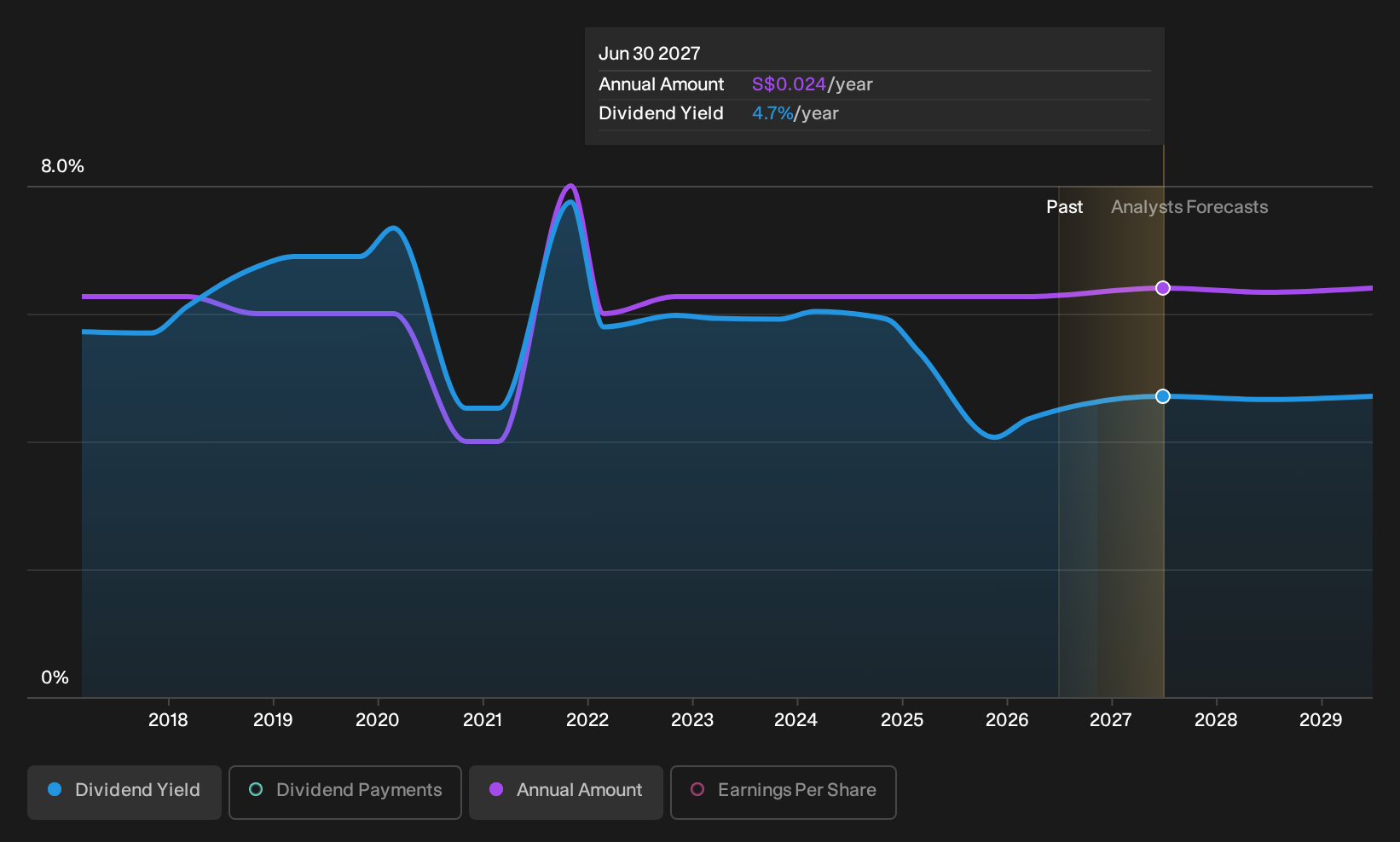
Have Earnings And Dividends Been Growing?
When earnings decline, dividend companies become much harder to analyse and own safely. If earnings decline and the company is forced to cut its dividend, investors could watch the value of their investment go up in smoke. Tai Sin Electric's earnings per share have fallen at approximately 8.3% a year over the previous five years. When earnings per share fall, the maximum amount of dividends that can be paid also falls.
Another key way to measure a company's dividend prospects is by measuring its historical rate of dividend growth. Tai Sin Electric's dividend payments are broadly unchanged compared to where they were 10 years ago. If a company's dividend stays flat while earnings are in decline, this is typically a sign that it is paying out a larger percentage of its earnings. This can become unsustainable if earnings fall far enough.
The Bottom Line
Is Tai Sin Electric an attractive dividend stock, or better left on the shelf? It's looking like an unattractive opportunity, with its earnings per share declining, while, paying out an uncomfortably high percentage of both its profits (97%) and cash flow as dividends. This is a starkly negative combination that often suggests a dividend cut could be in the company's near future. Bottom line: Tai Sin Electric has some unfortunate characteristics that we think could lead to sub-optimal outcomes for dividend investors.
With that being said, if you're still considering Tai Sin Electric as an investment, you'll find it beneficial to know what risks this stock is facing. Our analysis shows 3 warning signs for Tai Sin Electric that we strongly recommend you have a look at before investing in the company.
Generally, we wouldn't recommend just buying the first dividend stock you see. Here's a curated list of interesting stocks that are strong dividend payers.
Have feedback on this article? Concerned about the content? Get in touch with us directly. Alternatively, email editorial-team (at) simplywallst.com.