


EN
There's A Lot To Like About SATS' (SGX:S58) Upcoming S$0.02 Dividend
It looks like SATS Ltd. (SGX:S58) is about to go ex-dividend in the next two days. The ex-dividend date is commonly two business days before the record date, which is the cut-off date for shareholders to be present on the company's books to be eligible for a dividend payment. The ex-dividend date is an important date to be aware of as any purchase of the stock made on or after this date might mean a late settlement that doesn't show on the record date. Therefore, if you purchase SATS' shares on or after the 18th of November, you won't be eligible to receive the dividend, when it is paid on the 10th of December.
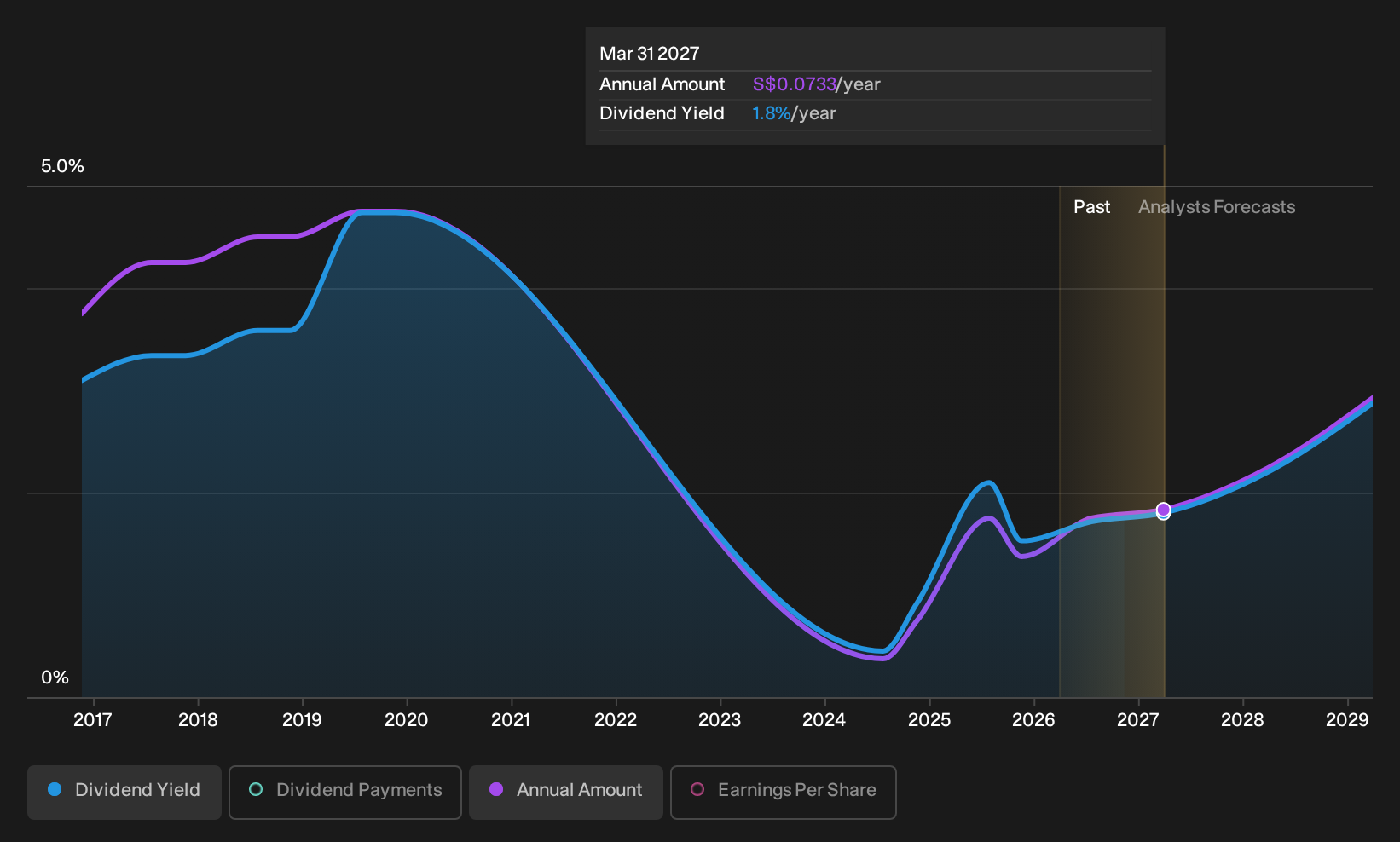
The company's upcoming dividend is S$0.02 a share, following on from the last 12 months, when the company distributed a total of S$0.07 per share to shareholders. Based on the last year's worth of payments, SATS stock has a trailing yield of around 1.7% on the current share price of S$4.07. We love seeing companies pay a dividend, but it's also important to be sure that laying the golden eggs isn't going to kill our golden goose! So we need to investigate whether SATS can afford its dividend, and if the dividend could grow.
Dividends are typically paid from company earnings. If a company pays more in dividends than it earned in profit, then the dividend could be unsustainable. That's why it's good to see SATS paying out a modest 36% of its earnings. A useful secondary check can be to evaluate whether SATS generated enough free cash flow to afford its dividend. Luckily it paid out just 17% of its free cash flow last year.
It's positive to see that SATS's dividend is covered by both profits and cash flow, since this is generally a sign that the dividend is sustainable, and a lower payout ratio usually suggests a greater margin of safety before the dividend gets cut.
View our latest analysis for SATS
Click here to see the company's payout ratio, plus analyst estimates of its future dividends.
Have Earnings And Dividends Been Growing?
Companies with consistently growing earnings per share generally make the best dividend stocks, as they usually find it easier to grow dividends per share. If business enters a downturn and the dividend is cut, the company could see its value fall precipitously. It's encouraging to see SATS has grown its earnings rapidly, up 56% a year for the past five years. Earnings per share have been growing very quickly, and the company is paying out a relatively low percentage of its profit and cash flow. This is a very favourable combination that can often lead to the dividend multiplying over the long term, if earnings grow and the company pays out a higher percentage of its earnings.
Many investors will assess a company's dividend performance by evaluating how much the dividend payments have changed over time. SATS's dividend payments per share have declined at 7.3% per year on average over the past 10 years, which is uninspiring. It's unusual to see earnings per share increasing at the same time as dividends per share have been in decline. We'd hope it's because the company is reinvesting heavily in its business, but it could also suggest business is lumpy.
The Bottom Line
Is SATS an attractive dividend stock, or better left on the shelf? SATS has grown its earnings per share while simultaneously reinvesting in the business. Unfortunately it's cut the dividend at least once in the past 10 years, but the conservative payout ratio makes the current dividend look sustainable. It's a promising combination that should mark this company worthy of closer attention.
With that in mind, a critical part of thorough stock research is being aware of any risks that stock currently faces. Our analysis shows 1 warning sign for SATS and you should be aware of it before buying any shares.
If you're in the market for strong dividend payers, we recommend checking our selection of top dividend stocks.
Have feedback on this article? Concerned about the content? Get in touch with us directly. Alternatively, email editorial-team (at) simplywallst.com.