


EN
Dividend Investors: Don't Be Too Quick To Buy Tamawood Limited (ASX:TWD) For Its Upcoming Dividend
Tamawood Limited (ASX:TWD) stock is about to trade ex-dividend in 4 days. The ex-dividend date is usually set to be two business days before the record date, which is the cut-off date on which you must be present on the company's books as a shareholder in order to receive the dividend. It is important to be aware of the ex-dividend date because any trade on the stock needs to have been settled on or before the record date. Therefore, if you purchase Tamawood's shares on or after the 19th of November, you won't be eligible to receive the dividend, when it is paid on the 11th of December.
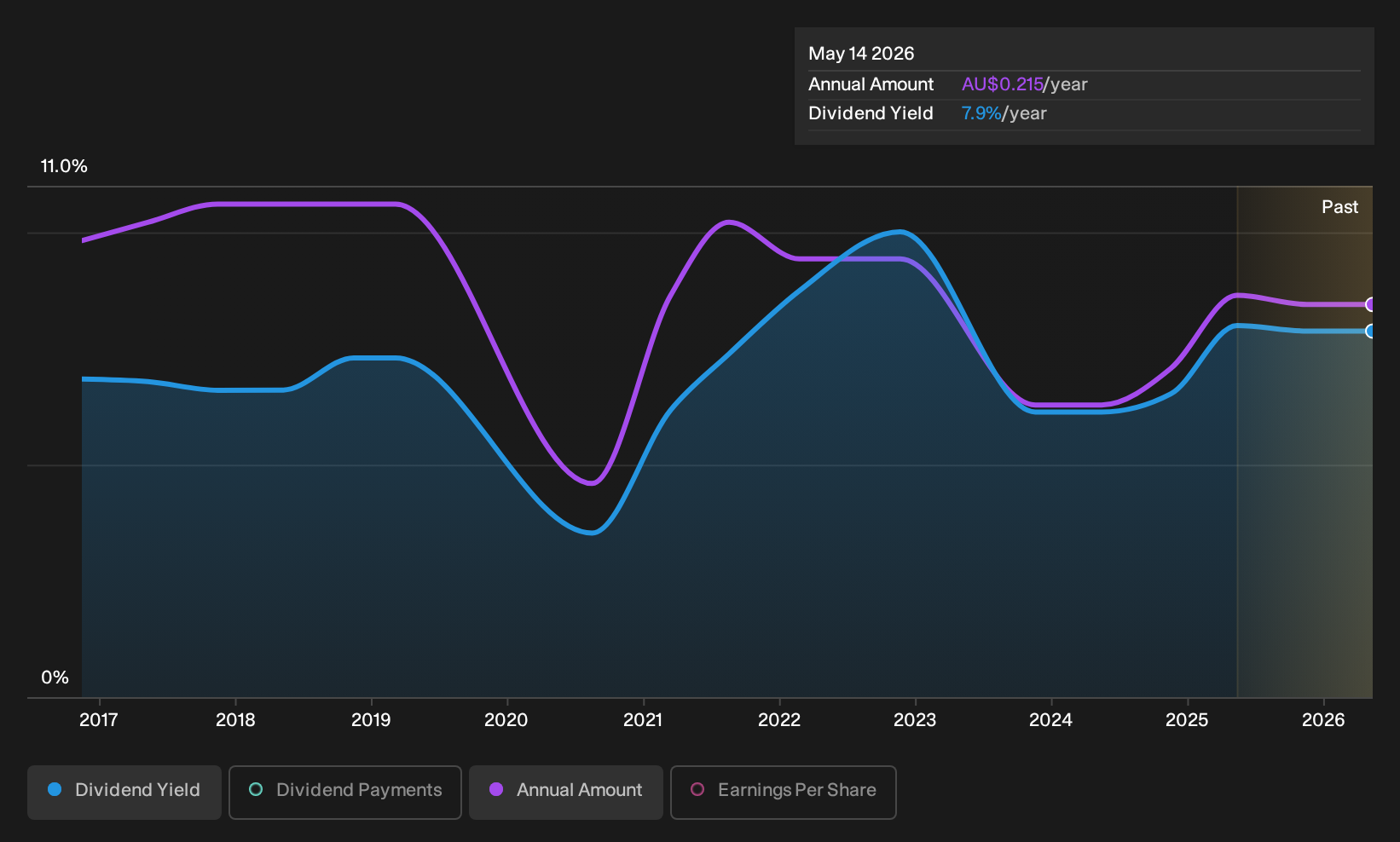
The company's next dividend payment will be AU$0.105 per share, on the back of last year when the company paid a total of AU$0.21 to shareholders. Last year's total dividend payments show that Tamawood has a trailing yield of 7.1% on the current share price of AU$3.03. Dividends are a major contributor to investment returns for long term holders, but only if the dividend continues to be paid. That's why we should always check whether the dividend payments appear sustainable, and if the company is growing.
Dividends are typically paid out of company income, so if a company pays out more than it earned, its dividend is usually at a higher risk of being cut. Last year Tamawood paid out 103% of its profits as dividends to shareholders, suggesting the dividend is not well covered by earnings. Yet cash flow is typically more important than profit for assessing dividend sustainability, so we should always check if the company generated enough cash to afford its dividend. Thankfully its dividend payments took up just 49% of the free cash flow it generated, which is a comfortable payout ratio.
It's good to see that while Tamawood's dividends were not covered by profits, at least they are affordable from a cash perspective. If executives were to continue paying more in dividends than the company reported in profits, we'd view this as a warning sign. Very few companies are able to sustainably pay dividends larger than their reported earnings.
See our latest analysis for Tamawood
Click here to see how much of its profit Tamawood paid out over the last 12 months.
Have Earnings And Dividends Been Growing?
Companies that aren't growing their earnings can still be valuable, but it is even more important to assess the sustainability of the dividend if it looks like the company will struggle to grow. Investors love dividends, so if earnings fall and the dividend is reduced, expect a stock to be sold off heavily at the same time. It's not encouraging to see that Tamawood's earnings are effectively flat over the past five years. We'd take that over an earnings decline any day, but in the long run, the best dividend stocks all grow their earnings per share.
The main way most investors will assess a company's dividend prospects is by checking the historical rate of dividend growth. Tamawood has seen its dividend decline 1.5% per annum on average over the past 10 years, which is not great to see.
To Sum It Up
Is Tamawood an attractive dividend stock, or better left on the shelf? Earnings per share have been effectively flat, which is a bit of a concern given the company is paying out 103% of its profit as dividends, which we feel is uncomfortably high. It's not that we think Tamawood is a bad company, but these characteristics don't generally lead to outstanding dividend performance.
So if you're still interested in Tamawood despite it's poor dividend qualities, you should be well informed on some of the risks facing this stock. Every company has risks, and we've spotted 2 warning signs for Tamawood you should know about.
If you're in the market for strong dividend payers, we recommend checking our selection of top dividend stocks.
Have feedback on this article? Concerned about the content? Get in touch with us directly. Alternatively, email editorial-team (at) simplywallst.com.