


EN
NVIDIA And 2 Top Undervalued Stocks To Watch
Rising interest rate worries are back on center stage after US Federal Reserve Vice Chair Philip Jefferson underlined that inflation will guide future policy moves. When borrowing costs stay uncertain, investors often pay closer attention to businesses that generate solid cash inflows and still trade at a discount to their estimated worth. This article spotlights three such U.S. stocks that screen as potentially underpriced on cash flows.
The three examples covered below are just a sample. The full screen surfaces 97 more companies that combine discounted valuations with compelling cash flow stories that are not detailed in this article. To identify which of those ideas best fit your own checklist, analyze the Undervalued Stocks Based On Cash Flows screener.
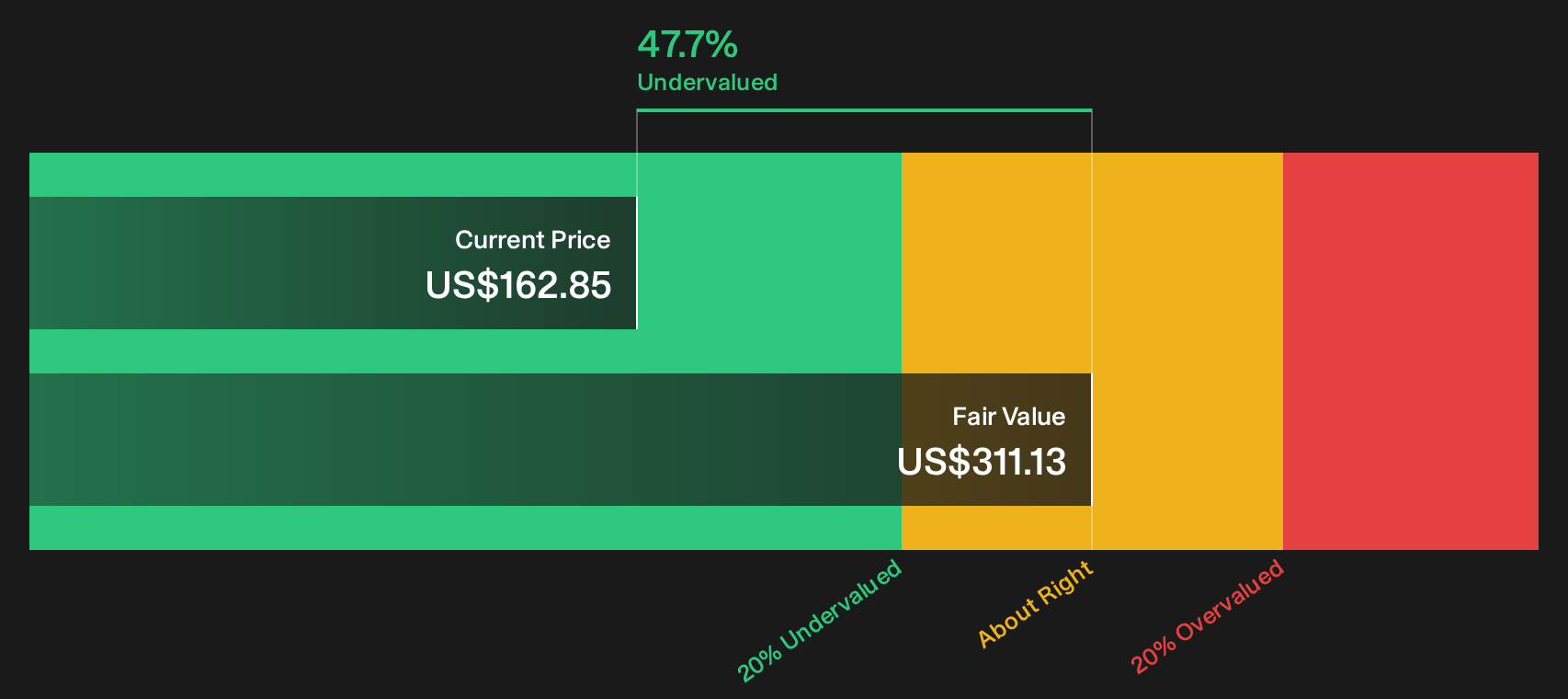
NVIDIA (NVDA)
NVIDIA is best known for graphics chips, but for this screener the spotlight is on its AI driven data center hardware and software that underpin future cash flows, which the analyst consensus Narrative on Simply Wall St frames through the lens of accelerating AI spending.
"Widespread, accelerating adoption of advanced AI, including reasoning and agentic workloads, continues to require much larger compute budgets from cloud providers and enterprises, which supports NVIDIA's data center revenue and earnings power as this spend is reflected in future financials."
What matters next is how one quiet but growing pressure shapes the balance between that demand and NVIDIA’s future pricing power.
NVIDIA Corporation runs two main lines of business, with Compute & Networking tied to AI data centers generating about US$275.4b and Graphics adding roughly US$27.6b. The group carries a market value around US$4,012.9b.
That pricing pressure is the real hinge, and the full narrative for NVIDIA explains how AI demand, rival chips and customer budgets could reshape NVIDIA’s cash engine and valuation story.
Alphabet (GOOGL)
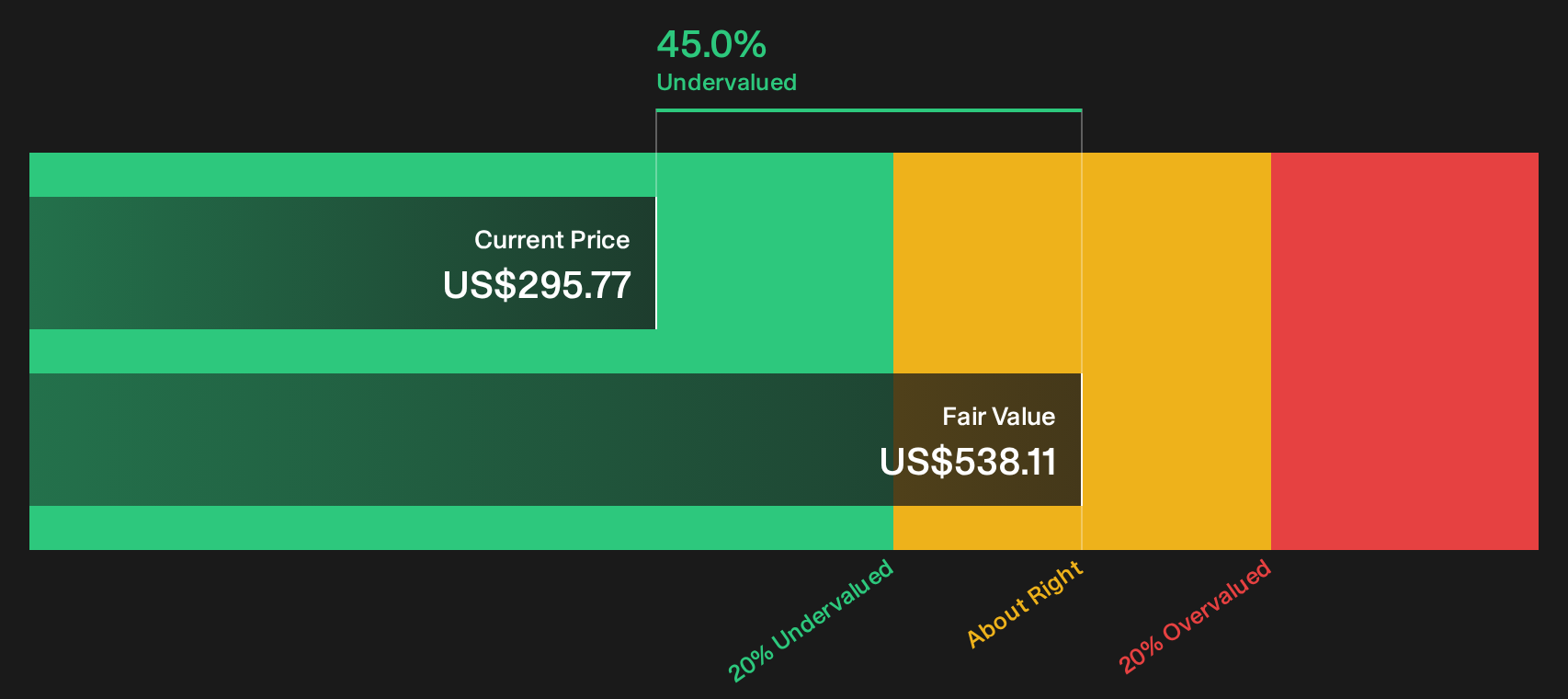
Alphabet runs the familiar Google search, YouTube and Android ecosystem, yet the screener angle hinges on Google Cloud’s AI infrastructure and Vertex AI subscriptions, which generate recurring cash flows that feed into Simply Wall St’s DCF undervaluation signal.
Alphabet generated about US$376.3b from Google Services, US$93.2b from Google Cloud and US$1.5b from Other Bets, while carrying a market value near US$3,653.5b.
According to oscargarcia, an investor in the Simply Wall St Community who wrote a detailed Alphabet thesis, Google Cloud’s AI shift is changing how this business converts long-term demand into cash.
"Google Cloud has gone from “meh” to money-maker. • Now #3 globally behind AWS and Azure, with over 11% market share."
The real swing factor is whether heavy AI infrastructure spending turns that cloud backlog into durable margins before one key cost pressure bites.
Before that pressure shows up in the numbers, the full narrative for Alphabet explains how Alphabet could convert heavy AI spending into faster cash flow growth and where risks might still be hiding.
Citigroup (C)
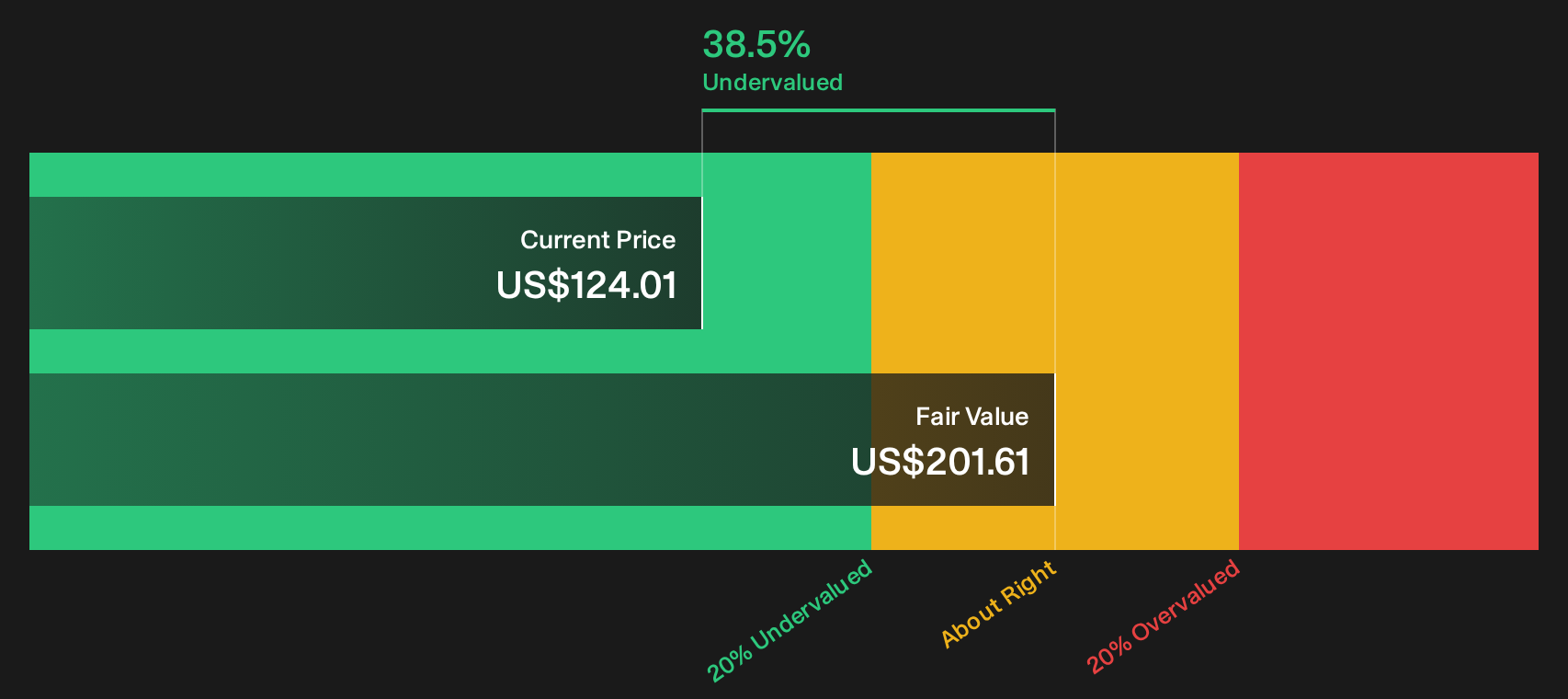
Citigroup ties into this cash-flow screen through its Treasury and Trade Solutions arm in Services, a fee-heavy engine that helps multinational clients move and manage money while generating recurring transaction income that can support value-focused investors looking at discounted cash-flow signals.
Citigroup runs a broad financial platform across Services, Markets, Banking, U.S. Personal Banking, and Wealth, with Markets generating about US$24.4b, Services US$23.5b, and Wealth US$9.5b in revenue, and the group valued at roughly US$205.3b.
The bearish analyst Narrative on Simply Wall St highlights how one of Citigroup’s biggest experiments in future-facing payments technology could shape that cash-flow story in less predictable ways.
"Citigroup’s push into tokenized deposits, blockchain based cross border payments and a consortium backed stablecoin introduces new technology and compliance complexity. This could require sizable ongoing spend before commercial volumes materialise, putting pressure on revenue conversion and delaying any uplift to fee income and earnings."
What really matters is whether a quieter shift in how efficiently Citigroup turns those recurring service flows into returns offsets the extra spend that comes with it.
That efficiency question is the real hinge, and the full narrative for Citigroup outlines how Citigroup’s payments bets, capital returns and fee engines could be quietly reshaping long term value.
Seeking Fresh Alternatives Before Momentum Flies
New ideas move fast. By the time a breakout story hits headlines, the easy entry can be gone. Scan these fresh, under the radar candidates while it matters and take action based on your own judgment.
- Identify potential early leaders in smaller names before momentum screens catch up by running the 13 elite penny stocks with strong financials curated for financial strength, not hype.
- Explore the next phase of AI infrastructure demand by checking the 53 AI infrastructure stocks that filters for real businesses involved in chips, data centers and networking build outs.
- Consider steadier portfolio ballast with the list of solid balance sheet and fundamentals (24 results) so you focus on resilient operators instead of stories that could be dropping out of favor tomorrow.
Have feedback on this article? Concerned about the content? Get in touch with us directly. Alternatively, email editorial-team@simplywallst.com