


EN
What Investors Got Wrong About AeroVironment Before A 60% Slide
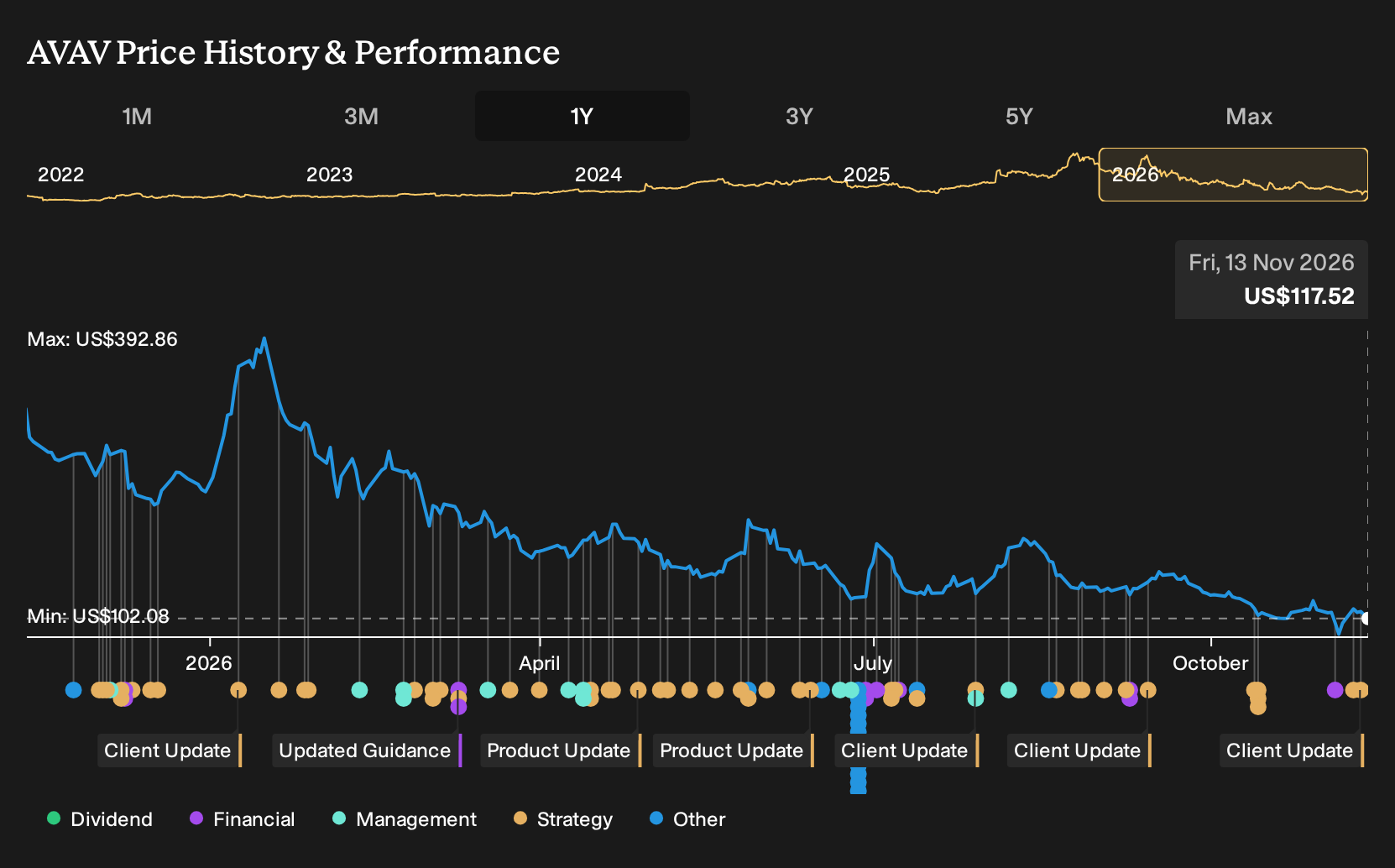
If you had backed the bulls who expected AeroVironment to ride record backlogs, ambitious Investor Day targets, and expanding drone and laser contracts, the outcome so far has been jarring. Investors who held AeroVironment over the past year are down 59.6%, including dividends. If that starting thesis rested on surging defense demand, AI-enabled platforms, and BlueHalo synergies, what exactly did it miss about contract risk, regulation, and execution quality?
A Narrative on Simply Wall St is one investor's written case for a company, with its growth, margin and multiple assumptions spelled out. Those assumptions imply an estimated Fair Value.
AeroVironment has already moved. Pinpoint other ways to investigate the theme among 86 robotics and automation stocks.
The Argument You Would Have Been Weighing On AeroVironment
The shares cost US$295 at the start of the period, and investors in AeroVironment faced two very different paths. One line of thinking saw a drone leader ready to convert a crowded order book into cash. The other focused on rules, budgets, and contract concentration.
The bullish Narrative carried a Fair Value of US$325, about 10% above the start price. It relied on assumptions that revenue could grow 52.7% a year and that profit margins might reach 13.0% by 2028.
The bearish case set Fair Value at US$157, 47% below the start price. That view focused on tightening export controls and dependence on a few U.S. government contracts as key risks to future earnings.
What The Evidence Did To The AeroVironment Argument
The biggest new fact for AeroVironment was the termination of its SCAR phased array antenna contract, followed by securities lawsuits, a US$89 million goodwill impairment, and identified control weaknesses. That challenged the bullish view that contract concentration and governance risk were secondary issues. Record contracts for laser and counter drone systems, and revenue and net margin both rising, supported the optimistic growth side.
The period showed how much the original thesis hinged on contract durability and program structure. For any defense stock, you would want to track how much projected cash flow relies on a single award, and then test that against future contract changes and impairments in filings.
What You Would Be Paying For In AeroVironment Today
AeroVironment now trades at US$118 after the share price fell 59.6% over the past year. The current bullish Narrative’s Fair Value sits above this level, which signals that, according to that author, the recent drop has moved the quotation below their assessment of worth.
According to C_Coffeen, an investor in the Simply Wall St Community who wrote the Narrative, the core idea is that AeroVironment could benefit if low cost unmanned and AI-driven systems become central to modern conflict. A buyer today would need to judge whether drone and counter drone demand can support that vision across air, land, sea, space, and cyber.
"The bull case for AVAV isn't just about drones; it is about ubiquity. In 20th-century warfare, air superiority required multi-million dollar jets and years of pilot training. In 2026, air superiority is increasingly defined by "low cost" systems: cheap, smart, and expendable. AeroVironment owns the "gold standard" in this category."
One Narrative has put a figure on that disagreement. → See the Narrative with its higher Fair Value, assumptions and all
Where AeroVironment’s Power Comes From
Watching AeroVironment means tracking a broader shift in warfare infrastructure. Small aircraft and sensors still rely on something basic behind the scenes.
They need dependable electricity and thermal control that quietly keeps systems within limits. One industrial specialist concentrates on that invisible backbone.
It focuses on routing grid power into sensitive hardware while managing excess heat. As platforms add more electronics, loads climb and reliability expectations rise.
Those electrical and thermal bottlenecks rarely make headlines, even when they decide which projects scale. That quiet work can shape which defense and computing upgrades actually deliver.
One Narrative has already put a figure on it. → Uncover the company trading 32% below one Narrative's Fair Value
Have feedback on this article? Concerned about the content? Get in touch with us directly. Alternatively, email editorial-team@simplywallst.com