


EN
Starship Flight 15 Puts Boeing Stock And Satellite Broadband Shares Back In Focus
Rocket reusability is moving from science fiction to live engineering test and Starship Flight 15 is the latest reminder that satellite broadband is not just about space headlines but about who gets paid on the ground. With a double catch attempt and fresh Starlink capacity on the line, investors watching SpaceX’s volatility may want to reassess listed satellite communications plays. This article walks through 3 stocks exposed to that same news catalyst and why they may deserve a closer look now.
The stocks covered next are a small sample of that theme, and the full screen surfaced 69 more companies with equally interesting satellite broadband and ground equipment stories that do not fit into one article. To go straight to the wider opportunity set, identify patterns, and analyze your own highest conviction ideas, head into the Satellite Broadband & Ground Equipment Providers screener.
Astroscale Holdings (TSE:186A)
Astroscale Holdings designs and builds satellites for debris removal and related services, tying it directly to growing low Earth orbit infrastructure that underpins satellite broadband. The business currently reports ¥5,886 million from Orbital Services and has a market value of about ¥139 billion.
Astroscale Holdings provides focused exposure to the pick-and-shovel side of satellite broadband, since its debris-removal and on-orbit servicing work is tied to how dense LEO constellations become. The stock is still loss making and highly volatile. The appeal of the company’s earnings outlook depends in part on how uncertain pressures around future demand and pricing develop.
Those pressures make the next step clear: start with the 2 key rewards and 1 important major warning sign to see what might be masking Astroscale Holdings’ upside or downside potential.

Thales (ENXTPA:HO)
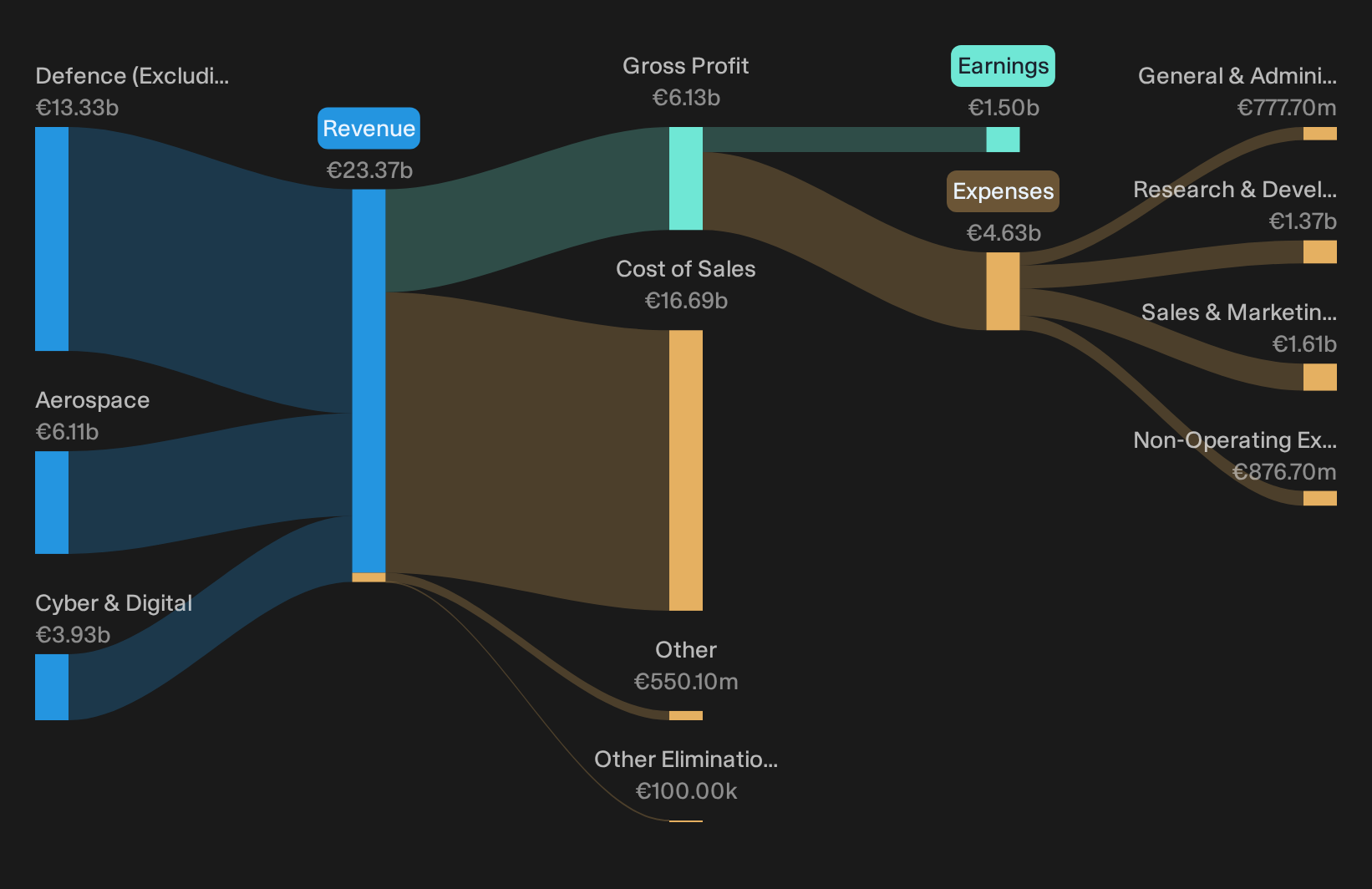
Thales is a global defence, aerospace, space, and digital security group whose satcom payloads and communications hardware plug directly into secure broadband and connectivity infrastructure. The business generated about €13.3b from Defence excluding Digital Identity & Security, €6.1b from Aerospace, and €3.9b from Cyber & Digital, and is valued at roughly €46.7b.
For investors tracking how satellite broadband demand ripples into large defence and aerospace contractors, Thales links cutting edge satcom hardware with long-term government and enterprise security budgets. According to the analyst consensus Narrative on Simply Wall St, the latest view pulls multiple data points into a single forward-looking story.
Acceleration of defense spending in France and across Europe, combined with Thales reporting €11.3b of defence order intake and double digit organic defence sales growth over the first nine months of 2026, supports the view that higher military budgets can continue to feed into order intake and future defence revenue.
What happens to that picture depends heavily on how one unresolved pressure in its digital security economics shapes future profitability and cash generation.
That unresolved pressure is precisely why the full narrative for Thales examines how Thales’ defence engine and digital security margins could be decoupling from headline order momentum.
Boeing (BA)
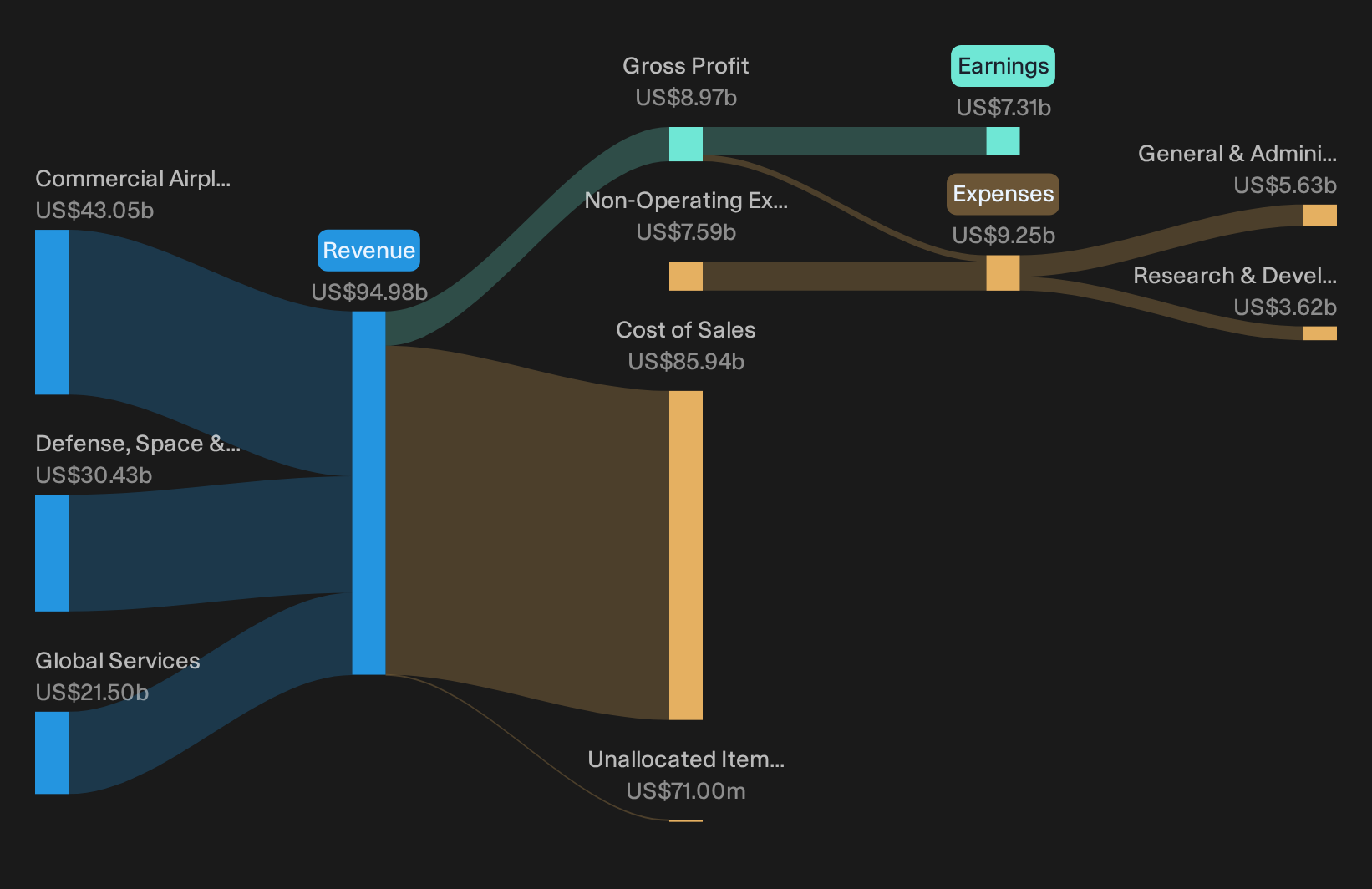
Boeing is a global aerospace and defense group that links this screener theme through satellites and launch systems alongside its commercial jets. The group generated about US$43.1b from Commercial Airplanes, US$30.4b from Defense, Space & Security, US$21.5b from Global Services, and has a market value near US$136b.
Boeing’s satellite and launch work gives you a direct line into the same broadband story reshaping investor expectations around reusable rockets. rcb9, an investor in the Simply Wall St Community, argues that the real hinge point is not the order book but how a specific financial stress plays out over the next few years.
Any single programme charge above $1 billion in a quarter through 2027. Full year 2026 free cash flow landing below the $1 billion guidance floor, which requires a large second half swing from a negative first.
What happens if that pressure collides with funding needs for new satellite and broadband projects could matter far more than headline demand growth.
If that financial squeeze is where the real story starts, read the full narrative for Boeing to see how Boeing could turn pressure into accelerating leverage on future programmes.
Seeking Alternatives Before Momentum Flies
Fresh ideas move first. Once momentum builds and prices start flying, the easy entry points can get caught and drop out of reach. Scan new themes before the crowd and consider acting sooner rather than later.
- Target reliable income streams while they are still under the radar for now by reviewing a hand picked mix of resilient payers in the 28 dividend fortresses.
- Look for potential mispricing in quality names before sentiment shifts by checking a curated pool of stronger balance sheets in the 19 high quality undervalued stocks.
- Follow listed companies involved in AI-related strategies before attention broadens by using a focused set of profit makers in the 42 profitable AI stocks that aren't just burning cash.
Have feedback on this article? Concerned about the content? Get in touch with us directly. Alternatively, email editorial-team@simplywallst.com